Why Some Pets Get Extra Silly Right Before Bed
That burst of hallway sprinting, toy-flinging, or attention-seeking right before lights out is usually not random. For many dogs and cats, bedtime silliness follows a predictable mix of leftover energy, household cues, and a last call for social time.
Jordan specializes in turning complex pets & animal lifestyle topics into clear, useful explainers for everyday readers.
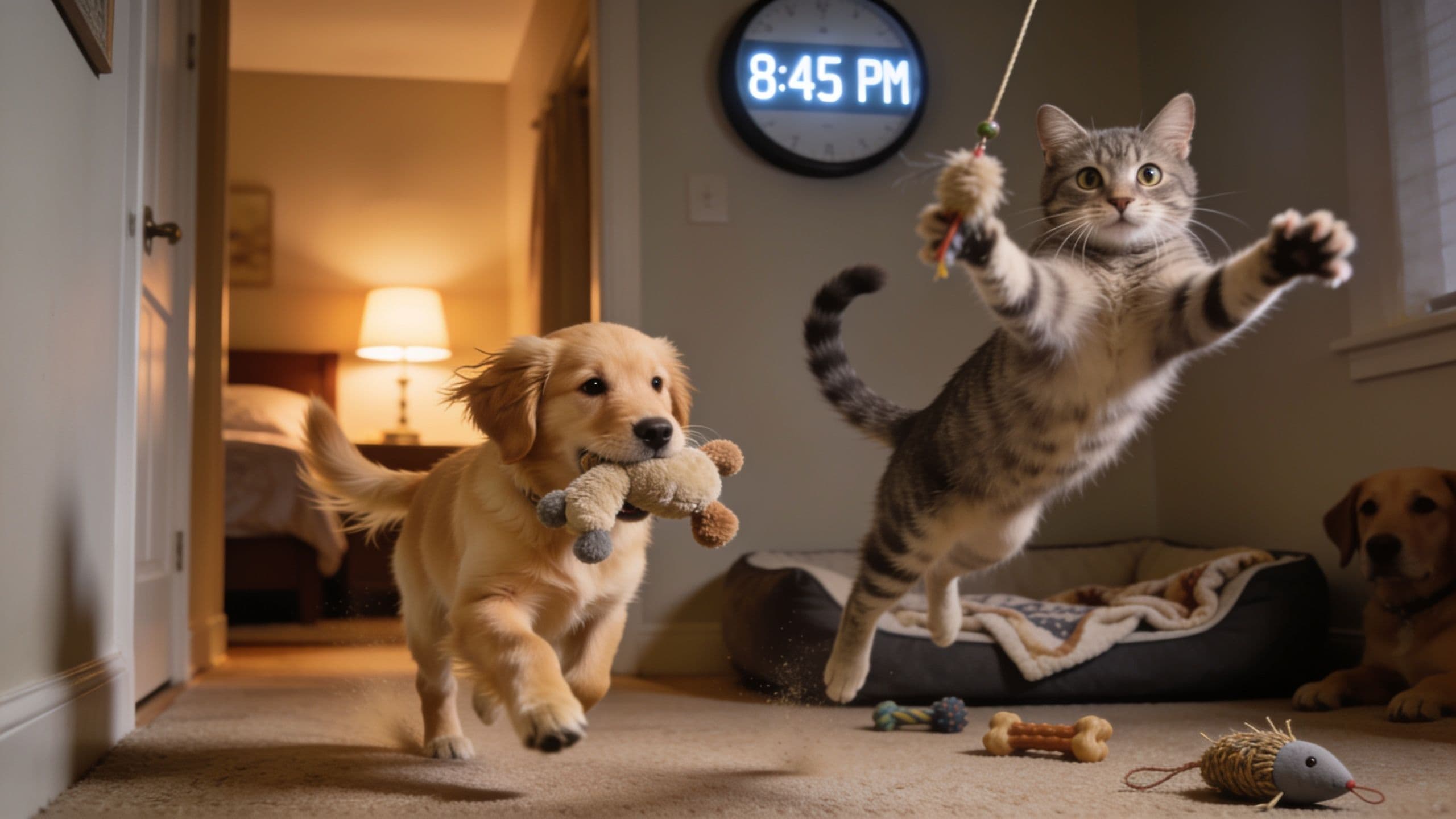
Just when the house finally settles, some pets seem to launch a one-animal variety show. Cats tear through hallways, skid across rugs, and pounce on invisible targets. Dogs start parading toys, pawing for attention, or turning the living room into a racetrack. To tired owners, it can feel mischievous, theatrical, or suspiciously well-timed.
Most of the time, though, bedtime silliness is not chaos for chaos’s sake. It is a pattern. Pets often become extra playful at night because the timing lines up with three simple forces: unused energy, strong routine cues, and the realization that this may be the last social moment before everyone disappears to sleep.
Bedtime antics usually have a clear pattern
Evening silliness tends to look dramatic because it happens in a compressed burst. A pet that has been mildly bored, lightly stimulated, or loosely waiting for family attention may suddenly release that energy all at once.
Common versions include:
Fast laps around the house
Pouncing, toy tossing, or wrestling with blankets
Barking, chirping, or demand behaviors
Ambush play at the edge of the bed or hallway
Repeated attempts to pull owners into one more round of interaction
The timing matters. Pets are observant about routine, often more observant than people realize. They notice the dishwasher turning on, the television going off, the bathroom light switching on, the toothbrushing, the final walk, the closing of doors. Those cues can form a predictable chain that tells them the active part of the day is ending.
For some animals, that cue chain means: settle down. For others, it means: this is my last chance.
Leftover energy is the simplest explanation
A surprising number of bedtime antics can be traced to plain old unmet activity needs.
If a dog had a short walk, limited sniffing time, and a long afternoon indoors, the body may still be primed for movement even if the household is exhausted. If a cat spent the day napping in quiet corners without much active play, nighttime may be when that stored energy finally comes out.
This does not mean every pet needs intense exercise late in the day. In fact, very stimulating play right before bed can backfire. But it does mean that daily outlets matter. Physical movement, exploratory activity, and mental engagement spread throughout the day often reduce the odds of a 10 p.m. performance.
For cats especially, the pattern can look dramatic because they often cycle between rest and short bursts of activity. In a quiet home, those bursts are more noticeable. For dogs, the issue is often less about wild instinct and more about a gap between the household’s schedule and the dog’s need for engagement.
A pet that seems "randomly hyper" at night is often giving a very practical message: there was still fuel in the tank.
The house is sending signals, and pets read them well
Pets are excellent students of human routine. They do not need clocks when they have sound, light, movement, and repetition.
By evening, the house changes in ways that are easy for animals to detect:
Foot traffic slows down
Family members become available after work or school
Noise from daytime tasks drops off
Attention becomes more concentrated
Bedtime rituals happen in the same order each night
That combination can create a surge of expectation. A dog may associate the end of dinner cleanup with a walk, toy time, or cuddling on the couch. A cat may become more active precisely because the environment is calmer and easier to patrol, stalk, and investigate.
This is one reason pets can seem to "switch on" the moment you start getting ready for bed. They are not simply reacting to the darkness. They are responding to a familiar transition.
Owners sometimes reinforce that pattern without realizing it. If a pet races around, then instantly gets attention, laughter, chasing, treats, or one big exciting play session, the pet learns that goofy nighttime behavior reliably works. From the animal’s point of view, that is not misbehavior. That is a successful strategy.
Dogs and cats often get silly for different reasons
The broad pattern is similar, but the details often differ by species.
Dogs often react to social timing
Dogs are deeply tied to household rhythm. Evening can feel socially important because it is when their people finally stop moving between tasks and become fully available. If the dog has waited through work hours, errands, and distracted multitasking, bedtime may feel like the final opening to secure interaction.
That is why some dogs become playful exactly when their owners want quiet. They are not necessarily resisting sleep. They are trying to cash in on togetherness before the night goes still.
This can show up as:
Bringing toys to bed
Demand barking or grumbling
Repeated nudging or pawing
Short zoomie bursts after the last walk
Attention-seeking silliness that escalates if ignored
Cats often become more active as the home quiets
Cats can seem especially dramatic at night because a quieter environment makes their activity stand out. Many cats also perk up when there is less commotion, fewer interruptions, and more room for focused play or exploratory behavior.
That may mean sprinting, climbing, toy hunting, or launching surprise attacks on feet under blankets. The behavior is often less about defiance and more about timing. The quiet of evening can make a cat feel alert, playful, and suddenly interested in movement.
For indoor cats, the pattern can also reflect a need for a more complete play sequence earlier in the evening: stalk, chase, pounce, catch, and then settle.
How people accidentally make the bedtime burst bigger
Even well-meaning owners can train a nightly spike of nonsense.
One common mistake is inconsistent enrichment. If activity needs are met on some days but not others, pets may default to creating their own entertainment. Another is saving the most exciting interaction for the very end of the night, which can raise arousal right when calm would be more helpful.
Attention itself can also be a reward. A pet that receives instant engagement for barking, tackling toys onto the bed, or zooming circles around the couch may repeat the act tomorrow.
A few common amplifiers:
Long stretches of inactivity followed by sudden excitement
Rough or high-speed play immediately before lights out
Laughing and chasing during disruptive antics
Feeding, petting, or talking right after demand behaviors
Unclear or changing evening routines
The point is not to ignore your pet completely. It is to notice the sequence. What happened in the hour before the silliness? What does the pet reliably gain from it? Once that pattern is visible, the behavior usually looks much less mysterious.
Calmer evenings usually come from better timing, not stricter rules
For most pets, the goal is not to suppress personality. It is to shift when energy gets spent and make the path to bedtime more predictable.
A few practical changes often help:
Move play and enrichment earlier
For dogs, that could mean a more satisfying late-afternoon walk with sniffing, training, or food puzzles rather than a rushed loop right before bed. For cats, an interactive play session earlier in the evening can help drain the urge for midnight acrobatics.
Create a consistent final routine
Pets relax more easily when the end of the day follows a reliable order. Think of a short sequence such as walk, water, brief calm play, final bathroom break, lights dim, settle. For cats, a play session followed by a small meal can mimic a natural hunt-eat-rest rhythm.
Keep the last transition quiet
If the house goes from boredom to wrestling match in five minutes, many pets will get amped up. Lower lighting, softer voices, and slower interaction can make a noticeable difference.
Reward the calm moments, not just the loud ones
Pets often get the most attention when they are being ridiculous. Flip that pattern by noticing and rewarding quiet behavior before the antics start. A dog lying on a mat or a cat settling nearby can be calmly reinforced with gentle attention or a routine bedtime treat.
Look for unmet needs before blaming attitude
If bedtime silliness is intense every night, ask practical questions first. Did the pet get enough movement, problem-solving, novelty, and social contact during the day? In many homes, the answer explains more than the behavior label does.
Nighttime goofiness often becomes much easier to manage once owners see it as a routine-based behavior instead of a personal challenge. The laps, pounces, and toy parades may be annoying when you are ready to sleep, but they usually follow a logic your pet has been signaling all along: the day is ending, energy remains, and this feels like the last good moment to use it.
Safety & Scope
This article is for general informational purposes and does not replace professional advice for complex repairs or installations.
Frequently Asked Questions
+Why does my cat get zoomies before I go to sleep?
Many cats become more active when the home gets quiet and predictable at night. If they have stored energy from the day or have not had a satisfying play session earlier, bedtime can become the moment when stalking, chasing, and sprinting finally come out.
+Why is my dog playful when I am trying to wind down?
Dogs often treat evening as prime social time because their owners are finally available and the routine is shifting toward bed. If your dog still has energy left or has learned that nighttime antics earn attention, playfulness can spike right when you want calm.
+Can a bedtime routine reduce evening pet chaos?
Yes. A predictable evening routine can help many pets settle more smoothly. Earlier enrichment, a consistent final walk or play period, and calm transitions into bedtime often reduce sudden bursts of silliness.