Why Pets Stare at You While They Eat
That intense mealtime eye contact is usually not random. Across dogs, cats, and smaller pets, staring while eating can reflect trust, vigilance, habit, and the subtle social rules of your home.
Jordan specializes in turning complex pets & animal lifestyle topics into clear, useful explainers for everyday readers.
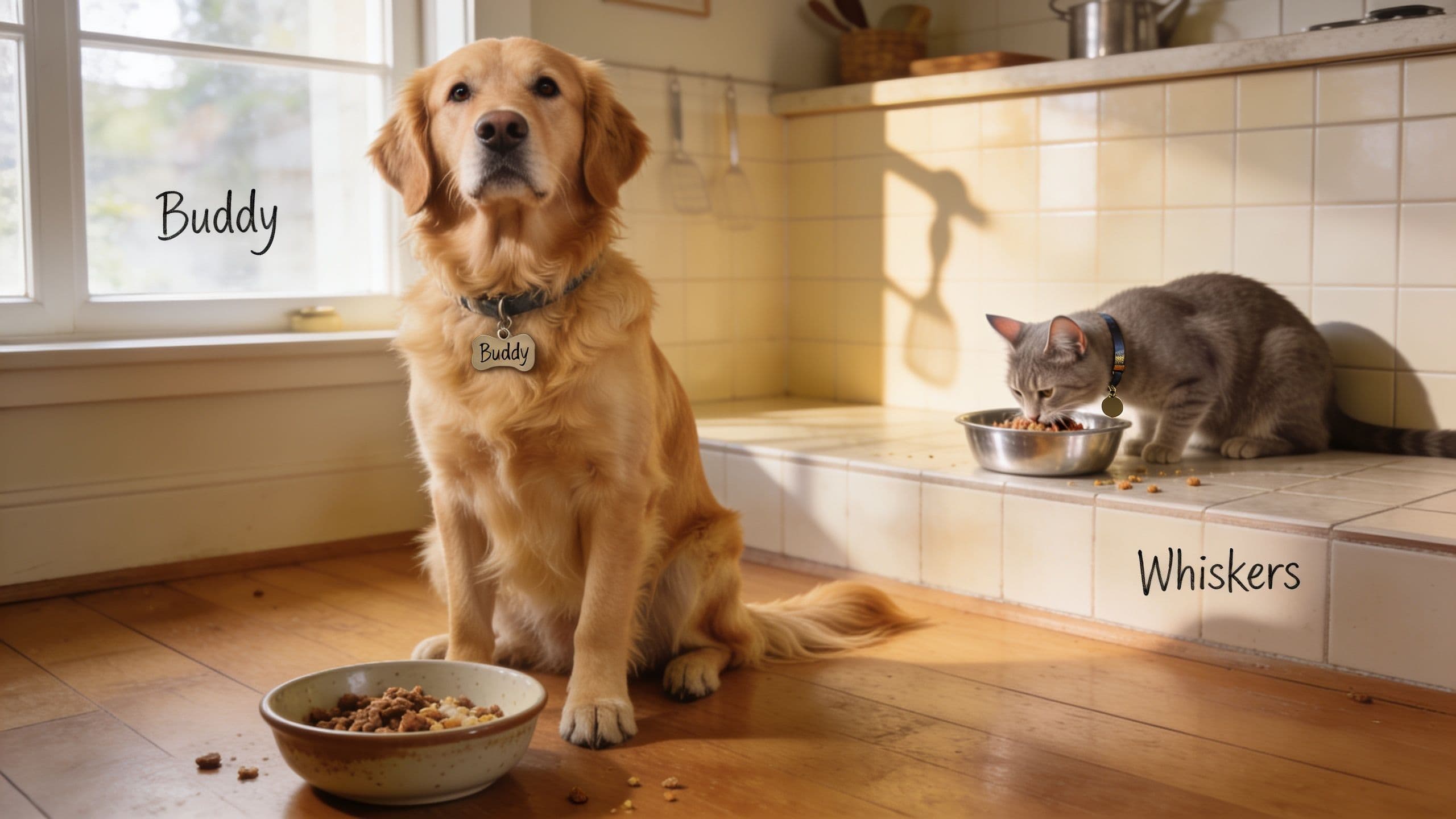
Few pet behaviors are as oddly intimate as being watched while your animal eats. You set down the bowl, step back, and suddenly you are part of the meal. Some pets glance up between bites. Others hold steady eye contact as if dinner comes with an audience requirement.
Most of the time, this is not a sign that anything is wrong. It is a mix of social behavior, learned routine, and environmental awareness. For some animals, your presence makes eating feel safer. For others, mealtime has become a shared ritual, especially if attention, praise, or the occasional extra treat has entered the picture.
The stare is not always the same behavior
Owners often describe one broad habit, but there are several versions of the mealtime stare.
A dog that looks up between bites may simply be checking in. Dogs are highly attuned to human cues, and many treat feeding time as a social event, not just a biological one. A quick glance can be the canine equivalent of making sure the group is still together.
A cat that refuses to eat unless you stay nearby may be doing something different. Cats can be selective about where and when they feel secure enough to eat. If they choose your presence, that often suggests reassurance rather than performance.
Then there is the long, dramatic eye contact: chew, stare, chew, stare. In some homes, that pattern is less about safety and more about expectation. If your pet has ever received praise, hand-fed additions, or table scraps during meals, the stare may be a practiced move. Pets are excellent observers of cause and effect.
Trust, vigilance, and the social side of eating
Eating is a vulnerable act for animals. Heads go down, attention narrows, and movement becomes more predictable. Even in a safe home, some pets retain instincts that make them monitor their surroundings while dining.
For dogs, the social piece is especially strong. Many dogs look to people for permission, feedback, and emotional cues throughout the day. A glance during meals can be part of that larger habit. If your dog tends to seek eye contact in other routines, such as before walks or at the door, mealtime staring may be one more version of the same check-in behavior.
Cats often get misread here. They are not always aloof about food; many are highly aware of context. A cat that eats only when you are nearby may associate you with safety, especially in a home with noise, children, visitors, or other animals. In multi-pet homes, a cat may also be watching for interruptions rather than watching you specifically. You just happen to be the biggest and most predictable part of the room.
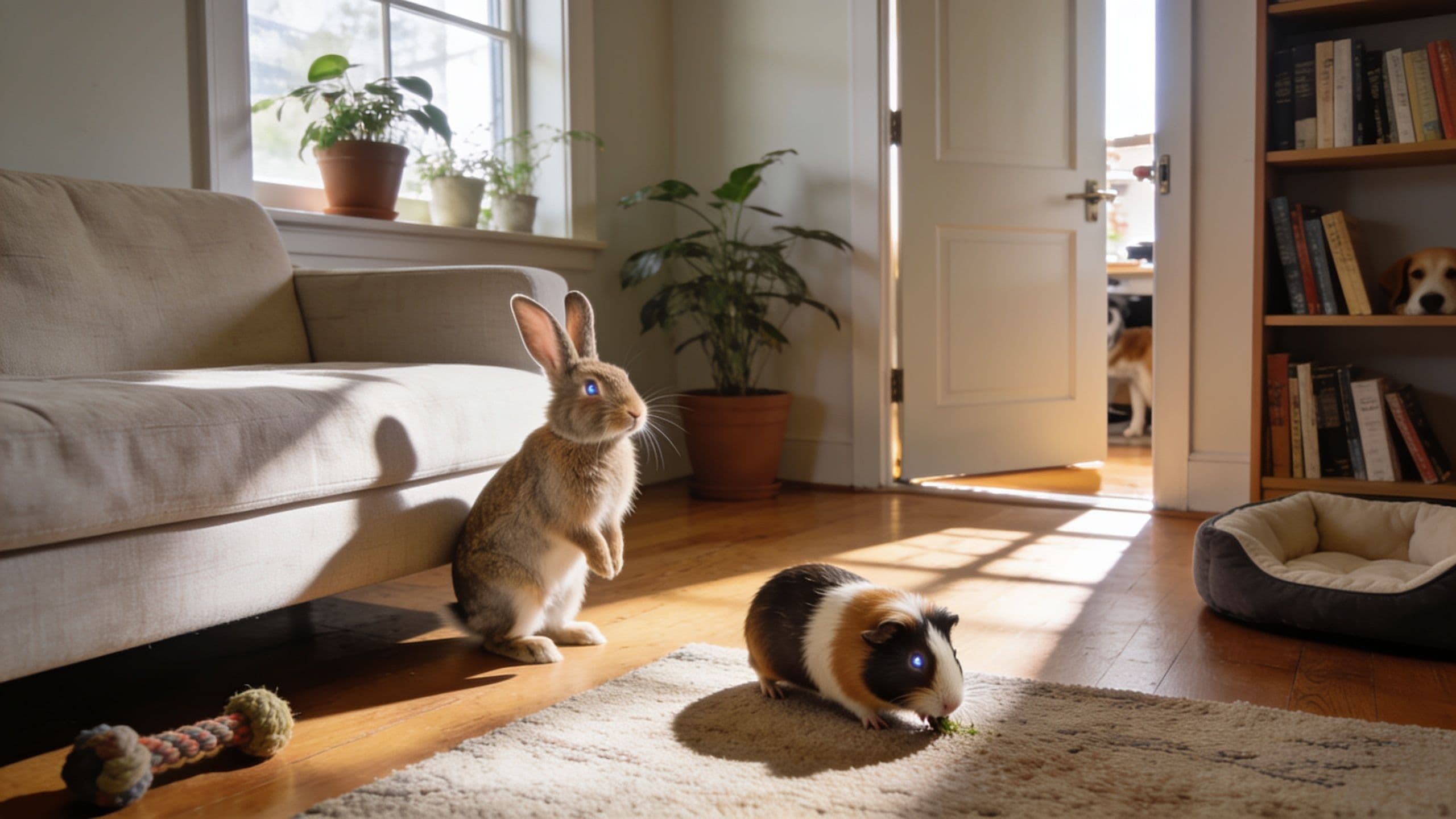
Small pets, including rabbits, guinea pigs, and some birds, can also remain visually alert while feeding. That is not unusual. Prey species often balance eating with environmental scanning. If they seem calm otherwise, occasional staring while they nibble may simply be part of how they stay aware.
Household dynamics can shape the whole ritual
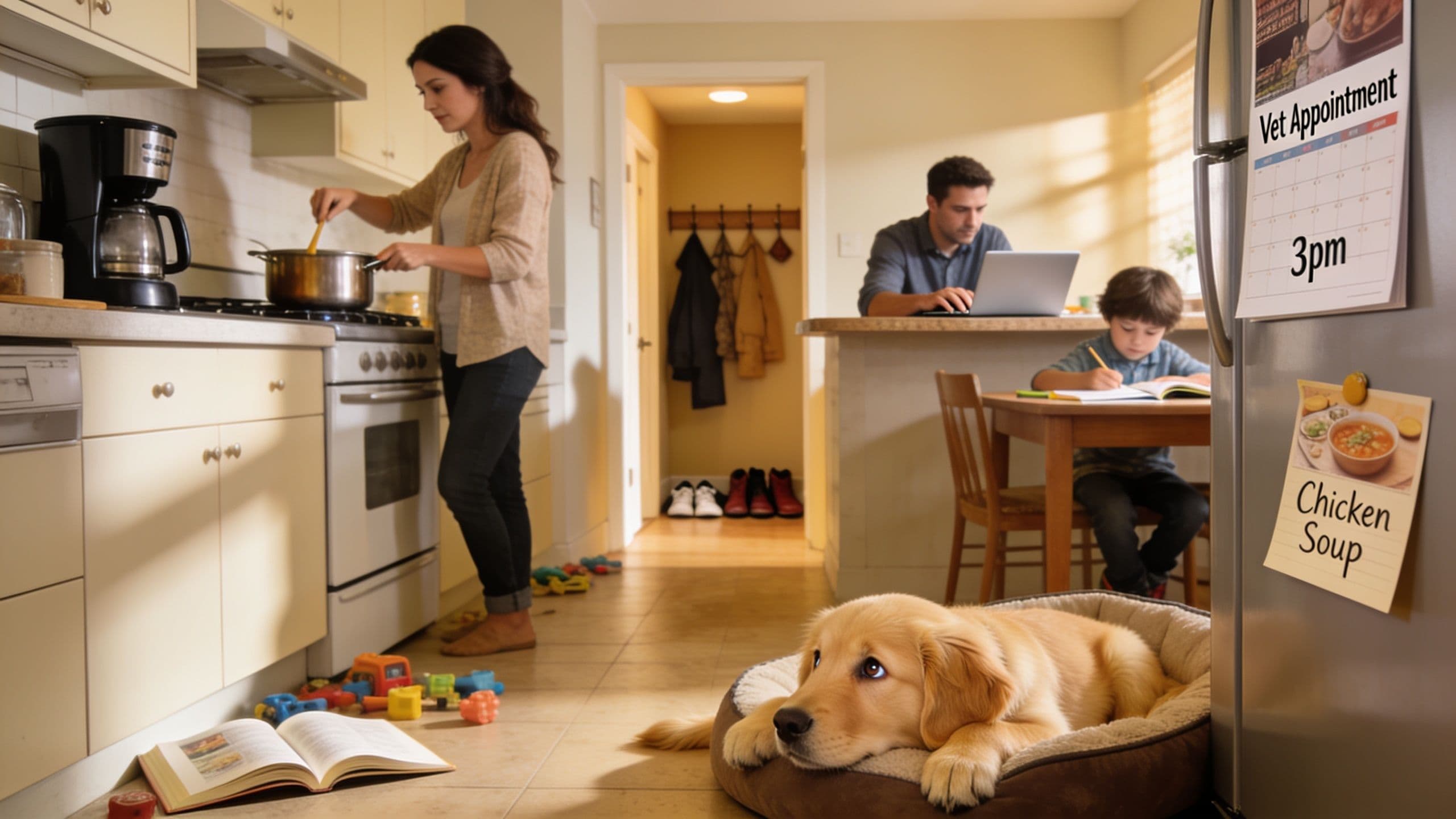
The room matters more than many owners realize. A bowl in a busy kitchen, next to a laundry machine, or near a doorway can change how relaxed a pet feels during meals.
Noise is one factor. Clattering dishes, appliances cycling on, or heavy foot traffic can make some pets pause and look up repeatedly. The stare may be less about you than about the fact that you are the familiar constant in an unpredictable space.
Other animals are another major influence. If one pet has a habit of circling, stealing, or simply staring at a housemate's food, the animal eating may become hyper-aware. In that case, looking at you may be a way of checking whether the situation is under control. Some pets also eat faster, slower, or only in installments when there is perceived competition nearby.
Placement matters too. A bowl pushed into a cramped corner can make a pet feel trapped, while a bowl in the middle of household traffic can feel exposed. Cats, in particular, often prefer feeding spots with a clear view of the room. Dogs vary, but many do better when meals happen in a consistent, low-drama location.
This is why the same pet can seem perfectly relaxed in one home and unusually watchful in another. Mealtime behavior is not just personality. It is environment, history, and routine layered together.
What dogs, cats, and smaller pets are most likely telling you
Dogs: engagement, permission, or the hope of bonuses
Dogs are the most likely to turn eating into a social exchange. Some have been taught to wait for a release cue before starting, and that training can carry into repeated eye contact during the meal. Others are looking for praise or gauging whether more interesting food might appear.
If your dog eats kibble, looks up, and then perks up when you move toward the fridge or table, the message may be simple: the regular dinner is fine, but they are still open to upgrades.
That does not mean the behavior is manipulative in a sinister way. It means your dog has learned that humans sometimes change the script.
Cats: security and situational awareness
Cats that want you nearby while they eat are often seeking reassurance more than interaction. This can be especially common with shy cats, newly adopted cats, or cats in homes where another pet creates tension.
Some cats also prefer company because mealtime has become one of the few calm, predictable one-on-one moments of the day. If your cat follows you to the bowl, starts eating when you stop moving, and pauses when you leave, the behavior is likely tied to comfort.
Small pets: alertness without panic
Rabbits and guinea pigs may continue eating while keeping an eye on the room. Birds can be similar, especially in active households. The key difference is body language. If the animal resumes eating normally, stays loose in posture, and does not bolt away, the staring is often simple awareness rather than distress.
When to adjust the setup
If the eye contact seems relaxed, there may be nothing to fix. But if your pet looks tense, startles often, or only eats under very specific conditions, a few practical changes can help.
Choose a quieter feeding location. Move the bowl away from heavy traffic, loud appliances, and places where other pets hover. For cats, consider a feeding area with a broad view rather than a tight corner. For dogs, aim for consistency and enough space to eat without interruption.
Separate pets during meals if competition is even mildly present. Many owners underestimate how much subtle pressure one animal can put on another simply by standing nearby.
Pay attention to accidental reinforcement. If your pet stares and you respond with toppers, hand-feeding, or conversation every time, the behavior can become a polished routine. That is not necessarily bad, but it helps to know whether you are seeing comfort-seeking or a successful strategy for upgrades.
Finally, watch for changes rather than isolated moments. A pet that has always glanced up between bites is different from a pet that suddenly seems reluctant to eat unless you stand guard. The pattern matters more than the stare itself.
A small behavior that reveals a lot about home life
That mealtime look can be part trust, part habit, and part household theater. Pets do not eat in a social vacuum. They eat in kitchens, hallways, apartments, family homes, and multi-animal spaces where noise, routine, and relationships all shape behavior.
So when your pet stares at you over dinner, the answer is usually not one dramatic explanation. More often, it is a blend of reassurance, vigilance, and learned expectation. In other words, your pet may not be judging your cooking. They may just be making sure the room, the routine, and their favorite person are exactly where they should be.
Safety & Scope
This article is for general informational purposes and does not replace professional advice for complex repairs or installations.
Frequently Asked Questions
+Why does my dog look at me between bites?
Dogs often check in during meals because eating is social for them as well as practical. Your dog may be looking for reassurance, waiting for cues, or hoping for praise or extra food if that has happened before.
+Why will my cat only eat when I am nearby?
Many cats feel more secure eating when a trusted person is close, especially in busy homes or multi-pet households. Your presence can make the space feel predictable and safe enough for them to relax and finish a meal.
+Should I move my pet’s food bowl to a quieter place?
If your pet seems tense, pauses often, or only eats when closely watched, a calmer feeding spot can help. Reducing noise, foot traffic, and pressure from other pets often makes mealtime more comfortable.