Why Pets Wait Outside the Bathroom Door
That familiar silhouette under the bathroom door is usually less mysterious than it feels. Dogs, cats, and other companion animals often treat bathroom trips as a meaningful break in the household pattern, mixing social attachment, curiosity, and a strong reaction to suddenly closed access.
Maya covers pets & animal lifestyle with an emphasis on practical analysis, products, and real-world impact.
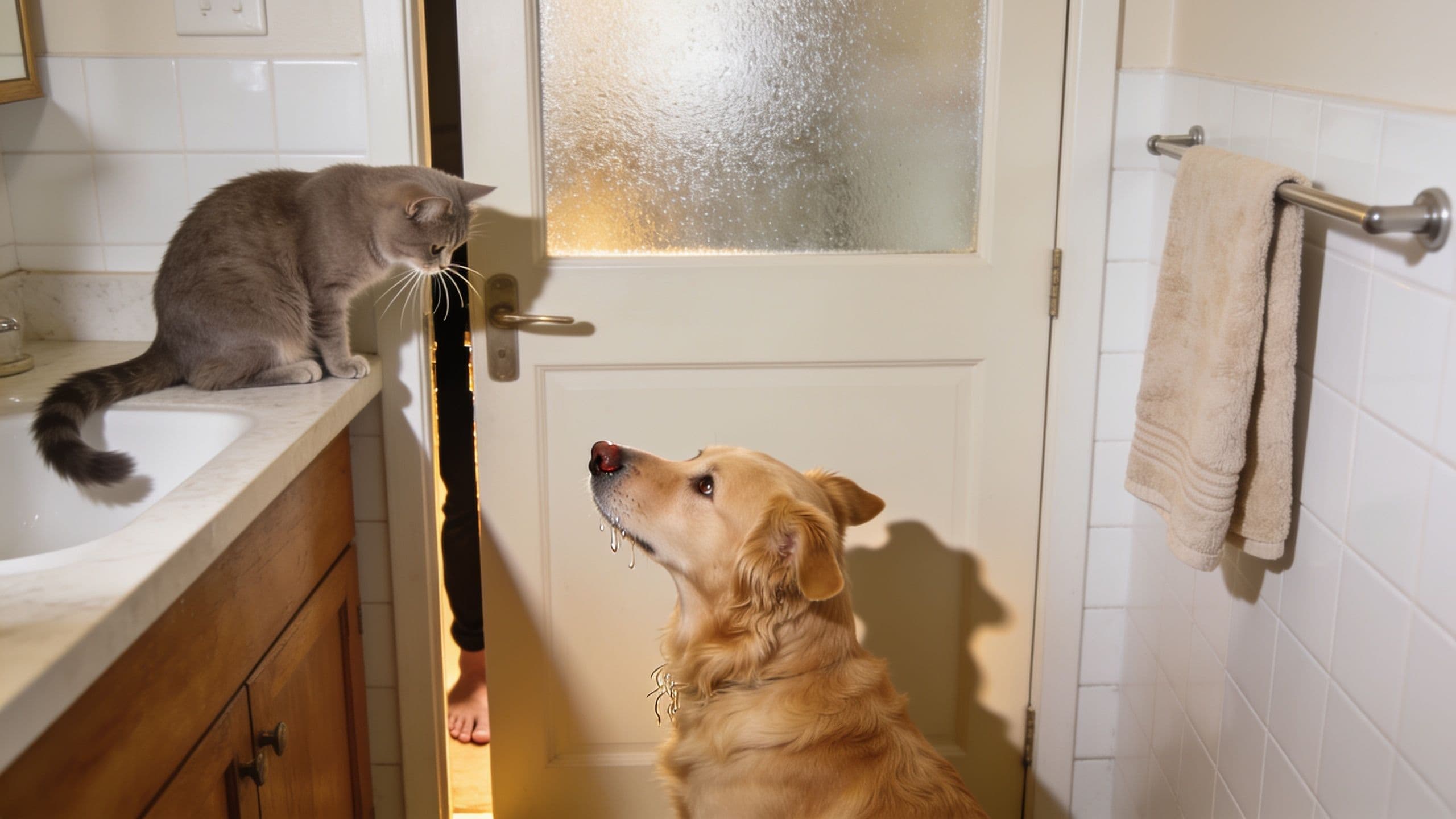
Few household moments reveal how closely animals track human behavior quite like a bathroom trip. Sit down, close one door, and suddenly a dog is posted outside like a security detail or a cat is sliding paws under the gap in protest. The behavior is funny because it feels absurdly specific. It is also a sharp demonstration of how companion animals read routine, access, and social connection.
For many pets, the bathroom door is not important because bathrooms are inherently fascinating. It becomes important because you went in, the access changed, and the usual flow of the home briefly stopped.
A closed door instantly becomes the story
Pets are excellent observers of what changes in their environment. Most of the day, room-to-room movement is fluid. You stand up, they may follow. You move to the kitchen, they know what that often means. You settle on the couch, they recalibrate around that choice. A closed bathroom door interrupts that pattern in a way they cannot ignore.
Barriers matter to animals because barriers change information. If a pet can see you, reach you, or at least move through the same space, nothing unusual is happening. The moment a door closes, they lose access to both you and the activity. That shift alone can make the door highly interesting.
This is especially true in homes where interior doors are rarely shut. If most spaces stay open all day, a suddenly closed bathroom door stands out as an event. Animals notice contrast. What is normally available is now blocked. That can trigger waiting, scratching, vocalizing, or simply parking themselves outside until the situation resolves.
Closed doors also create what behavioral scientists would call an information gap. Pets often know something is happening, but not what. For a curious animal, that uncertainty is compelling. For a socially attached one, it can be mildly frustrating. For many, it is both.
Dogs often frame it as a social separation
Dogs are specialists in tracking human movement and social patterns. Centuries of domestication have made them unusually tuned to where people go, how people move, and what those movements predict. That is one reason many dogs follow their owners from room to room without any obvious goal beyond staying in range.
Outside the bathroom, that tendency can look dramatic: whining, lying against the door, nudging it with the nose, or waiting silently until you emerge. In many cases, this is not a sign that the dog is panicking. It is simply the same follow-you impulse meeting a temporary obstacle.
Dogs also build expectations around household sequences. If you wake up, use the bathroom, then feed them, that trip is part of a meaningful routine. If you get ready for a walk after brushing your teeth, they may treat the bathroom visit as a prelude to something important. They are not just reacting to the door. They are reacting to what the door often predicts.
Some dogs do add a protective or supervisory layer. Owners joke that their dog is guarding them while they are vulnerable, and there is often a grain of truth in that. Many dogs naturally monitor the household and prefer to stay near key social partners. Waiting outside the bathroom can be less about anxiety than about participation in the group.
The important distinction is intensity. A dog that waits calmly is usually just being socially attentive. A dog that howls, pants, scratches frantically, or cannot settle may be showing a broader separation-related issue rather than a bathroom-specific quirk.
Cats treat the bathroom door like a challenge to order
Cats have a reputation for wanting what is on the other side of any closed door, and that reputation is well earned. While dogs often center on the person, cats frequently combine social interest with territorial curiosity. A closed door changes the map of the home. That alone can make it unacceptable.
Cats tend to like monitoring their environment on their own terms. If a room is suddenly inaccessible, they may see that as a problem to solve. The bathroom door is not just keeping them away from you; it is interrupting their ability to inspect, patrol, and confirm that the territory is functioning normally.
That helps explain why some cats are most interested precisely when the door is shut. Open the door and they may stroll in, glance around, and leave. The point was less the bathroom itself than the fact that access had been restricted.
There is also a practical layer. Bathrooms are full of sensory details: running water, echoing sounds, cool tile, sinks at jumping height, cabinets, towels, and routines that happen at the same times every day. For a cat, that makes the space an active node in the home, not a boring side room.
Many cats also learn that human bathroom time is stationary time. A person who is otherwise busy becomes a captive audience. That can mean attention, petting, or simply a reliable chance to be near you without competition from laptops, cooking, or chores.
Routine is the hidden engine behind the habit
One of the smartest ways to understand bathroom-door behavior is to stop viewing it as a single odd habit and see it as part of your pet's broader routine tracking.
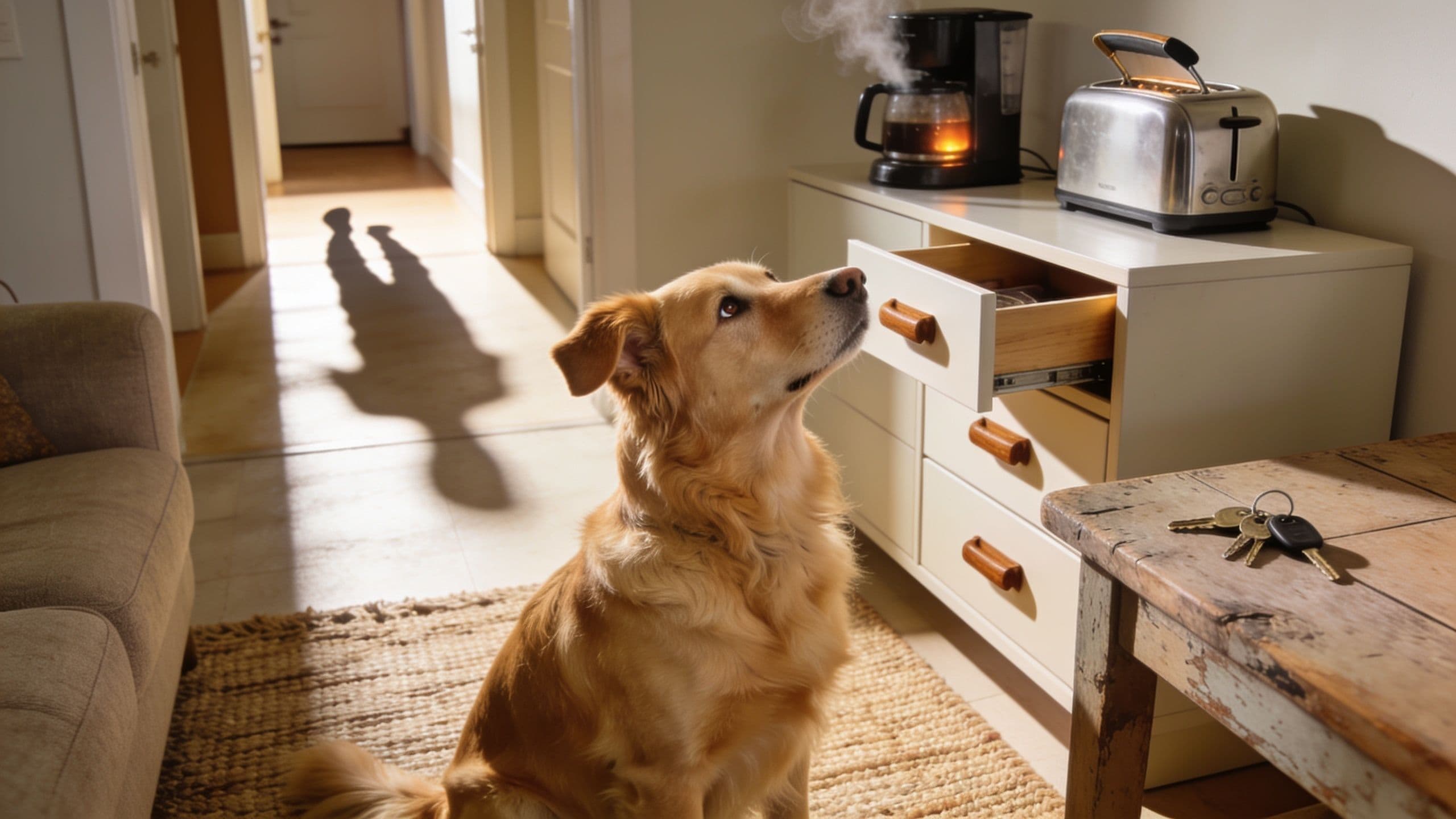
Pets are highly sensitive to repeated sequences. They notice when certain actions cluster together: alarm, bathroom, coffee, leash; or evening cleanup, bathroom, lights off, bed. Your bathroom trips may seem spontaneous to you, but to a pet they are often regular markers in the day's structure.
That predictability matters because animals use routine to anticipate what comes next. A brief disappearance behind a door may be read as a transition point. Dogs may think food, walk, bedtime, or departure is coming. Cats may interpret it as one of the home's recurring checkpoints. Even small pets such as rabbits or parrots can become alert when a well-known human pattern shifts.
This is why pets sometimes care more at certain times of day. A midday bathroom break may barely register, while the same trip during the morning rush or pre-bed routine gets immediate attention. The behavior is tied not just to the door but to the larger sequence surrounding it.
What owners often misread
It is easy to over-interpret bathroom-door waiting as either deep devotion or serious distress. Usually it is more ordinary than either extreme.
A pet stationed outside the door is often doing some combination of four simple things: keeping social contact, checking a blocked space, reacting to a break in routine, and waiting for the next event. None of those require a dramatic emotional explanation.
That said, context matters. If the behavior appears only at the bathroom door and looks casual, it is likely just companion-animal logic at work. If the same pet becomes distressed whenever any door closes, follows obsessively all day, eliminates indoors when left alone, or escalates quickly into panic, the issue may be broader than simple curiosity or attachment.
Owners also sometimes assume the pet is being stubborn or manipulative. In most cases, the animal is not trying to control you. It is responding to a small but meaningful change in access and predictability. From the pet's perspective, waiting by the door is a reasonable strategy: stay close, gather information, and be ready when the social unit reconnects.
How to make the routine less disruptive
If the behavior is harmless, many owners simply accept it as one of the comic rituals of living with animals. But if scratching, crying, or door-pawing is becoming disruptive, a few small changes can help.
First, avoid accidentally rewarding high-intensity behavior. If your dog whines loudly and you immediately open the door while talking excitedly, or your cat scratches and you respond with a dramatic entrance, the behavior may become more persistent. Calm exits and calm returns reduce the sense that the door interaction is a major event.
Second, create a nearby alternative. A mat outside the bathroom, a bed in the hallway, or a perch with a view can give the pet a clear waiting spot. This works especially well for dogs that simply want proximity and for cats that want observational access.
Third, add routine-compatible redirection. If your pet reliably reacts during certain times of day, offer a chew, puzzle feeder, or short settling cue before you close the door. The goal is not to punish the interest but to give it another outlet.
Finally, look at the whole pattern if the response seems intense. Bathroom-door behavior can be the most visible expression of a larger issue with frustration tolerance or separation. If the pet struggles in many similar situations, broader training or behavior support may be more useful than focusing on the bathroom alone.
The reason pets wait outside the bathroom door is not one neat instinct but a familiar mix: you matter, routines matter, and closed access matters. For companion animals that organize their day around your movement and the home's patterns, that simple shut door becomes a surprisingly important moment.
Safety & Scope
This article is for general informational purposes and does not replace professional advice for complex repairs or installations.
Frequently Asked Questions
+Why does my dog cry outside the bathroom door?
Usually because your dog wants to stay near you and the closed door interrupts that. Many dogs follow owners as part of normal social attachment and routine tracking. If the crying is mild and brief, it is often simple frustration or anticipation. If it is intense, paired with panic, or happens whenever you leave, it may point to a broader separation-related issue.
+Why does my cat hate closed doors?
Cats often react strongly to closed doors because blocked access changes their territory and limits information. Many cats want to inspect spaces on their own terms, so a shut door becomes interesting precisely because it is shut. The bathroom can be especially appealing because it contains water sounds, cool surfaces, and a predictable human routine.
+Do pets think bathroom routines are part of the household schedule?
Yes, many do. Pets are very good at noticing repeated sequences in daily life. A bathroom trip may signal feeding, walks, bedtime, or your next movement through the home. That is why some pets react more strongly at certain times of day when the bathroom stop is part of a larger, familiar pattern.