The Sound Map of Home: How Pets Learn Every Household Noise
Pets do not need words to follow a household routine. They build a detailed sound map from drawers, keys, footsteps, appliances, and tiny sequence changes, turning ordinary noise into a set of reliable signals about what happens next.
Jordan specializes in turning complex pets & animal lifestyle topics into clear, useful explainers for everyday readers.
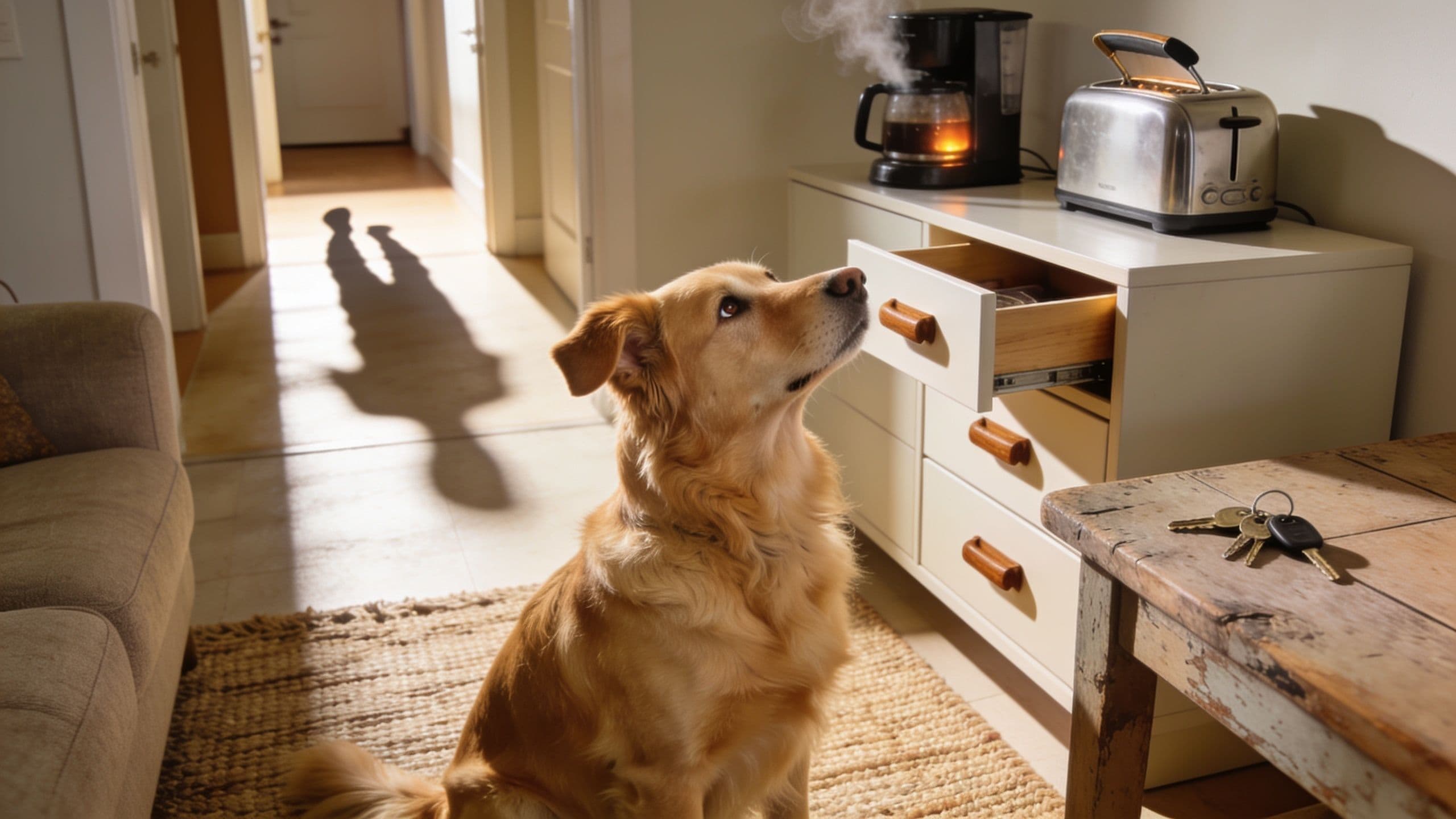
Long before a person says "walk," "dinner," or "bedtime," many pets already know what is coming. The clue is often not language at all. It is the soft slide of a drawer, the metal jingle of keys, the click of a leash clip, or the specific rhythm of one person climbing the stairs. To a pet, home is not background noise. It is a pattern-rich environment where sounds predict events with surprising accuracy.
That is why a dog can appear in the kitchen the instant the treat drawer opens from across the house, or a cat can wake from a dead sleep when a familiar food tin is handled. These reactions are not party tricks. They are the result of daily learning, built through repetition, timing, and emotional meaning.
Pets are not just hearing sounds; they are tracking consequences
Pets learn household noise the same way they learn many other routines: one event keeps leading to another. A drawer opens, then food appears. Keys jingle, then someone leaves. A laptop closes, then an evening walk starts. Over time, the first sound becomes meaningful because it reliably predicts the next step.
This is basic associative learning, but in a home it becomes remarkably fine-grained. Animals do not only learn isolated sounds. They learn chains.
A dog may connect the sequence of a chair rolling back, footsteps to the hallway, a closet door opening, and sneakers being pulled on with the start of an outing. A cat may distinguish between the cupboard that stores bowls and the cabinet that stores cleaning supplies, even if both doors make a similar thud. Small pets, including rabbits, guinea pigs, and parrots, can become just as attentive, especially when recurring sounds are tied to feeding, social contact, or handling.
The key point is that pets are constantly testing a simple question: what usually happens after this?
The household sounds that become the strongest signals
Not every noise matters equally. Pets tend to memorize sounds that are repeated often, occur in clear contexts, and lead to something emotionally important.
Drawers, containers, and food prep
Food-related sounds are among the fastest to stick. The scrape of a kibble bin lid, the crack of a treat pouch seal, the whir of an automatic feeder, or the sound of a can opener can become powerful signals because the reward is immediate and consistent.
This is why a pet may ignore ten other kitchen noises but react instantly to one specific drawer. That drawer has a history.
Keys, doorknobs, and shoes
Departure and arrival sounds carry strong social meaning. Dogs in particular often learn the difference between "someone is moving around" and "someone is about to leave" by combining cues: keys picked up, a certain coat rustling, shoes with a hard sole hitting the floor, then the front door latch.
Many owners swear their pets can tell work shoes from walking shoes. In practical terms, that is plausible. Different shoes produce different footstep patterns, floor impacts, and preparation sequences. Pets do not need to label these sounds the way people do. They only need to notice that one sound pattern usually leads to a short trip and another leads to a walk.
Leashes, collars, and routine objects
The click of a leash clasp or the jingle of a collar tag often carries more meaning than the spoken word "walk." Spoken language varies in tone and timing. The hardware sound is clean, repeatable, and tightly linked to the event itself.
The same is true for bedtime cues such as a bathroom light switch, a phone charger being plugged in, or a television shutting off. These small sounds can tell a pet where the day is heading.
Dogs, cats, and smaller pets build different kinds of sound maps
All companion animals can learn sound associations, but they do not always attend to the same details.
Dogs often follow action sequences
Dogs are especially good at reading movement plus sound as a package. They may track a whole pre-walk ritual rather than one magical noise. That is why owners sometimes try to "sneak out" by picking up keys earlier or putting shoes on in another room, only to find the dog still knows. The dog has learned a broader routine, not just a single cue.
Dogs also tend to be highly responsive to socially relevant sounds: a familiar car pulling in, a family member's gait, or the pattern of someone approaching the door.
Cats often notice subtle environmental shifts
Cats can be just as sound-aware, but their cues may look more understated. A cat may react to the cupboard where wet food is stored, the rustle of a specific bag, or the sound of a person sitting in the usual work chair before a quiet afternoon. Because cats often observe before acting, their sound map can be easy to miss unless you watch for ear turns, posture changes, or sudden appearance at exactly the right moment.
Small pets can become highly tuned to recurring noise
Rabbits, guinea pigs, hamsters, and birds often show sharp responses to repeated feeding and handling cues. A refrigerator door, pellet scoop, or cage latch can trigger anticipation quickly. At the same time, these animals may be more affected by abrupt or low-frequency household noise because they have fewer ways to investigate and control the environment.
Why one ordinary sound excites your pet and another causes stress
A noise does not matter only because of its volume. Context and history often matter more.
A blender may be loud but tolerated if it is predictable and never leads to anything threatening. A quieter sound, such as keys picked up, may trigger distress in a dog with separation issues because it predicts being left alone. Likewise, a vacuum cleaner can be difficult not only because it is noisy, but because it moves unpredictably through a pet's space.
Predictability changes everything. Repeated sounds that lead to safe, familiar outcomes usually become routine. Sounds that arrive suddenly, vary in timing, or have been paired with unpleasant events can stay charged.
This helps explain why some pets are unbothered by thunderstorms played softly on a speaker but react strongly to the real thing. The real event includes vibration, pressure changes, flashes, and a household full of unusual human behavior. The sound is only part of the story.
How to use the sound map without creating chaos
Once you realize how much your pet learns from noise, routine management gets easier.
Make cues deliberate
If you want a pet to understand a routine, use a consistent sound close to the event itself. A leash clip before every walk or a short verbal cue before meals can become a clear signal. Consistency speeds learning.
Avoid accidental false alarms
Many owners accidentally teach disappointment. If you open the treat drawer five times a day without giving a treat, or jingle the leash and then do nothing, the cue becomes noisy and less reliable. Some pets will still react every time; others will become frustrated or confused.
Build positive associations with difficult sounds
For sounds that cause worry, the goal is not to force exposure at full intensity. It is to pair manageable versions of the sound with calm, positive outcomes. That might mean low-level recordings, distance from the source, food rewards, or giving the pet a predictable safe place during noisier routines.
Notice what your pet is actually using
Owners often assume the pet is responding to their words when the real cue is earlier and subtler. If your dog starts running to the door before you say "walk," the true signal might be the closet hinge or the sound of you picking up waste bags. Spotting the real cue helps you understand both excitement and anxiety.
The deeper appeal of this idea is that it changes how home feels. A household is not just a layout of rooms and furniture to an animal. It is a living soundtrack of forecasts. The morning coffee grinder may mean breakfast is near. A certain pair of shoes may mean adventure. A drawer slide may mean reward. Even silence can mean something if it usually comes right before bedtime.
Pets seem psychic only because they are excellent pattern readers. They live close to routine, they notice repetition, and they care intensely about what follows. In a familiar home, every hinge, latch, footfall, and appliance can become part of a map they navigate with astonishing confidence.
Safety & Scope
This article is for general informational purposes and does not replace professional advice for complex repairs or installations.
Frequently Asked Questions
+Why does my pet know I am opening the treat drawer from another room?
Because that sound has likely been paired with treats many times. Pets learn the specific noise and the event that follows it, so even from another room they can recognize it as a reliable predictor of food or attention.
+Can pets tell the difference between my work shoes and walking shoes?
Often, yes. Different shoes create different sounds and are usually part of different action sequences. Your pet may not identify the shoes as objects the way you do, but it can learn that one footstep pattern leads to a walk while another leads to you leaving.
+Why do some normal house sounds make pets nervous?
A sound can become stressful if it is unpredictable, very intense, or linked to an unpleasant experience. Sometimes the issue is not loudness alone but what the sound predicts, such as being left alone, handled, or startled by a moving object like a vacuum.