Why One Simple Welcome-Home Ritual Can Change the Whole Evening
The first minute after you walk in the door often determines whether your dog settles into the evening or stays revved up for the next hour. A simple, repeatable welcome-home ritual can turn chaotic arrivals into calmer, more connected reunions.
Jordan specializes in turning complex pets & animal lifestyle topics into clear, useful explainers for everyday readers.
Your dog’s most intense moment of the day may be the instant your key hits the lock. That burst of barking, spinning, jumping, toy-grabbing, or body-slamming is not just a funny personality quirk. It is often a highly practiced emotional pattern. And because it happens every day, the way you handle that first minute can shape the entire evening.
A welcome-home ritual works because it gives excitement a structure. Instead of making your return bigger and bigger, it teaches your dog what happens next: pause, connect, settle. For many households, that small shift reduces noise, cuts down on jumping, and makes post-work hours feel less chaotic.
Why arrivals feel so big to dogs
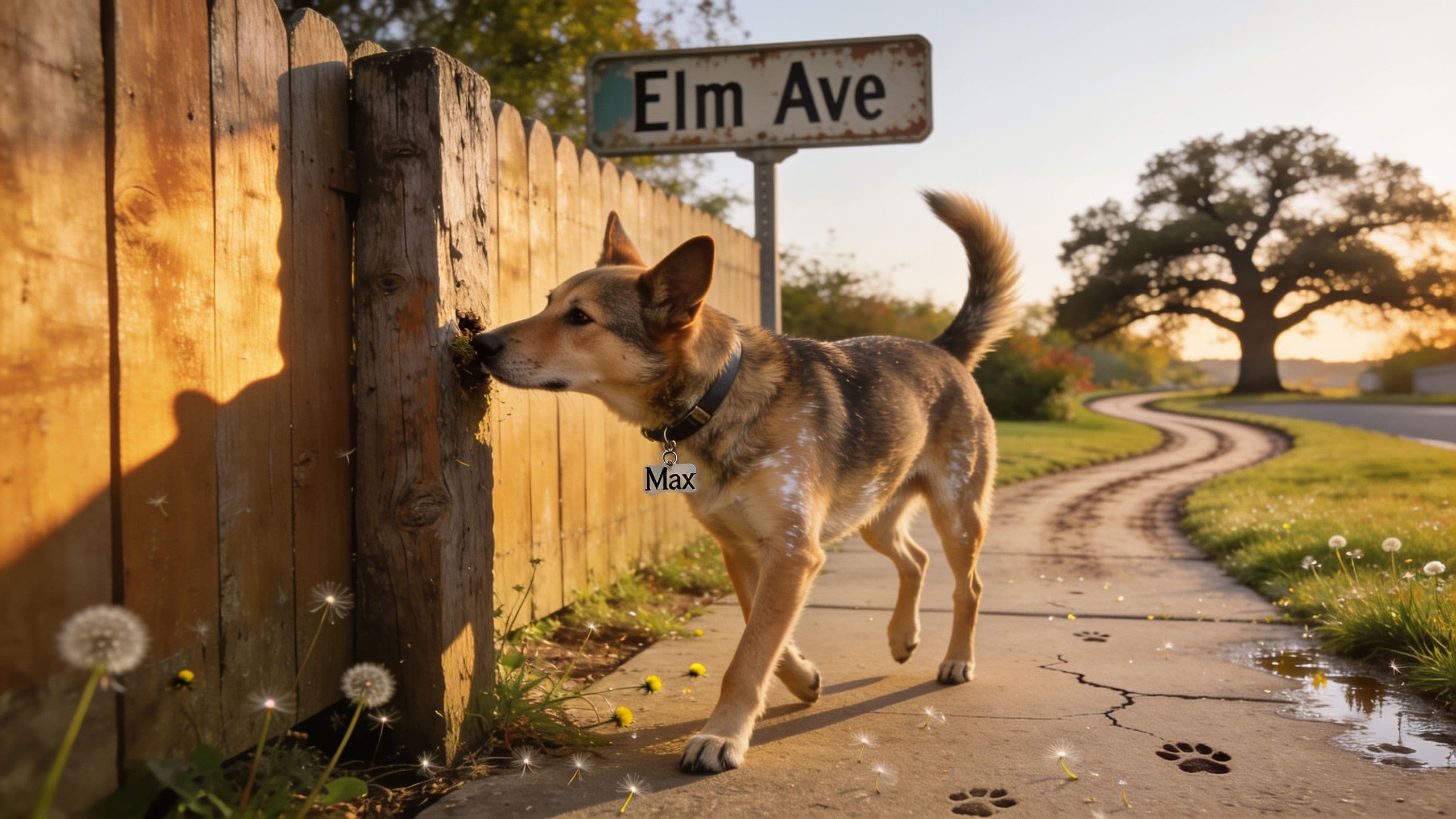
Reunions combine several powerful triggers at once. There is anticipation, release, social attachment, and habit. Dogs are experts at noticing predictive details, so they often begin revving up before you even open the door: footsteps in the hall, the garage sound, a car door, keys, or a familiar routine at a certain time of day.
Then the emotional release hits. After time apart, many dogs have pent-up energy and social excitement with nowhere to put it. If previous reunions involved squealing voices, wrestling, immediate petting, or a dramatic response to jumping, that pattern can become even stronger. In learning terms, the dog is not only excited to see you. The dog is excited about the whole performance that usually follows.
That is why some dogs seem unable to “just calm down” on command. Their arousal is already high before contact begins. If your first response adds more intensity, the dog can stay elevated long after the greeting itself is over.
The best ritual is predictable, brief, and calm
A useful welcome-home ritual does not mean ignoring your dog or acting cold. It means making your arrival easy to read.
For most dogs, a strong routine has three parts:
1. A low-drama entry
Walk in without immediately escalating the moment. Keep your voice even. Move normally. If your dog jumps, spins, or barks, avoid turning that into a game. The goal is not punishment. It is simply refusing to add more fuel.
For some dogs, this may mean pausing for a few seconds after you enter, putting your bag down, and waiting for four paws on the floor before offering attention. For others, it may mean stepping inside, closing the door, and standing still until the first surge passes.
2. A repeatable cue for connection
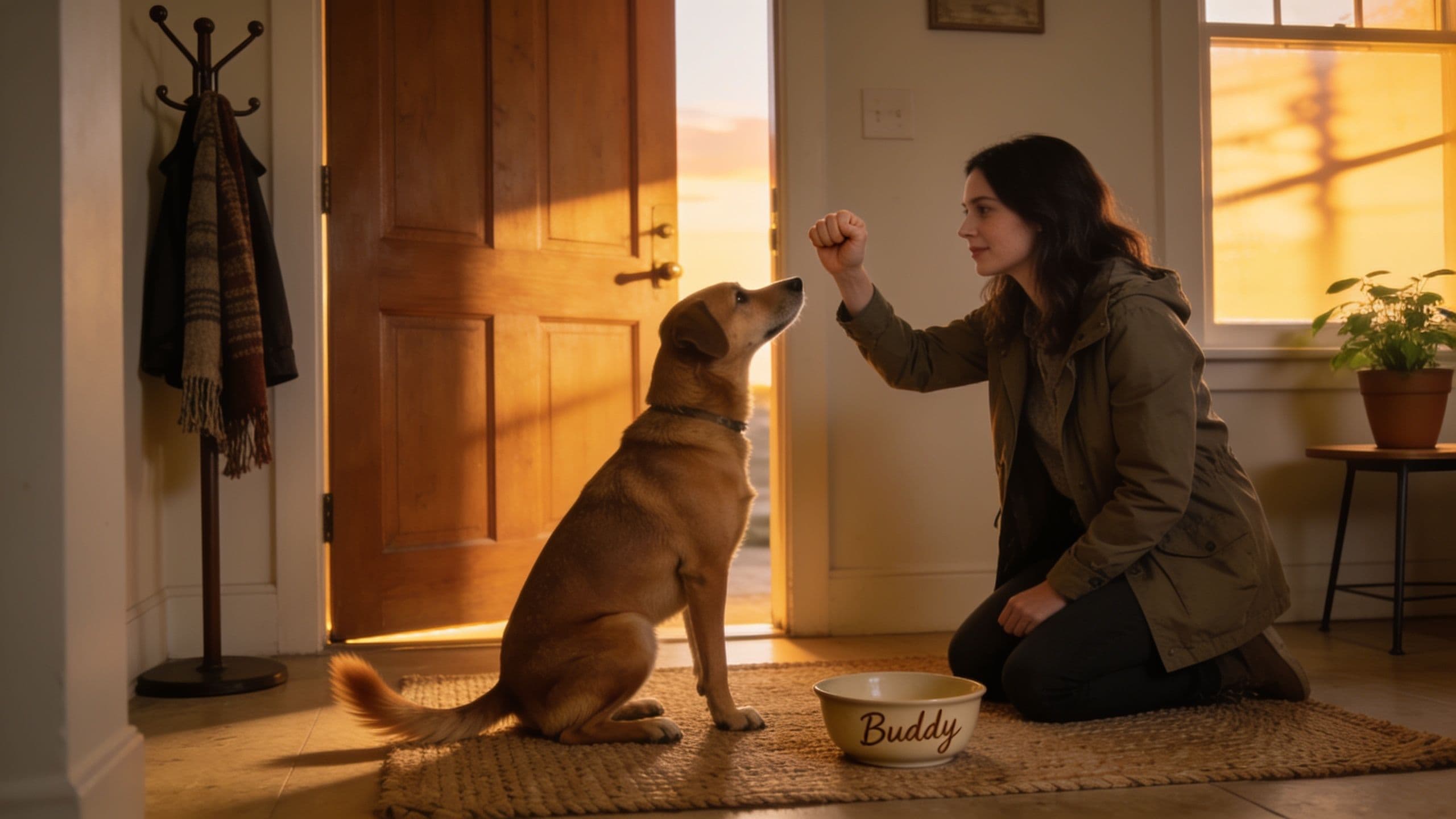
Once your dog is in a more workable state, offer the same cue every day. That could be “sit,” “mat,” “touch,” or a hand target near your leg. The cue matters less than the consistency.
This is the moment your dog learns, “When my person comes home, this is how we reconnect.” A dog that knows exactly what earns attention usually gets to calm faster than a dog left guessing.
3. A calming reward, not an explosion
After the cue, reward with something that fits the evening you want. That may be quiet petting, a few seconds of close contact, access to the couch, a chew, or being released to go outside. If you want a peaceful night, your reward should not feel like the opening scene of a party.
A lot of owners accidentally train the opposite sequence: frantic greeting first, calm later. A ritual flips that. Calm behavior becomes the route to the good stuff.
Matching the ritual to your dog’s reunion style
Not all dogs come home to the same emotional script. The routine works best when it fits the dog in front of you.
The full-body celebrator
This dog launches. Jumping, zooming, vocalizing, and wild wiggling happen all at once. Here, physical management helps. Keep your own movements compact. Ask for a simple behavior the dog already knows. If needed, toss a treat to a mat or bed to create a little distance before greeting more warmly.
These dogs often benefit from a short decompression transition after the reunion, such as sniffing in the yard, a lick mat, or a scatter of kibble on the floor. Sniffing and licking can lower intensity better than excited petting.
The toy greeter
Some dogs grab a ball, rope, or stuffed toy the second you enter. This is often a helpful outlet rather than a problem. If the dog keeps four paws on the floor and can carry the toy calmly, you may be able to build the ritual around it: enter, cue a sit, praise, then accept the toy parade.
The key is deciding whether the toy is organizing excitement or amplifying it. If it leads to shrieking and body slams, shift to a calmer object like a chew or a snuffle mat after the initial greeting.
The velcro follower
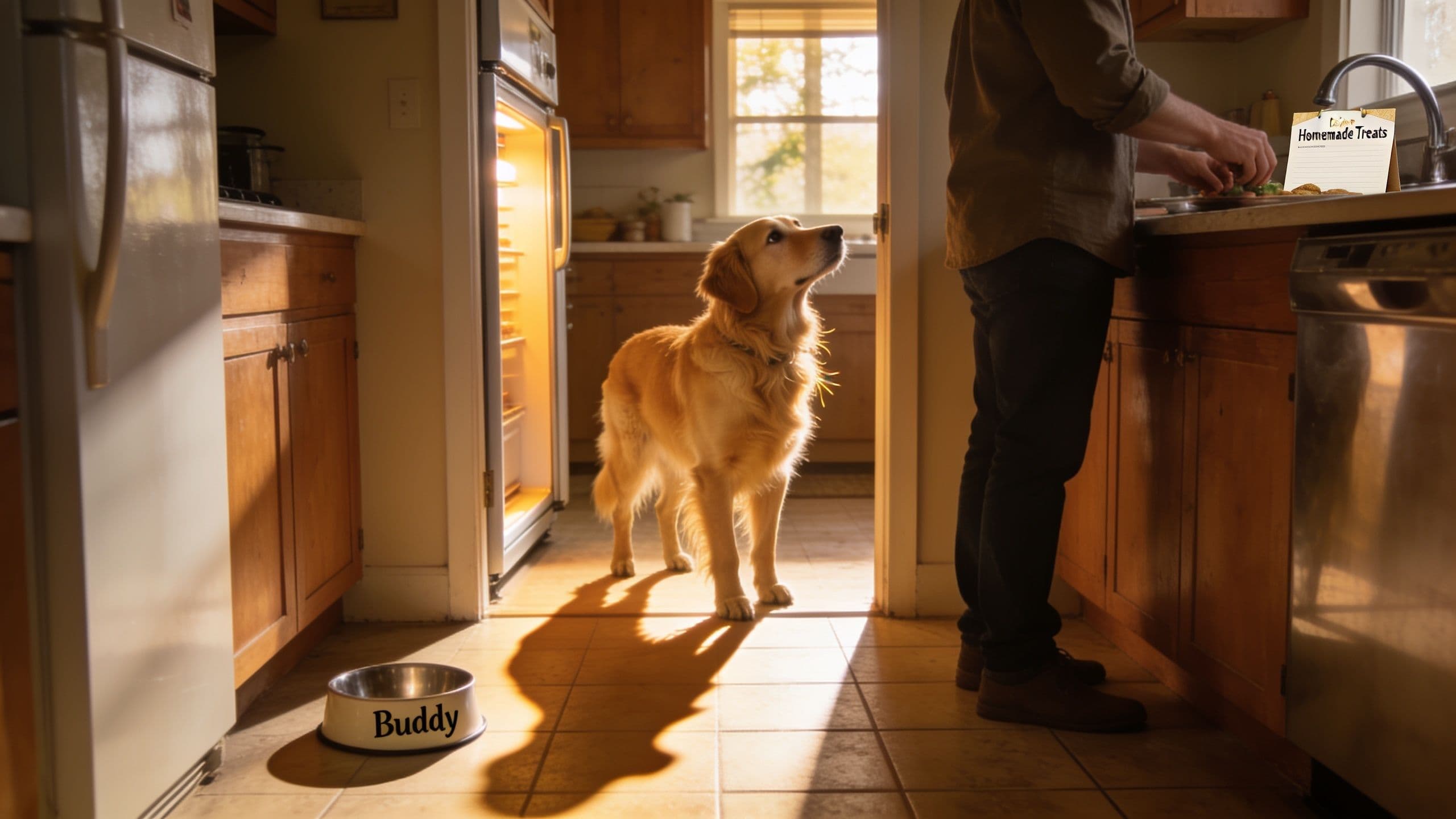
These dogs may not explode at the door, but they shadow you intensely afterward, unable to settle as you move around the house. For them, the ritual should include a clear ending. Greet, connect, then guide them to a predictable next step such as dinner, a mat near the kitchen, or a short walk.
Without that handoff, the reunion can stretch into a low-grade state of neediness all evening.
The sensitive or conflicted dog
Some dogs do not like loud voices, direct looming contact, or immediate touching, even when they are happy you are home. Puppies, recently adopted dogs, and some rescues may do better with a softer arrival: turn slightly sideways, let the dog approach, use a quiet voice, and keep the first contact brief.
A good ritual is not always energetic. Sometimes the most successful greeting is the one that respects the dog’s need for gentleness.
The habits that keep evenings chaotic
When owners say, “My dog loses it every time I get home,” the issue is often inconsistency rather than intensity alone.
One day the dog gets scolded for jumping. The next day the same jumping is rewarded because the owner missed the dog and started hugging back. From the dog’s perspective, the behavior still pays often enough to keep trying.
Another common mistake is making every return feel special. If you greet a weekday arrival like a six-month military reunion, your dog has little reason to develop a lower gear. Warmth matters, but scale matters too.
Timing also trips people up. If you ask for calm after thirty seconds of excited wrestling, you are trying to stop a state you just helped create. It is far easier to prevent over-arousal than to reverse it once it peaks.
And then there is speed. Many owners come home and immediately start moving fast: shoes off, bags down, kitchen lights on, talking, unpacking, feeding, multitasking. To a keyed-up dog, that can feel like the reunion is still happening. A simple ritual slows the transition enough for the dog to read it clearly.
A one-minute routine that works in real life
For many dogs, a practical ritual looks like this:
Enter quietly.
Pause for three to five seconds.
Wait for four paws on the floor.
Ask for one familiar cue, such as sit or mat.
Deliver calm attention or a food reward.
Move into the next predictable activity, such as going outside, dinner, or a chew.
That is not a rigid formula. It is a sequence. The power comes from repeating it until your dog stops treating your arrival like an emotional free-for-all and starts treating it like a known event.
Consistency is what makes the ritual effective. Not perfection. If you have one rough day, nothing is ruined. But if you want calmer evenings, the first minute needs to stop changing based on your mood, your schedule, or how adorable the jumping seems that day.
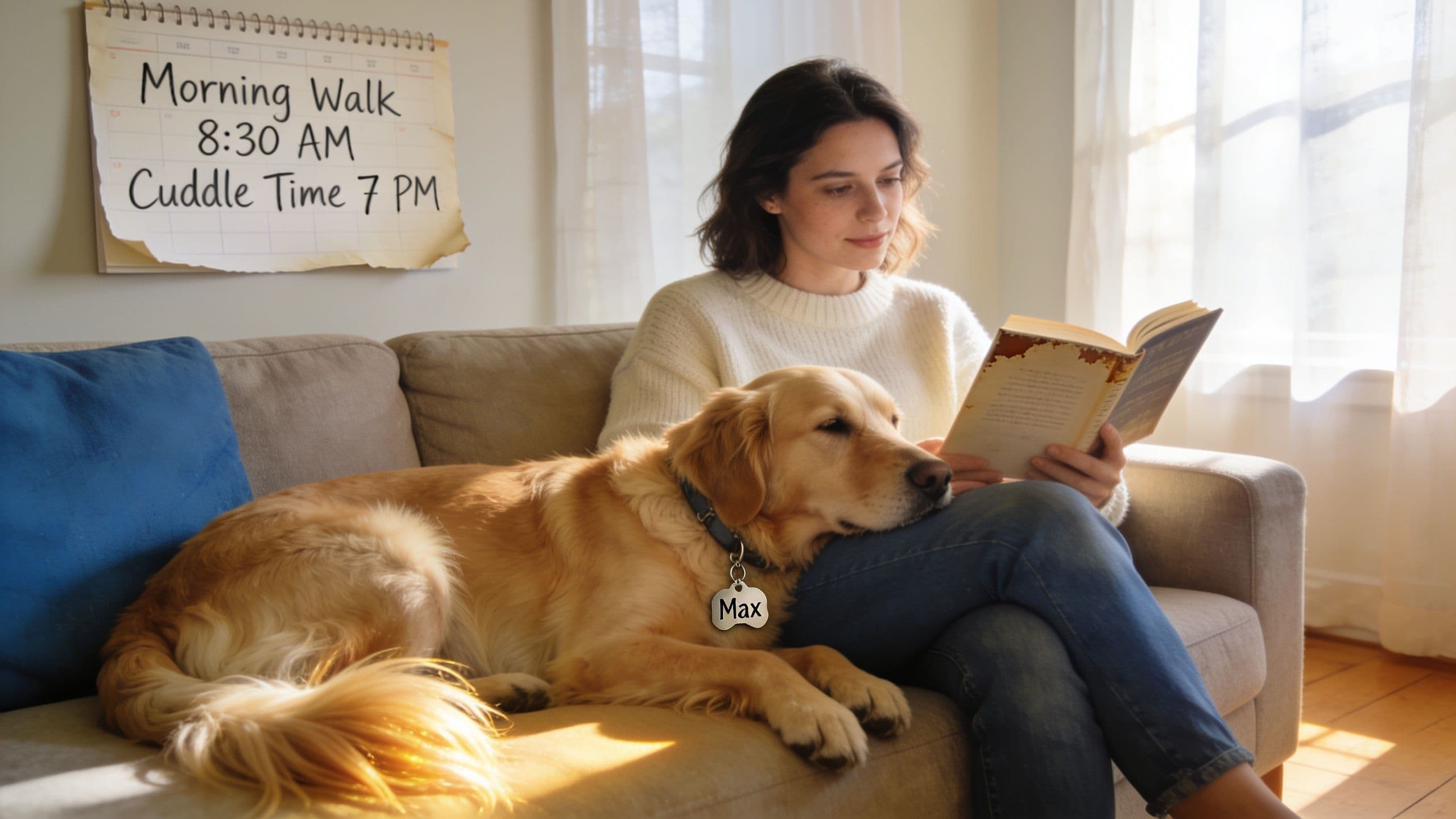
The deeper benefit is not just less chaos at the door. A ritual tells your dog that reunion does not have to mean losing control. It can mean recognition, relief, and connection without the crash that follows. For dogs that struggle with overexcitement, that predictability can be a real kindness.
And for owners, it often changes the emotional tone of the night. You stop starting every evening by reacting. Your dog stops guessing. The house feels easier almost immediately.
Safety & Scope
This article is for general informational purposes and does not replace professional advice for complex repairs or installations.
Frequently Asked Questions
+How should I greet my dog when I get home?
Greet your dog warmly but without adding extra excitement. Enter calmly, wait for a moment of controlled behavior such as four paws on the floor or a sit, then offer attention, praise, or a small reward. The goal is a predictable reunion, not an emotionally intense one.
+Why does my dog get too excited when I return?
Your return combines anticipation, attachment, habit, and built-up energy. Many dogs also learn that barking, jumping, or spinning leads to attention, touch, or play. Over time, the arrival itself becomes a highly charged event.
+Can a routine reduce jumping at the door?
Yes. A consistent greeting routine can reduce jumping by teaching your dog that calm behavior is what earns attention. If you reliably pause, wait for four paws on the floor, and reward a simple cue like sit, many dogs begin offering calmer behavior more quickly.