Living With a Velcro Dog Without Making Separation Harder
A dog that shadows you from room to room can be loving, flattering, and draining at once. The challenge is not to push that dog away, but to build daily habits that make closeness feel secure instead of fragile.
Jordan specializes in turning complex pets & animal lifestyle topics into clear, useful explainers for everyday readers.
A dog that follows you to the bathroom, waits outside every closed door, and pops up the second you stand can seem deeply devoted. It can also quietly turn a normal day into a constant negotiation. The problem is not affection. It is the pattern that forms when a dog starts to believe your movement always means access, interaction, or uncertainty.
Many owners try to fix clinginess by either soaking the dog in more attention or abruptly shutting the dog out. Neither approach usually helps much. What works better is changing the rhythm of daily life so your dog can stay attached to you without feeling responsible for tracking you every minute.
When sweet turns into shadowing
Everyday clinginess often looks ordinary at first: your dog trails you into the kitchen, waits outside the shower, stands up when you stand up, or only settles if you are seated nearby. Some dogs stare, anticipating your next move. Others patrol the hallway if you close a door. A few seem calm until they realize you are heading upstairs without them.
This behavior is not always full-blown separation distress. Often it is a home habit that has become over-rehearsed. Dogs are experts at pattern recognition. If following you usually leads to petting, conversation, snacks, access to the yard, or even just visual confirmation that all is well, then following becomes the default choice.
Certain dogs are more prone to it. Companion breeds such as Cavalier King Charles Spaniels, Maltese, and Havanese are bred to stay close. Herding breeds like Border Collies and Australian Shepherds may monitor movement intensely. Rescue dogs, newly adopted dogs, and dogs after a big routine change may also become hyper-aware of where their person is.
The useful distinction is this: a dog can love being near you without needing to supervise your every step. That gap is where lifestyle changes matter.
The daily habits that accidentally build dependency
Owners rarely create velcro behavior on purpose. More often, normal loving habits accidentally teach a dog that constant proximity pays.
Attention for every check-in
If your dog glances at you and gets a smile, a comment, a touch, or a little conversation every single time, you may be reinforcing monitoring behavior all day long. Dogs do not need a treat for something to be rewarded. Eye contact, speech, and body orientation can be powerful enough.
This does not mean you should ignore your dog coldly. It means not every follow, stare, or nose-bump needs a response.
Movement always predicts engagement
In many homes, a person standing up means something good is about to happen: feeding, leash time, couch time, backyard access, or a chance to tag along. If every transition includes the dog, the dog learns that your movement is important information that must be tracked immediately.
Never practicing being apart while both of you are home
A lot of dogs are rarely left emotionally alone unless the owner leaves the house entirely. They are included in every room, every errand within the home, every quiet moment. Then owners are surprised when the dog struggles with a closed office door or cannot settle if someone takes a shower. Independence is a skill, and like any skill, it improves with low-stakes repetition.
Big reunions and dramatic departures
If leaving a room or coming back always turns into a meaningful event, the contrast can make absence feel more significant. This is especially common when owners feel guilty and compensate with enthusiastic greetings, soothing speeches, or lots of touching right after any brief separation.
Build a house routine that makes alone time boring
The most effective lifestyle shift is simple: teach your dog that not every separation predicts loss, and not every reunion deserves a celebration.
Create places worth choosing
A dog is less likely to glue itself to your legs if there are comfortable alternatives. Set up rest zones in the rooms where life happens, not just in a remote corner. A supportive bed near the kitchen, a mat by the office, or a crate with the door open in the living room can all work.
Make those spots attractive in practical ways:
Soft bedding with good traction
A chew, lick mat, or stuffed food toy at calm times
Distance from foot traffic and loud appliances
A consistent cue such as "bed" or "settle"
The point is not exile. The point is giving the dog a viable option besides following you heel-to-toe.
Practice short, dull separations
Start with movements that are too minor to trigger concern. Stand up, walk to the counter, return, and sit down. Step into the hallway for three seconds and come back without fanfare. Close the bathroom door briefly, reopen it, and move on.
Keep these repetitions boring. No apology when you leave. No party when you return. If your dog remains settled, that is the win.
For many dogs, success comes faster when owners stop making every absence emotionally loaded. The dog does not need to feel abandoned for 20 minutes to learn independence. Five seconds of calm can be meaningful if repeated enough times.
Reward the behavior you actually want
It is easy to notice the dog who follows. It takes more intention to notice the dog who stays put.
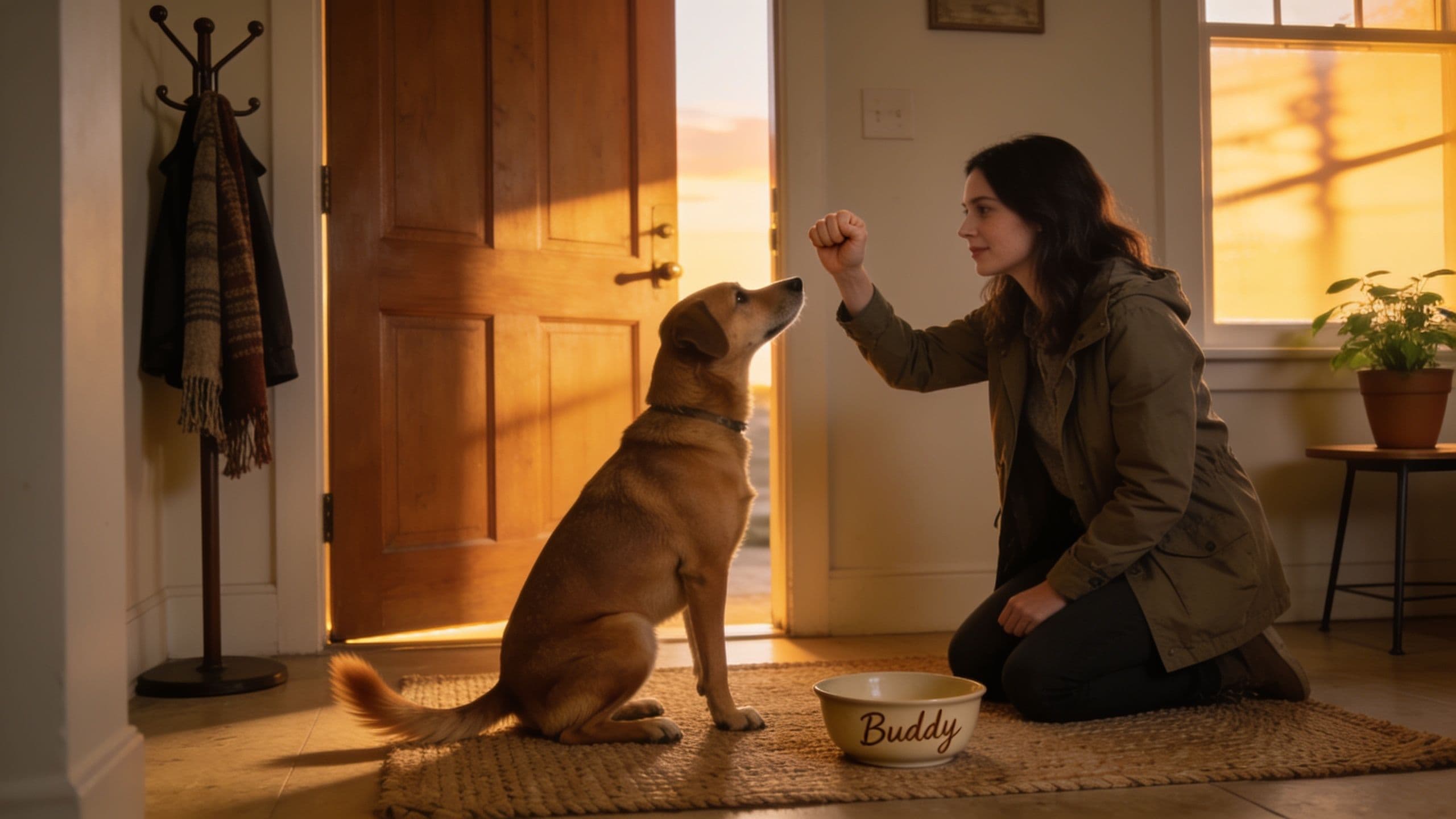
If your dog lies on a bed while you move around, quietly reinforce that choice. Drop a treat between the paws. Offer a calm stroke if touch helps your dog settle. Return with a chew before the dog decides to get up and trail behind you.
Timing matters. Reward the pause, the exhale, the decision not to shadow.
Reduce commentary and constant check-ins
Some clingy dogs live in an environment of nonstop social feedback: their name repeated all day, frequent eye contact, spontaneous cuddles whenever they appear. Affection is not the problem. Predictability is the fix.
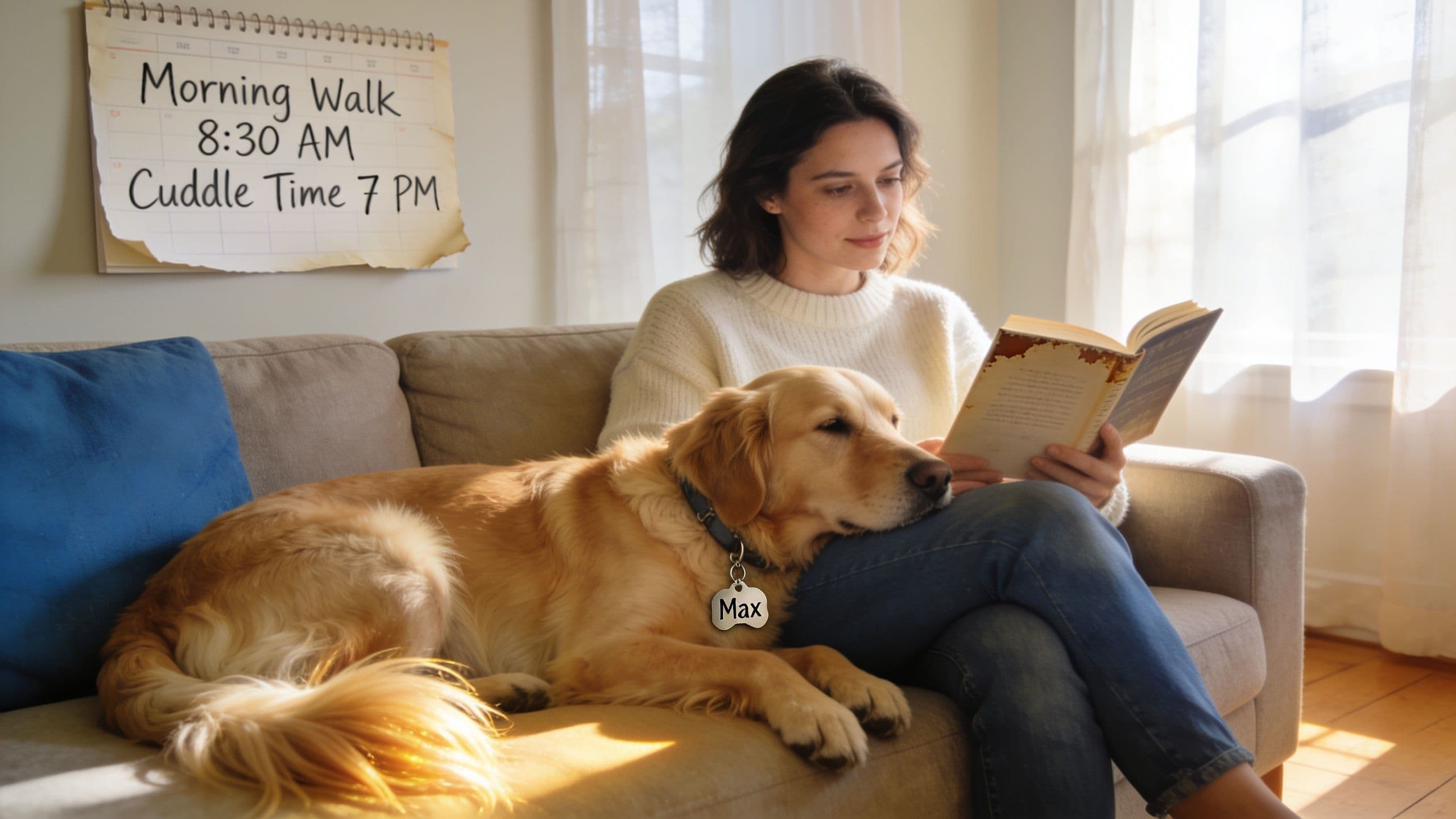
Try shifting affection toward clearer windows such as morning cuddles, after-work play, or an evening grooming ritual. Outside those moments, let your dog exist near you without turning every glance into an interaction.
Closeness works better when it is predictable
People often worry that encouraging independence will cool the bond. In practice, many dogs become easier to live with when they know connection is reliable and does not depend on tracking you obsessively.
Predictable rituals help. A sniffy morning walk, a midday training session, or a nightly couch hangout tells the dog that attention is coming. That can lower the urgency to seek it every minute.
Independent enrichment also matters. Food puzzles from brands like Kong, West Paw, and Nina Ottosson can give a dog something to do that does not involve watching you. For scent-driven dogs, scatter feeding or simple nose-work games can be especially useful because they shift the dog from social monitoring to independent problem-solving.
Reunions deserve special handling too. When you come back into the room, be warm but measured. If your dog rushes over, greet briefly and move on. That tone helps prevent your arrivals from becoming the emotional high point the dog spends the whole day awaiting.
What progress usually looks like
Improvement often appears in small signs before big ones. Your dog may still follow you sometimes, but not every time. The dog may watch you leave the room without standing up. You may be able to close a door for a minute without hallway pacing. These are meaningful gains.
It is also normal for the pattern to vary by context. A dog may relax during evening routines but struggle more in the morning, or remain calm with one household member and shadow another. That does not mean the plan is failing. It means the dog is responding to specific associations.
If the behavior escalates into panic, frantic scratching, destructive behavior, vocalizing, drooling, or inability to eat when left, that moves beyond ordinary clinginess and may call for a more structured behavior plan. Separation-related problems exist on a spectrum, and home habits are only one piece of it. The American Kennel Club and ASPCA both distinguish everyday attachment from more serious distress patterns.
For the typical velcro dog, though, the goal is not emotional distance. It is resilience. You want a dog who can adore you, seek you out, and enjoy being close without feeling compelled to monitor your every move. That kind of confidence is not built through less love. It is built through steadier, less frantic forms of it.
Safety & Scope
This article is for general informational purposes and does not replace professional advice for complex repairs or installations.
Frequently Asked Questions
+Why does my dog follow me to every room?
Many dogs follow their owners because proximity has become rewarding and predictable. Your movement may signal attention, food, outdoor access, or reassurance, so the dog learns that tracking you is worthwhile. Breed tendencies, routine changes, and a strong social bond can all contribute.
+Can too much attention make clingy behavior worse?
Yes, it can if every check-in gets a response. Constant eye contact, touching, talking, or including the dog in every small household movement can teach the dog that staying close always pays off. The solution is not withholding affection entirely, but making attention more predictable and rewarding calm independence too.
+How do I teach my dog to relax when I move around the house?
Create comfortable rest spots, practice very short low-key separations, and reward your dog for staying settled while you move. Keep departures and returns boring, and notice the moments when your dog chooses not to follow. Repetition at an easy level usually works better than testing the dog with long absences too soon.