The Kitchen Shadow: Why Dogs Trail Their Owners at Home
When a dog appears in every doorway seconds after you do, it usually is not a mystery or a problem. At home, many dogs become expert trackers of routine, movement, and reward, especially around kitchens, hallways, and the people they trust most.
Avery writes about trends, platforms, and strategic shifts in pets & animal lifestyle, with attention to what matters in practice.
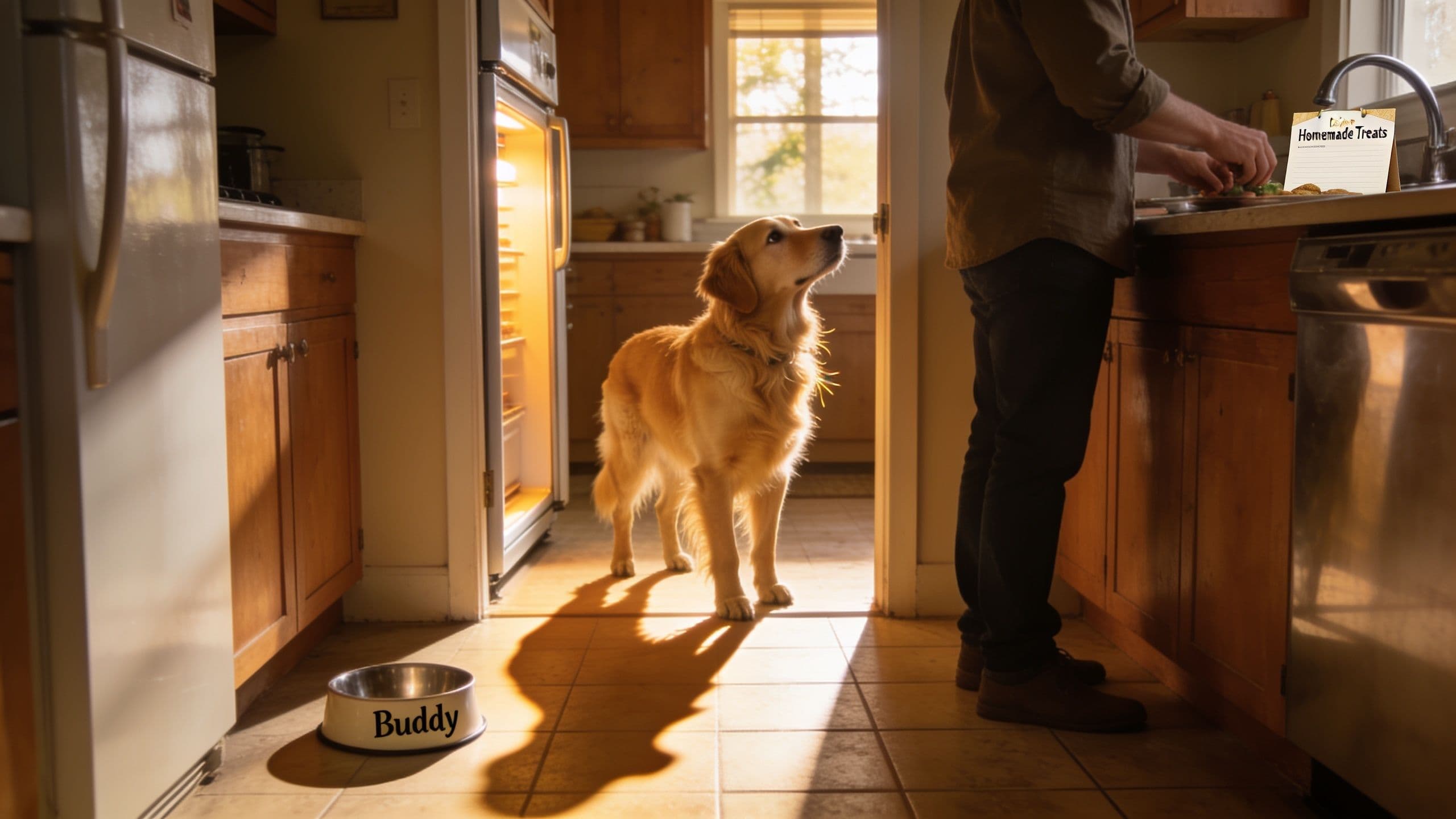
Your dog may look clingy when they follow you from the couch to the sink to the laundry room, but most of the time they are doing something far more ordinary: reading the household. Dogs are exceptional observers of patterns, and home life is full of signals that matter to them. A hand reaches for keys. A chair scrapes back. Someone stands up near dinnertime. The hallway light clicks on. To a dog, those tiny moments often predict food, access, attention, or a chance to go outside.
That is why the classic “shadow dog” often shows up most reliably in the kitchen, in doorways, and whenever one particular person gets moving. The behavior can be deeply social, mildly opportunistic, and completely normal all at once.
Dogs Follow Movement Because Movement Means Something
A dog lying across the room can look half asleep, then appear at your heel the instant you stand. That speed is not magic. It is pattern recognition.
In most homes, human movement is the start of something important. Walking toward the kitchen may mean meals, scraps, ice cubes, or the sound of a treat drawer opening. Heading toward the back door may mean a potty break or a walk. Moving from desk to sofa may mean petting time. Even a trip to another room can be rewarding if it often ends with the dog being invited along.
Dogs learn these links quickly because they live in routines. Many owners do too, often without realizing how consistent they are. If breakfast happens after the coffee machine starts, if the leash comes out after you put on shoes, or if the dog gets affection whenever they trot after you, the dog begins to track every step that comes before the payoff.
This is one reason following behavior can feel stronger at certain times of day. A dog may ignore you during a random afternoon errand to the closet but become your escort at 6 p.m. sharp. From the dog’s perspective, one movement predicts nothing and the other predicts dinner.
Why the Kitchen Becomes the Center of the Story
If there is one room that creates “shadow” behavior faster than any other, it is the kitchen. It combines scent, routine, and reward in a way few parts of the home can match.
Food smells linger there, even when no food is being prepared. Cabinets and refrigerators are opened there. Water bowls may be nearby. Family members pause there, talk there, and often hand things down there, whether intentionally or not. A dog does not need to be fed scraps for the kitchen to become a high-value zone. The room itself is full of clues that good things happen.
Hallways matter for a different reason: they are information channels. A dog parked in a hallway can monitor traffic to several rooms at once. If your pet likes to keep tabs on you, that central position makes sense. It is less about guarding and more about staying connected to the flow of the home.
Owners sometimes mistake this behavior for stubborn underfoot hovering when it is really anticipation. The dog is not thinking abstractly about “following.” The dog is thinking, in effect, *something may happen next, and I would like to be where it happens*.
Why Some Dogs Follow One Person More Than Everyone Else
A common question in multi-person households is why the dog tails one specific person while ignoring others. Usually the answer is simple: that person predicts the most relevant outcomes.
Maybe they do the feeding. Maybe they handle walks. Maybe they work from home, so they generate more small interactions throughout the day. Maybe they are calmer and easier for the dog to read. Dogs often form especially strong follow-patterns around the person whose behavior is most consistent and rewarding.
Attachment plays a role, but it does not have to be dramatic. Many dogs simply prefer proximity to the person they trust most or understand best. That preference can be reinforced by dozens of tiny moments: a glance, a pat, a spoken response, an opened door, a game, a meal.
Breed tendencies can shape the pattern too. Companion breeds often enjoy close proximity as part of their social style. Herding and working breeds may be especially attentive to movement and location. Retrievers and food-motivated dogs may become expert kitchen assistants for obvious reasons. Personality matters just as much as breed, though. One dog follows for social closeness, another for snacks, and a third because joining in is their default mode.
Normal Household Shadowing Versus a Dog Simply Staying Connected
Following by itself is not a reliable sign of a problem. Plenty of relaxed, well-adjusted dogs choose to be near their people most of the day.
Signs that the behavior is likely ordinary include:
The dog can settle once you stop moving
They follow loosely rather than frantically
They are happy to nap nearby instead of demanding interaction
They can stay behind occasionally without becoming distressed
Their interest rises around predictable events like meals, walks, or bedtime
In other words, many “shadow dogs” are not anxious. They are social, observant, and efficient. They know where the action is.
What often makes the behavior feel bigger than it is is the physical layout of a home. Small kitchens, narrow hallways, and frequent back-and-forth movement make normal companionship feel like constant surveillance. A large dog in a compact galley kitchen can seem dramatically attached when they are simply trying to remain in range of possibility.
The Habits People Accidentally Teach
Owners often strengthen underfoot behavior without meaning to. Dogs are very good at detecting what works, and attention itself can be a reward.
If every follow earns conversation, eye contact, petting, or a laugh, the dog learns that shadowing pays. The same happens if the dog receives treats, dropped ingredients, or access to outdoor time immediately after arriving in the kitchen. Even gently nudging the dog aside can become part of the game if it reliably produces interaction.
Timing matters here. If a dog plants themselves in front of the stove and is then given a chew to move away, the dog may learn that crowding the cooking area is what makes the chew appear. That does not mean rewards are a bad idea. It means placement and sequence matter.
A better pattern is to reward the alternative you want before the dog gets underfoot. Ask for a bed or mat settle while you begin cooking, then reinforce the dog for staying there. Over time, the dog learns that the action zone is not the only place where good things happen.
Gentle Ways to Build More Space Without Making It a Big Issue
For dogs who are friendly followers but inconvenient kitchen companions, small management changes usually work better than trying to stop the behavior outright.
Give the dog a job that competes with hovering
A mat, bed, or rug placed just outside the kitchen can become a designated hangout spot. Reward the dog for choosing it during routine moments, not only when they are already in your path. The goal is to make settling nearby as rewarding as shadowing closely.
Make daily rhythms easier to predict
Dogs often follow more intensely when they are trying to gather information. Predictable mealtimes, walks, and short attention breaks can reduce that constant monitoring. If the day makes sense, the dog has less need to track every movement for clues.
Notice your own reinforcement patterns
If you do not want a dog glued to your calves while you cook, avoid making that position the most interesting place in the room. Reward calm waiting at a slight distance. Deliver treats or chews to the dog’s station, not to the floor beside you.
Use barriers when safety matters
Some kitchens are simply too tight for a dog to navigate safely. A baby gate, exercise pen, or closed doorway is a practical solution, especially during busy cooking sessions. Management is not failure; sometimes it is the cleanest answer.
The useful mindset is not “how do I make my dog stop caring where I am?” It is “how do I make a nearby, safer option equally worthwhile?”
Your Dog Is Probably Reading the House Better Than You Realize
The everyday shadow dog is usually not solving a mystery. They are following the strongest signals in their environment: your motion, your habits, and the rooms where outcomes tend to happen. The kitchen becomes a magnet because it concentrates reward. One person becomes the chosen target because they are the most meaningful predictor of what comes next.
That is why the behavior can feel so personal while still being very practical from the dog’s point of view. Following is often part affection, part anticipation, and part simple experience. They have learned the map of your home and the pattern of your day, and they know that staying close gives them the best chance of being included.
If the result is a dog quietly padding after you from room to room, that is often just companionship with excellent timing.
Safety & Scope
This article is for general informational purposes and does not replace professional advice for complex repairs or installations.
Frequently Asked Questions
+Why does my dog follow me but not other people in the house?
Dogs usually follow the person who most consistently predicts valuable things like meals, walks, play, access outdoors, or calm attention. They may also prefer the person whose routine is easiest to read or whose presence feels most reassuring. It often reflects learned patterns and social preference more than anything mysterious.
+Is it normal for a dog to follow its owner everywhere?
Yes, in many homes it is normal. Dogs are social animals and strong observers of routine, so following can be a relaxed way of staying connected and keeping track of what might happen next. It is especially common around mealtimes, walks, and in rooms associated with rewards, such as the kitchen.
+How can I stop my dog getting under my feet in the kitchen?
Give the dog a specific nearby place to settle, such as a mat or bed just outside the kitchen, and reward that location regularly. Avoid unintentionally reinforcing underfoot behavior with attention or food near your legs. If the space is tight or cooking is busy, use a gate or barrier so the dog can stay safe while still feeling included.