The One-Basket Rule for Pet Gear That Actually Gets Used
Pet supplies only help when they are easy to grab, easy to return, and stored where real routines happen. The one-basket rule creates a single home for daily pet gear so walks, cleanup, play, and quick exits stop feeling scattered.
Maya covers pets & animal lifestyle with an emphasis on practical analysis, products, and real-world impact.
Pet gear becomes clutter surprisingly fast because the items are small, mobile, and tied to moments when nobody wants to hunt for them. A leash ends up on a chair, wipes migrate to the bathroom, towels land in the laundry room, and toys spread into every corner. The result is not just visual mess. It is friction: delayed walks, missed cleanup, duplicate purchases, and daily routines that feel more complicated than they should.
The one-basket rule fixes that by giving everyday pet essentials a single, visible home. Not a full storage system. Not a custom built-in. Just one container for the items you reach for constantly, placed exactly where those habits happen.
Why pet gear gets messy even in organized homes
Pet supplies do not behave like pantry goods or office tools. They move with the pet and with the owner. A dog leash travels to the door, the car, the park, and back. A cat wand toy starts in the living room and disappears under a sofa. Grooming wipes get borrowed for muddy paws, then left near the sink.
Three things usually create the mess:
No landing zone after use. Gear comes home but has nowhere obvious to return.
Too many storage spots. When towels are in one closet, treats in a cabinet, and waste bags in a drawer, the system looks tidy but works poorly.
Backup stock mixed with daily gear. Refill packs, unopened food toppers, flea combs, travel carriers, and old harnesses crowd the items you actually use every day.
This is why many pet owners feel as if they are always buying another roll of bags or another small bottle of wipes. The supplies exist. They are just scattered.
The one-basket rule, stripped to what matters
The rule is simple: everyday pet items live together in one portable basket or bin, and only daily-use items earn a spot there.
That basket should sit at the point of use, not where there happens to be empty space. For many dog households, that means near the door used for walks. For cat homes, it may be near the area where play and grooming usually happen. For apartment dwellers, it may be a bench cubby, a shelf by the entry, or a narrow basket under a console.
The strength of this rule is not the basket itself. It is the limit. One container forces editing. If an item is important enough to support a real routine, it stays. If not, it moves to backup storage somewhere else.
A useful basket does three jobs at once:
1. It reduces search time. You know where the essentials are. 2. It improves reset time. After a walk or play session, everything goes back to one place. 3. It exposes what you actually use. That makes it easier to stop overbuying gadgets that never become habits.
The basket can be woven, plastic, canvas, wire, or a handled caddy. Style matters less than access. Open-top containers usually work better than lidded boxes because friction kills follow-through. If you have to snap open a lid every time, items will start living on surfaces again.
What deserves space in the basket
Think in terms of routines, not categories. The right basket supports the moments that happen repeatedly each week.
For walk and door routines
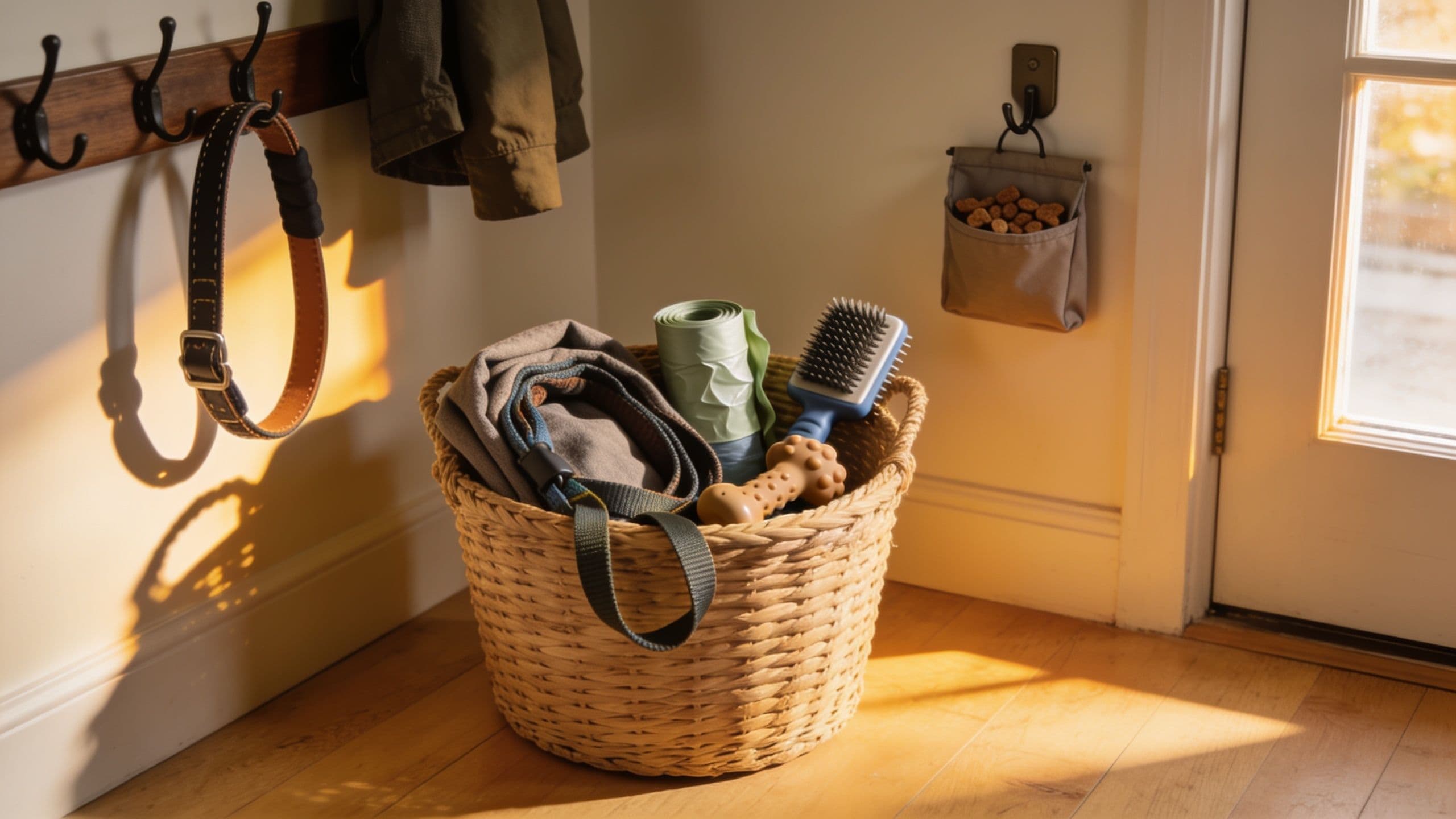
These are the most common daily-use items for dog owners:
Leash
Harness or collar currently in use
Waste bag rolls
Paw wipes or a small towel
Treat pouch or a small jar of treats
Portable water bowl if you use it often
House keys clip, if you always pair it with walks
This setup turns the basket into a true launch point. You are not collecting gear from three rooms before going outside.
For cleanup and quick care
Most homes benefit from keeping a few practical basics in easy reach:
Pet-safe wipes
Small grooming brush used several times a week
Lint roller
Stain-removal cloth or cleanup rag
Medication organizer only if it is part of a daily routine and safe to store there
The key is restraint. Nail clippers used once a month, backup shampoo, and spare flea treatment usually do not belong in the basket.
For enrichment that actually happens
Toys are often where systems fall apart. A giant toy bin becomes a dumping ground, but zero toy storage means every room becomes storage.
A better approach is to keep two or three high-rotation toys in or beside the basket if they support daily engagement. For a dog, that might be a tug toy and a ball. For a cat, a wand toy and one small solo toy. The rest can live in a separate toy rotation box elsewhere.
This matters because pets often respond better to fewer visible options. Rotating toys also helps old favorites feel new again, without buying more.
For fast exits and short trips
If you regularly leave the house with your pet, the basket can hold a light travel layer:
Foldable bowl
Car restraint clip or small seatbelt attachment
A copy of an ID tag contact card
One small pack of emergency cleanup bags
Only include what you use enough to justify the space. The basket should feel efficient, not like a mobile pet closet.
How to make it work in dogs, cats, and small-space homes
The one-basket rule is flexible because the routine changes by household.
Dog households
Dogs create the clearest case for entry-based storage. Mud, walks, waste bags, and towels all point toward the door. If you have multiple dogs, resist the urge to create one basket per pet unless their gear is truly different. A single household basket usually works better, with one hook or divider for each dog’s leash.
A second zone can make sense only if you have a strong grooming routine elsewhere, such as a mudroom utility sink or garage wash station.
Cat homes
Cats do not require the same grab-and-go entry setup, so the basket should support interaction rather than exits. Good candidates include grooming wipes, a brush, nail caps if used, a wand toy, treats for training, and a lint roller for furniture.
Do not force litter supplies into this basket unless it lives right by the litter zone and those items are part of a daily reset. Scoopers, litter liners, and refill bags often work better in a separate, dedicated container near the box.
Small apartments
In smaller homes, the best storage often hides in plain sight: under an entry bench, inside a console shelf, beside a shoe rack, or on the bottom level of a rolling cart. The basket should still be open and reachable. If it is buried in a closet behind coats, it will not support everyday habits.
For tiny spaces, editing matters even more. One current leash, one towel, one wipe pack, one treat container, and one or two toys may be enough. Backup stock can live high on a shelf or under a bed in a labeled bin.
The mistakes that turn a good idea into another clutter pile
The one-basket rule works because it creates a boundary. Most failures happen when that boundary disappears.
Overstuffing the basket is the biggest one. If the container is crammed, people stop putting things back. Choose a basket that fits your routine, then stop when it is full.
Storing it too far from the action is another common mistake. A beautiful basket in the laundry room is useless if the muddy dog enters through the side door.
Mixing daily gear with seasonal items also causes drag. Winter coats, booties, cooling vests, holiday bandanas, and backup harnesses should live elsewhere until needed.
Using the basket as a guilt zone is less obvious but common. If you keep puzzle toys, training tools, or grooming items you never touch, the basket becomes a reminder of routines you do not actually have. Build it around real behavior, not ideal behavior.
A good test is this: if you emptied the basket onto the floor, would you put nearly every item back within a week? If not, edit harder.
A smaller system that solves a bigger problem
Many home organization ideas fail because they demand too much maintenance. The one-basket rule works because it removes decisions at the exact moments people are busiest: before work, after walks, during spills, or when a pet suddenly needs attention.
That is why such a small change can improve an entire week. You stop asking where the wipes went, whether there are any waste bags left, or which room the brush ended up in. The routines become smoother because the tools are already where they belong.
For pet owners, that is the real standard of organization. Not whether the setup looks impressive, but whether it gets used every day.
Safety & Scope
This article is for general informational purposes and does not replace professional advice for complex repairs or installations.
Frequently Asked Questions
+What pet items should stay near the door?
For most dog households, keep the items tied to leaving and returning home near the door: a leash, harness, waste bags, paw wipes, a small towel, and treats if you use them on walks. Add a portable water bowl only if it is part of your normal routine. Store backup supplies somewhere else so the door area stays easy to use.
+How do I organize pet supplies in a small apartment?
Use one open basket or bin in the spot where your main pet routine happens, such as by the entry or under a bench. Keep only daily-use items there and move extra stock, seasonal gear, and rarely used tools to a separate labeled bin on a high shelf or under the bed. In small spaces, fewer items in reach usually works better than trying to store everything together.
+Should toys be stored separately from care items?
Usually, yes. Keep only one to three frequently used toys in or near the everyday basket if they support daily play. Store the rest in a separate toy bin for rotation. That keeps the main basket focused on routines like walks, cleanup, and quick care while preventing toy overflow from taking over the system.