The Everyday Training Cues Owners Use Without Realizing It
Pets often learn the routines, movements, and repeated phrases around them faster than owners realize. Better behavior at home often starts by noticing the signals you are already giving every day.
Avery writes about trends, platforms, and strategic shifts in pets & animal lifestyle, with attention to what matters in practice.
Most owners think training happens during the obvious moments: a sit before dinner, a recall in the yard, a treat after a good choice. But many of the strongest cues in a pet’s life are not planned at all. They are the small, repeated signals built into ordinary household routines.
A hand moving toward the leash can mean a walk before a word is spoken. A shift in posture on the couch can predict playtime. A repeated “no, no, no” can become background noise while a single step toward the kitchen becomes the real command. Pets are excellent pattern readers, and they do not care whether a signal was meant to be part of training. If it happens often enough, and if it reliably predicts something important, they learn it.
That is why owners sometimes feel as if a dog is ignoring commands while somehow reacting perfectly to everything else. In many homes, the accidental cue is clearer than the intentional one.
The signals your pet notices before you do
Animals living closely with people become experts in tiny details. Dogs, in particular, are good at tracking body orientation, movement, routine, and timing. Cats do it too, especially around feeding, play, and access to favored spaces. What looks insignificant to a person can be highly meaningful to a pet.
Common accidental cues include:
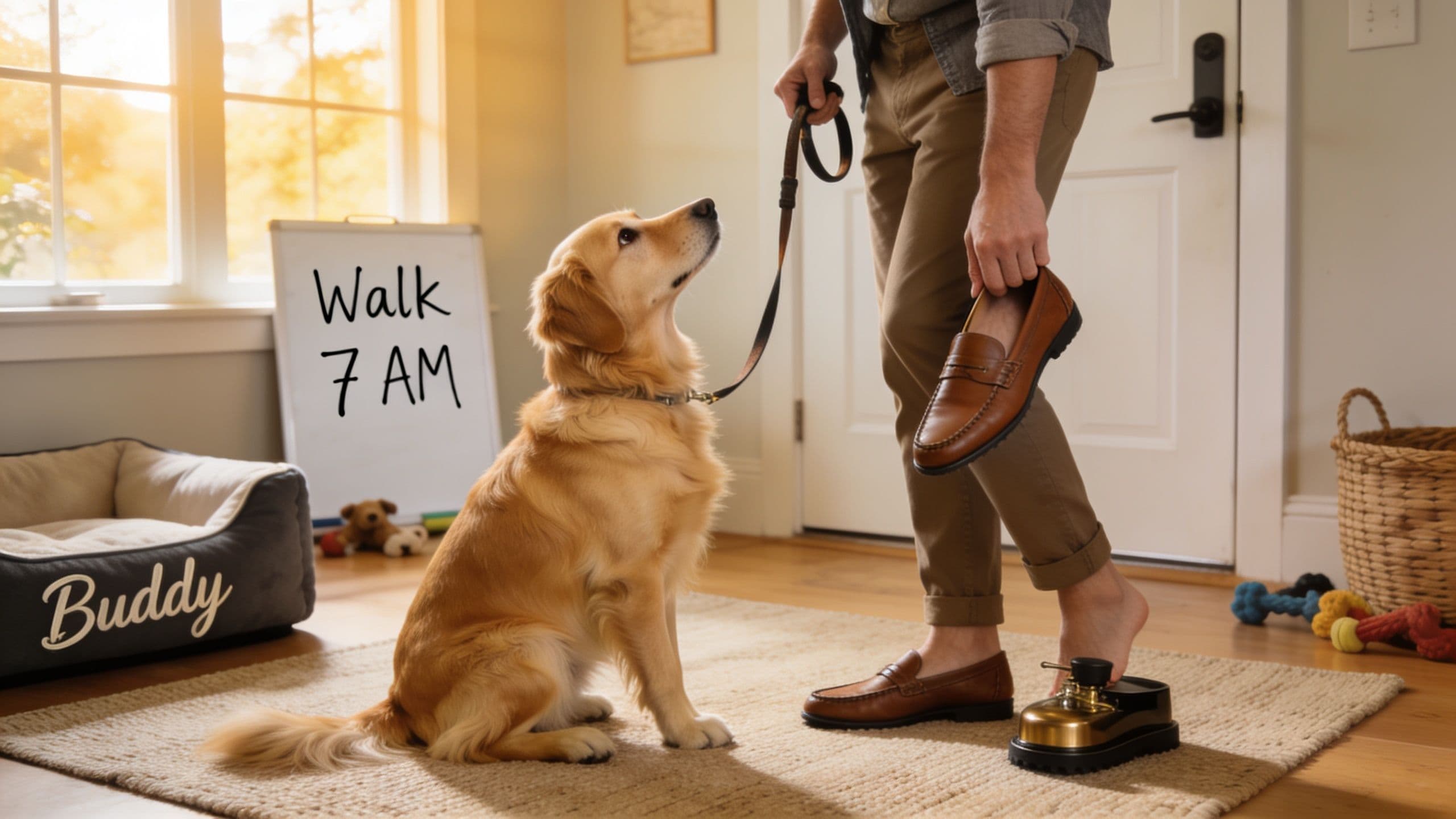
Reaching for shoes, keys, or a jacket, which predicts going outside
Standing up from a desk chair, which signals a break in the workday
Walking toward the treat cabinet, which matters more than the word “treat”
Patting the couch or shifting a blanket, which becomes an invitation to jump up
Repeating a pet’s name in a certain tone, which starts to mean urgency or excitement
Slowing near the front door, which cues barking, spinning, or rushing ahead
The important point is not that pets are being stubborn or manipulative. They are responding logically to the clearest pattern available. If “sit” is said five different ways but opening a drawer always leads to food, the drawer is the more reliable cue.
Why unintentional cues become stronger than commands
Consistency beats intention almost every time. A cue does not need to be carefully designed to work. It only needs to show up regularly before an outcome that matters.
That is the basic reason pets learn household signals so quickly. The chain is simple: a pattern appears, a consequence follows, and the brain keeps the association. If the same sequence happens every day, the lesson sticks.
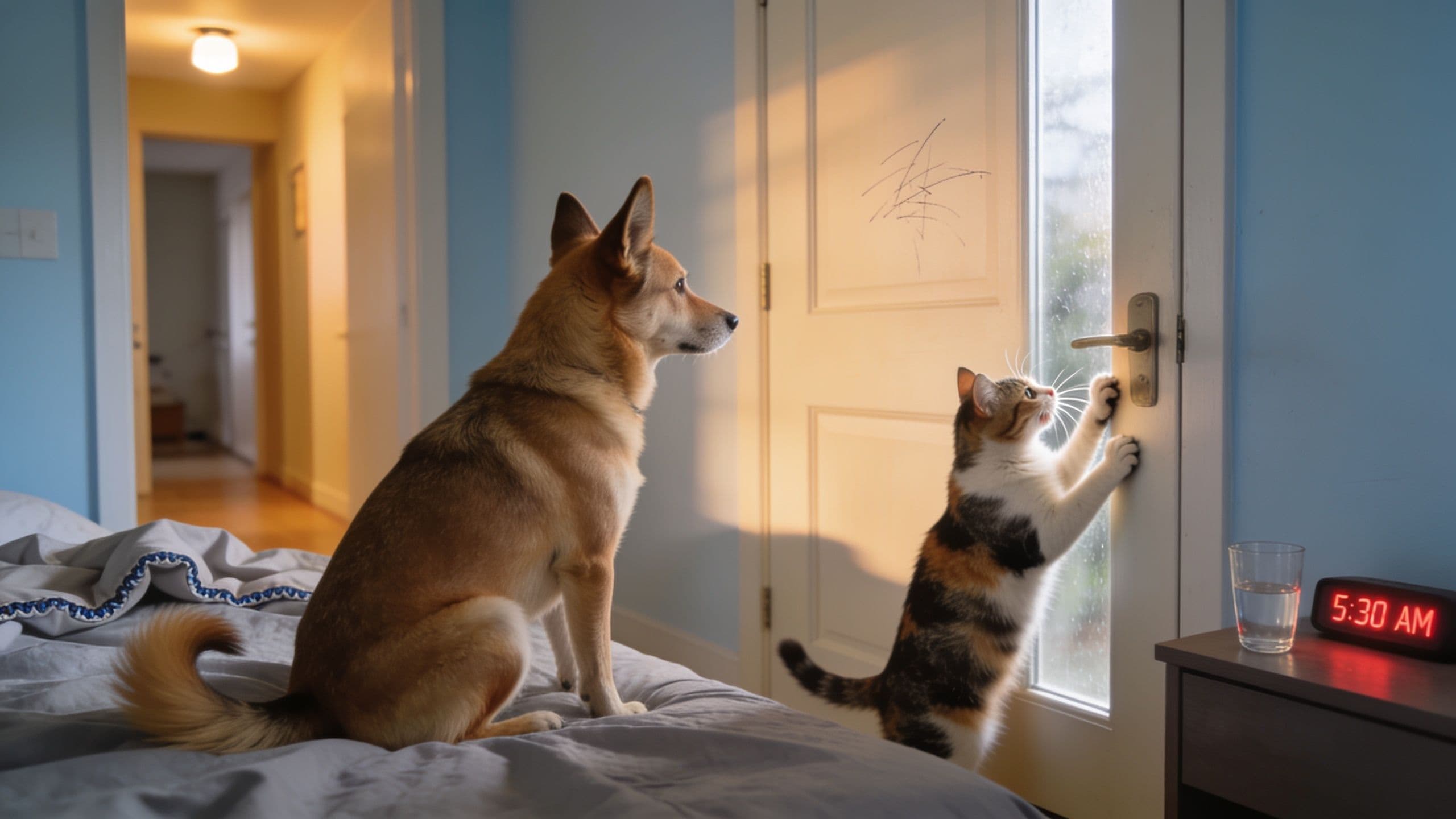
This is also why owners accidentally reinforce behaviors they dislike. If a dog jumps when someone puts on walking shoes, and the walk still happens, the jumping is now part of the routine surrounding the reward. If a cat meows loudly at 6 a.m. and breakfast follows, the meowing has worked. The pet does not divide life into “formal training” and “regular life.” It is all one learning environment.
Timing matters just as much as repetition. If praise or access comes a second too late, the pet may connect it to the wrong behavior. Owners often think they rewarded calm, when in fact they rewarded barking, crowding, pawing, or darting through a doorway. Over time, those tiny timing errors can create habits that seem mysterious but are actually well-practiced.
Four routines that quietly teach the wrong lesson
Mealtime preparation
Food routines are full of accidental cues because they are repetitive and emotionally charged. A pet may start reacting to the sound of a cabinet, the lift of a scoop, or the owner walking toward a bowl location. That part is harmless until excitement escalates into pestering, jumping, circling, or vocalizing that still ends with food arriving.
The pet’s takeaway is not just “food is coming.” It can also become “this level of chaos works.” If you want calmer meals, the useful change is often not a new verbal command but a new sequence: pause, wait for four paws on the floor or quiet behavior, then continue preparation.
Couch and bed access
Many owners unintentionally create confusing furniture rules. Sometimes the dog is invited up with a pat on the cushion. Sometimes the dog jumps up uninvited and is allowed to stay. Other times the same behavior is corrected because guests are present or the owner is wearing work clothes.
From the pet’s perspective, the rule is not inconsistent because pets are difficult. The signal is inconsistent because the owner’s actions are. If you only want access after invitation, the invitation has to be clear and the self-invited jump should not produce the same result.
Door greetings
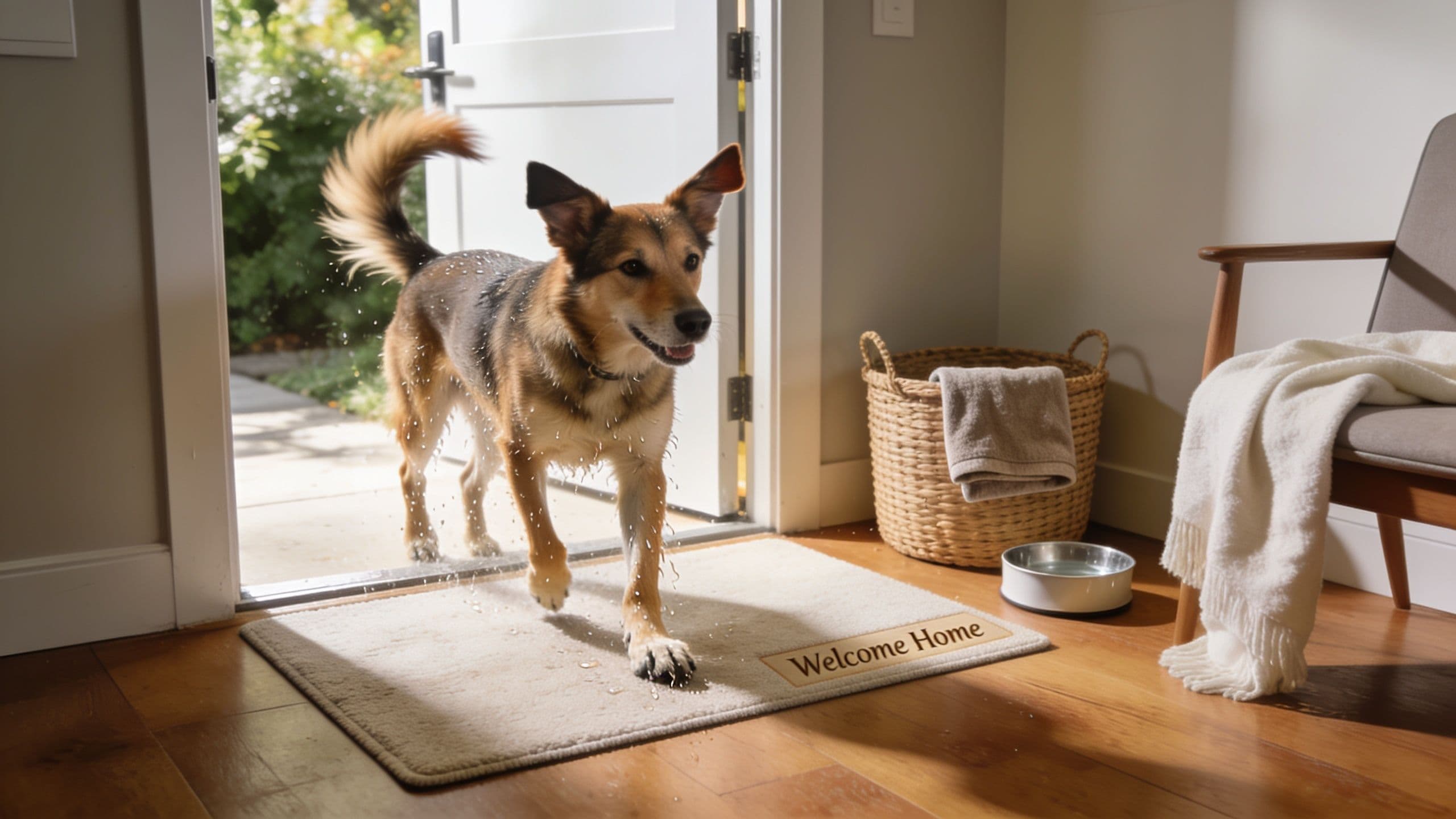
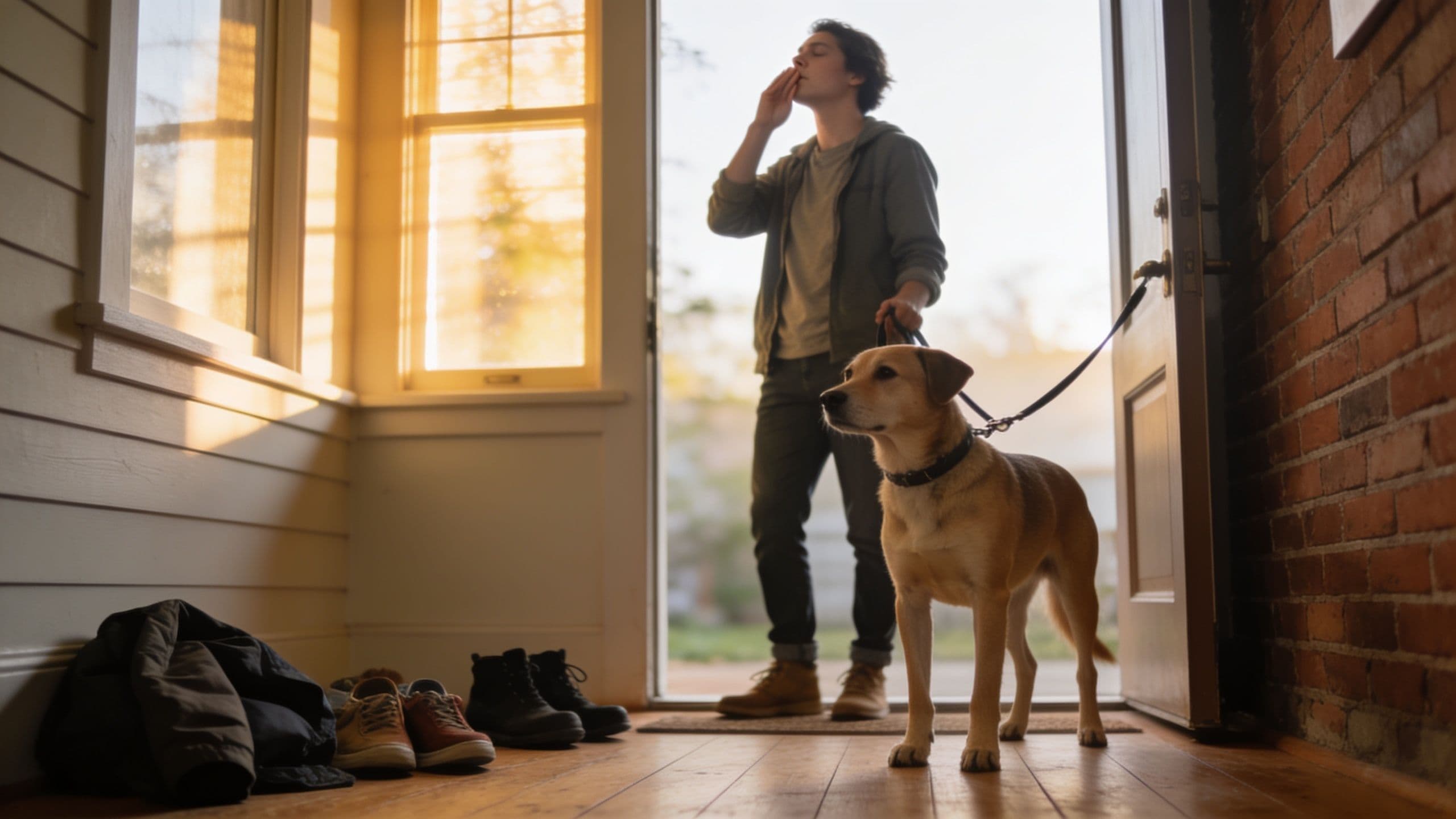
Front-door routines often teach excitement by accident. Owners may talk faster, move quickly, and reach for the handle while the dog is already barking or bouncing. Then the door opens, guests enter, and the social reward lands at the peak of arousal.
The owner may believe the cue was “someone’s here,” but the pet may have learned a richer chain: footsteps, owner posture change, glance toward the entryway, hand on knob, then the big payoff. If calm greetings are the goal, the whole sequence has to support calm, not just the owner’s words.
Work-from-home transitions
Remote work has made some routines more obvious. Many pets can tell the difference between a real break and a fake one long before the owner speaks. Closing a laptop, removing headphones, stretching, or standing near a certain hour can all become cues for attention-seeking.
This is not necessarily a problem, but it can become one if the pet learns to interrupt more intensely because that is what finally earns interaction. In that case, the accidental lesson is that nudging, whining, or pawing is part of how breaks begin.
Mixed messages usually come from movement, not words
Owners tend to focus on the verbal side of training because words feel deliberate. But pets often prioritize what bodies do over what mouths say.
A dog may come running before hearing “walk” because the real cue is the owner picking up a specific pair of shoes. A dog may break a stay not because the command failed, but because the owner leaned forward, changed eye contact, or reached with a hand in a way that always precedes release.
This helps explain a common frustration: “My dog listens better to my partner than to me.” In many cases, one person is simply more consistent in posture, timing, and follow-through. The verbal cue may be identical, but the total package is clearer.
Repetition can also create accidental substitutes. If “off” is always followed by physically stepping toward the dog, the movement may become the real cue and the word may fade into irrelevance. If a pet only responds after hearing “come” three times, the learned cue may actually be the third repetition, not the first.
How to clean up your cue system at home
The fix is rarely dramatic. It starts with noticing what reliably happens right before your pet does the behavior you see every day.
First, watch your own patterns. If your dog gets excited before a walk, identify the earliest signal: shoes, keys, leash, your tone, or moving toward the door. If your cat appears in the kitchen before feeding, ask what actually predicts the meal. Often the answer is more specific than owners expect.
Second, choose one clear cue for important behaviors and support it with matching actions. If “up” means furniture access, use it consistently and avoid accidental invitations through pats, open body language, or inconsistent tolerance. If “wait” matters at the door, do not pair it with rushed movements that signal the opposite.
Third, reduce unnecessary repetition. Saying a cue multiple times teaches pets that the first version can be ignored. Give the cue once, help the pet succeed if needed, and reward the behavior you wanted.
Fourth, reward the right moment. If calm behavior is your goal, reinforcement has to arrive during calm, not after the pet has escalated. This is where timing often matters more than the size of the reward.
Finally, get everyone in the household aligned. Pets can learn variation, but they struggle with contradictions. A family does not need perfect formality, just enough agreement that the same behavior does not earn opposite outcomes depending on the person, room, or time of day.
Better behavior at home often has less to do with teaching entirely new skills than with cleaning up the signals already embedded in daily life. Pets are always learning. The question is whether the lesson matches what you meant to teach.
Safety & Scope
This article is for general informational purposes and does not replace professional advice for complex repairs or installations.
Frequently Asked Questions
+Am I accidentally training my pet bad habits?
Possibly. If a behavior like jumping, whining, barking, or pawing regularly leads to attention, food, access, or play, your pet may learn that the behavior works. Accidental training often happens through repeated routines rather than formal practice.
+Why does my dog react before I say the command?
Your dog may be responding to earlier cues such as your posture, movement, tone, or routine. Picking up keys, leaning forward, walking toward a door, or reaching for a leash can become stronger signals than the spoken word because they are highly consistent.
+How can I make my cues more consistent at home?
Use one clear cue for each important behavior, avoid repeating it, and make sure your body language matches the message. Try to reward the exact behavior you want, and get everyone in the household to follow the same basic rules so your pet is not receiving mixed signals.