The 5-Minute Reset After a Chaotic Walk
For many dogs, the hardest part of a walk is not the walk itself. It is the jarring switch from outdoor excitement to indoor expectations. A short, consistent reset can lower arousal, reduce post-walk chaos, and help your dog settle faster once the leash comes off.
Jordan specializes in turning complex pets & animal lifestyle topics into clear, useful explainers for everyday readers.
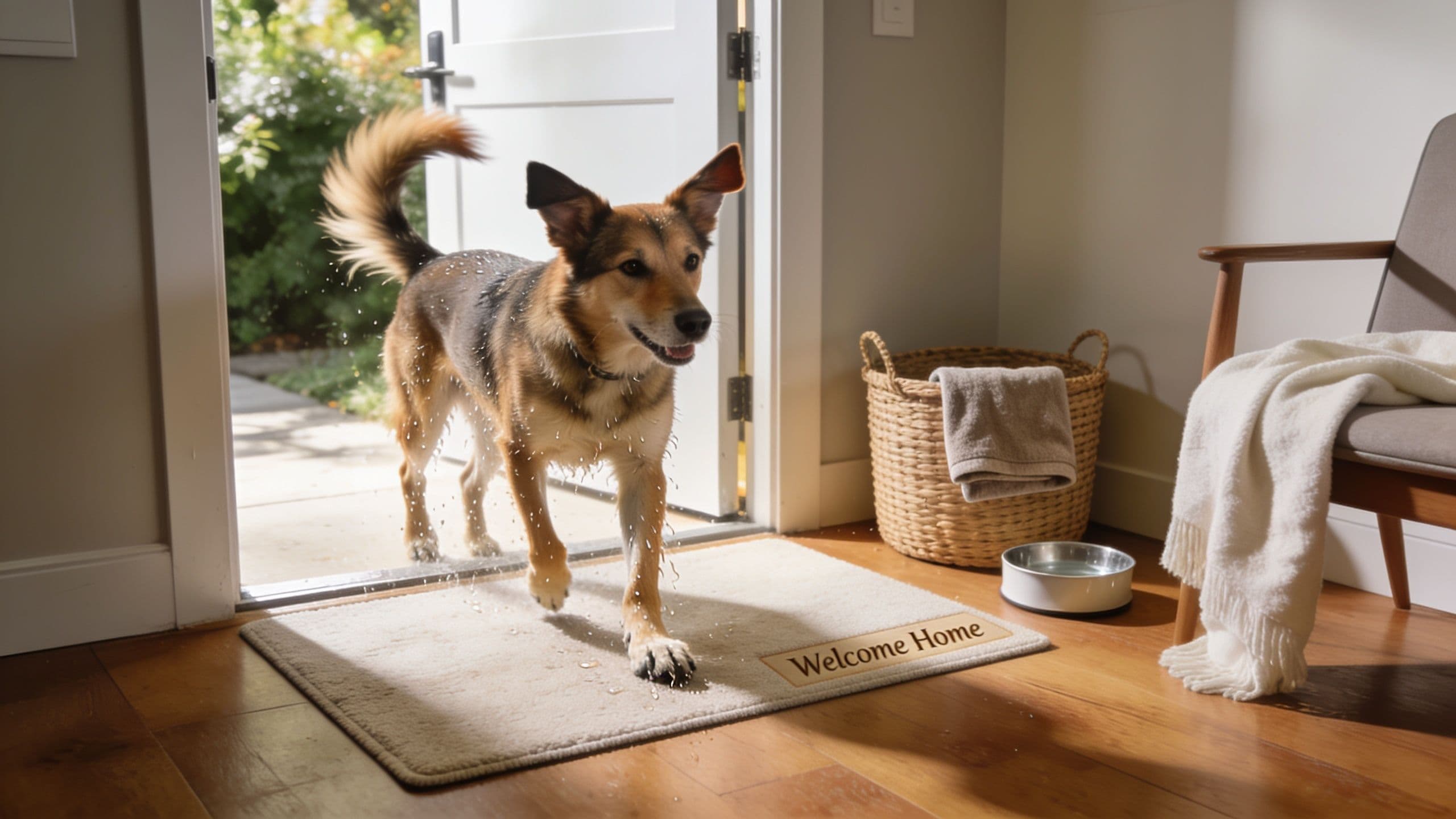
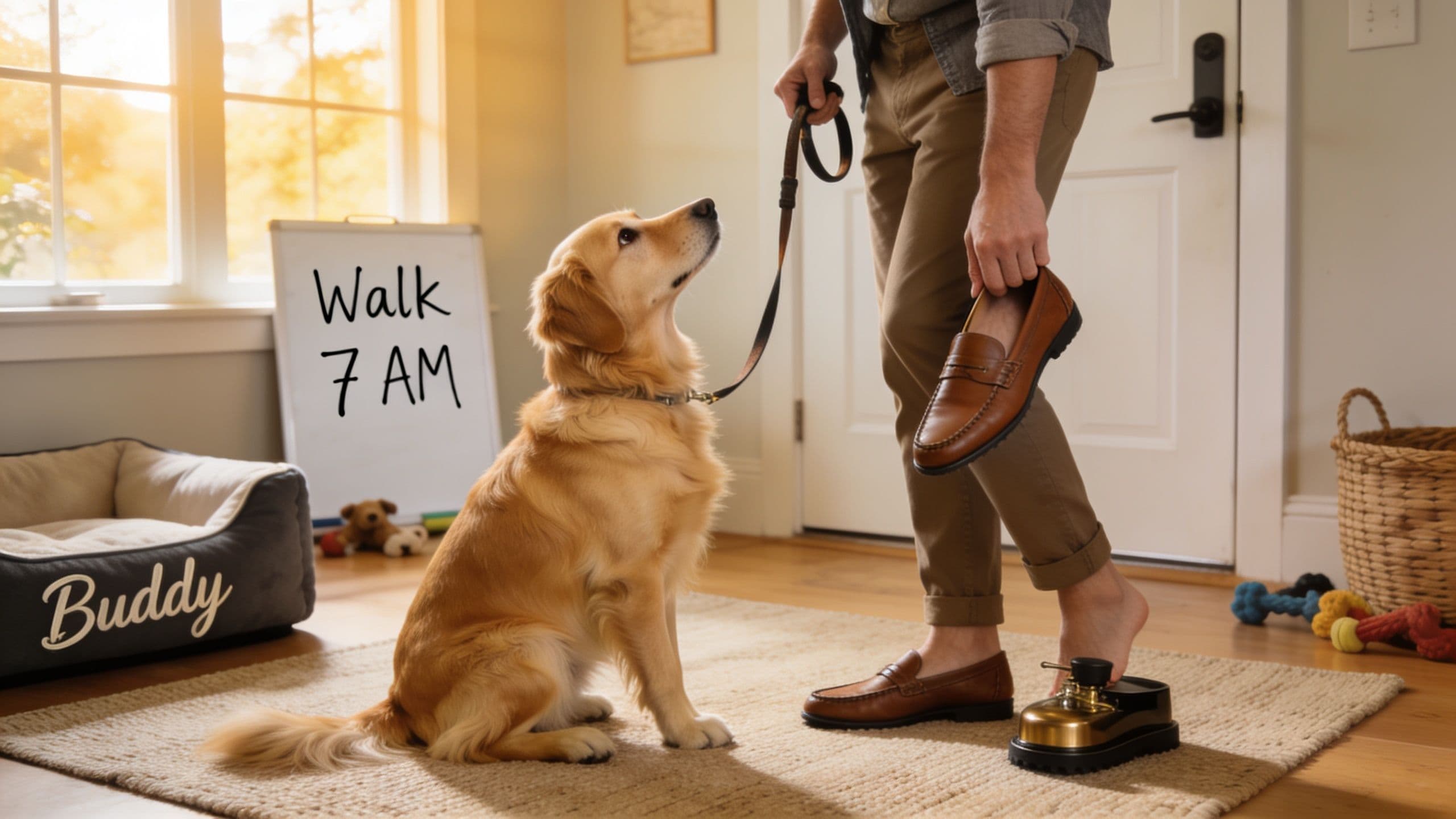
The walk ends at the door, but your dog’s nervous system often does not. After a stimulating outing—passing dogs, delivery vans, squirrels, wet sidewalks, unfamiliar smells—many dogs come home carrying that energy straight into the house. That is when the zoomies start, the barking shifts to the window, or the leash turns into a tug toy.
A five-minute reset works because it treats the return home as a transition, not a stop button. Instead of expecting instant calm, it gives your dog a predictable sequence: enter, decompress, orient, then settle.
Why the first few minutes indoors matter so much
Dogs do not separate experiences the way people do. A walk can leave them physically tired but mentally activated. That is especially true for young dogs, social dogs, sensitive dogs, and any dog who finds the outside world intensely rewarding or mildly overwhelming.
The problem is the contrast. Outdoors, your dog is scanning, sniffing, listening, making decisions, and often moving at a brisk pace. Indoors, the expectations suddenly flip: no pulling, no barking, no shaking rainwater everywhere, no ricocheting off furniture. If that switch happens too fast, many dogs struggle to regulate.
Owners also accidentally keep arousal high. They come in talking excitedly, remove the leash in a hurry, wipe paws while the dog squirms, then offer a burst of affection or play. None of those things are bad on their own, but for an already revved-up dog, they can stack stimulation rather than reduce it.
The 5-minute reset: a practical sequence that actually helps
This routine should feel boring in the best possible way. The goal is not obedience perfection. It is a reliable pattern your dog can learn to anticipate.
Minute 1: Calm entry, low chatter
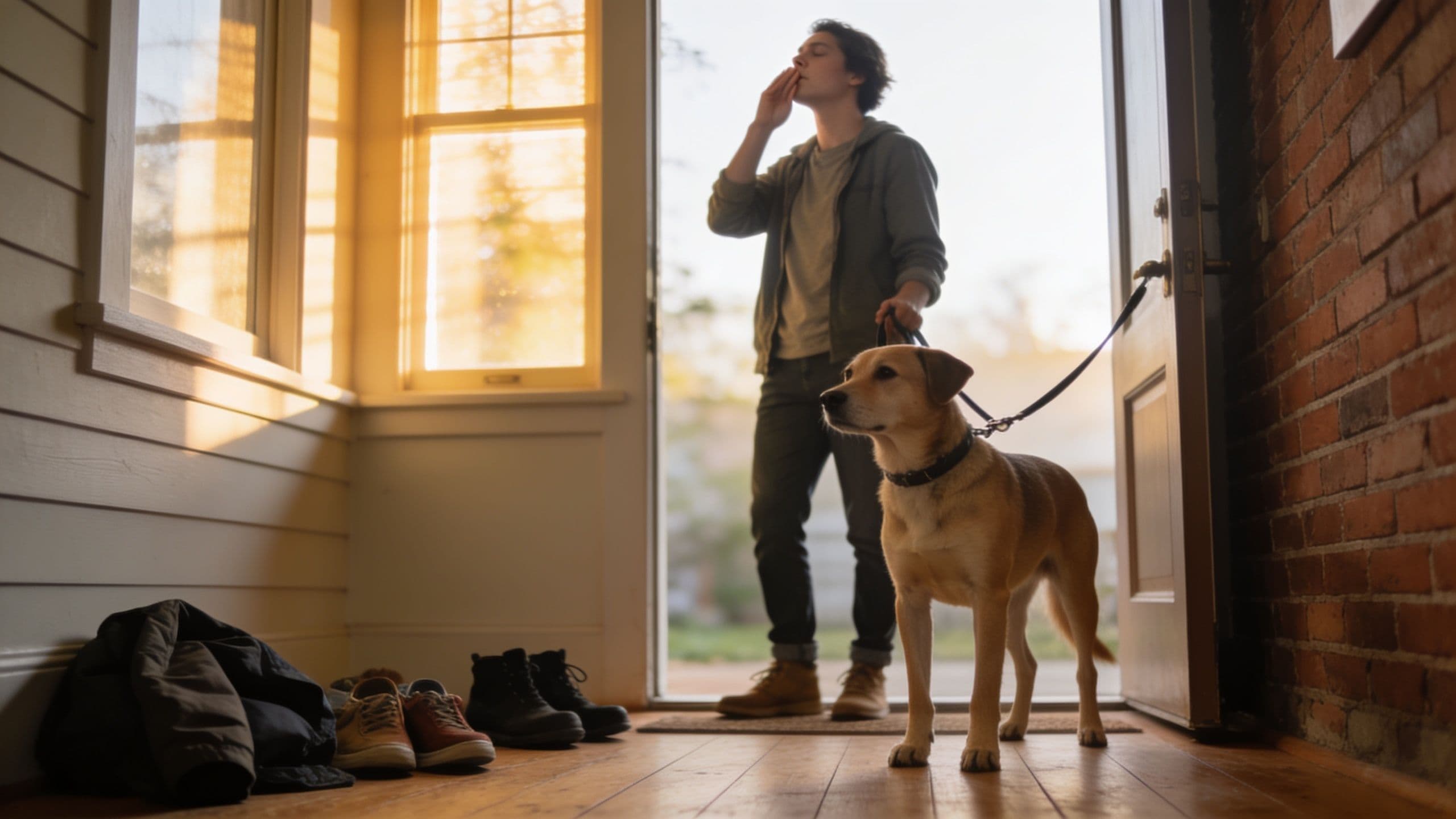
Open the door and keep your energy flat. No excited greetings, no rapid-fire cues, no immediate crowding if multiple people are home. Guide your dog inside on leash if that helps prevent a frantic sprint through the house.
If your dog is muddy, wet, or likely to explode into motion, pause in the entryway. Let them stand, sniff, and look around for a few seconds before you start toweling paws or unclipping gear. Slow hands matter here. Fast handling can make an excited dog even more wriggly.
For multi-dog homes, bringing dogs in one at a time can dramatically reduce the chaos. The front door can become a social pressure point, especially if one dog is more intense than the other.
Minute 2: Water and a simple sniff outlet
Offer water, but do not worry if your dog takes only a few licks. Some dogs drink immediately; others need a moment for their breathing to normalize.
Then give your dog a low-key decompression task. This could be:
A small scatter of kibble or treats on a mat or floor area
A sniffy towel with a few pieces of food tucked into folds
A lick mat prepared in advance
A quiet snuffle mat in a low-traffic room
Sniffing and licking are useful because they redirect the dog away from environmental scanning and into a repetitive, self-paced activity. The point is not to tire the dog out more. It is to help their focus narrow.
If your dog gets frantic around food puzzles, skip anything too difficult or exciting. The reset should lower intensity, not create a challenge session.
Minutes 3-4: Leash off, lights down, no big social moment
Once your dog has had a brief pause and a chance to sniff, remove the leash and reduce stimulation around them. That can mean closing the blinds if window-watching triggers barking, turning down loud audio, or simply avoiding a burst of petting while they are still buzzing.
This is the part many people miss: attention can be activating. Some dogs come inside and immediately demand contact—jumping, mouthing, pawing, barking. If you respond with excited touch or animated conversation, you may be rewarding the exact state you want to soften.
Instead, move normally. Sit down. Put things away. Let your dog follow the routine rather than perform for attention. If they choose a bed, mat, rug, or cool patch of floor, that is a useful sign they are starting to come down.
Minute 5: Cue the indoor rhythm
The last step is consistency. Once the post-walk pause is over, transition into whatever usually happens next: quiet rest, a chew, breakfast, or you returning to work.
A short settling cue can help if your dog already knows one, such as going to a mat or bed. But avoid turning this into a mini training drill unless your dog finds training calming. For some high-drive dogs, active cueing can increase anticipation instead of reducing it.
Think of this minute as the handoff from outdoor mode to home mode. The more predictable it becomes, the easier that switch gets.
Signs your dog needs decompression, not more activity
Owners often interpret post-walk chaos as proof the dog still needs more exercise. Sometimes that is true. Often, though, the dog needs help settling, not another layer of stimulation.
Common signs include:
Indoor zoomies right after the leash comes off
Barking at windows, hallways, or household sounds
Pacing from room to room
Grabbing the leash, towel, or sleeves with their mouth
Demand barking for food, play, or attention
Inability to lie down even though the dog seems physically tired
These behaviors do not automatically mean your dog is being difficult. They often mean arousal is still high and the dog does not yet know how to transition smoothly.
The habits that keep dogs revved up indoors
Some post-walk routines accidentally create a second wind.
Immediate rough play
A game of tug or chase right after a stimulating walk can tip an excited dog into overdrive. If you want to play, wait until the dog has fully settled and you can feel the difference in their body language.
Crowding the doorway
People gathering around the dog, talking loudly, wiping paws all at once, or reaching for the collar can turn the entry into a bottleneck of excitement and frustration.
Feeding in a frenzy
Feeding right away is not inherently wrong, especially if the walk happened before a regular meal. But if your dog storms in, spins, vocalizes, and slams into the feeding area, you may want a brief pause first. Thirty to ninety calm seconds can make mealtime less chaotic.
Inconsistent expectations
If some days your dog comes in and gets instant play, and other days they are expected to settle silently, the transition is harder to predict. Dogs generally do better when the pattern is boring and familiar.
How to tailor the reset to the dog in front of you
A good reset is not one-size-fits-all. It should match the dog’s temperament and the kind of walk they just had.
For social extroverts
Dogs who find every outing thrilling may need more structure on the way in. Keep the leash on for an extra minute, use a food scatter, and avoid a big family greeting until they have softened.
For sensitive dogs
If your dog comes home from busy streets or crowded parks looking wired, use the quietest room in the house for the reset. Less talking, less handling, and fewer sudden movements usually help.
For puppies and adolescents
Young dogs often struggle most with transitions. Their issue is not just energy; it is incomplete self-regulation. Keep the routine very short and very consistent. Puppies especially benefit from a clear landing zone such as a mat, pen, or chew spot.
For muddy or rainy walks
Practical handling matters. Keep a towel station by the door, prepare the sniff activity before leaving, and avoid turning cleanup into a wrestling match. The less chaotic you are, the easier it is for the dog to de-escalate.
A five-minute reset will not solve every behavior issue. If your dog remains intensely distressed after walks, panics indoors, or cannot disengage from triggers long after returning home, a more individualized training plan may be needed. But for many households, the fix is simpler than it looks: stop treating the walk’s end like an on-off switch.
The dog that seems wild after a walk is often not asking for more excitement. They are asking for a smoother landing.
Safety & Scope
This article is for general informational purposes and does not replace professional advice for complex repairs or installations.
Frequently Asked Questions
+Why does my dog get hyper right after a walk?
Because the walk may end before your dog’s arousal does. Exciting smells, movement, noise, social encounters, and physical activity can leave a dog mentally activated even when they are physically tired. The abrupt switch from outdoor stimulation to indoor rules often triggers zoomies, barking, pacing, or demand behavior.
+Should I feed my dog as soon as we come back inside?
You can, especially if it fits your normal schedule, but many dogs do better with a brief calm pause first. Offering water, reducing stimulation, and waiting even a minute can make mealtime less frantic. If your dog rushes in overexcited, a short reset often leads to a smoother feeding routine.
+How can I help my dog settle after exciting outings?
Use a predictable re-entry routine: come inside calmly, keep your energy low, offer water, give a simple sniff or lick activity, and avoid immediate rough play or intense attention. Over time, a consistent five-minute decompression ritual helps many dogs switch from outdoor mode to home mode more easily.