A Better Morning Routine for Pets Who Wake the House Too Early
Early-morning barking, meowing, and pawing often persist because they work. A calmer household starts by changing the cues, rewards, and first 15 minutes of the day so pets stop treating dawn like a guaranteed payoff.
Avery writes about trends, platforms, and strategic shifts in pets & animal lifestyle, with attention to what matters in practice.
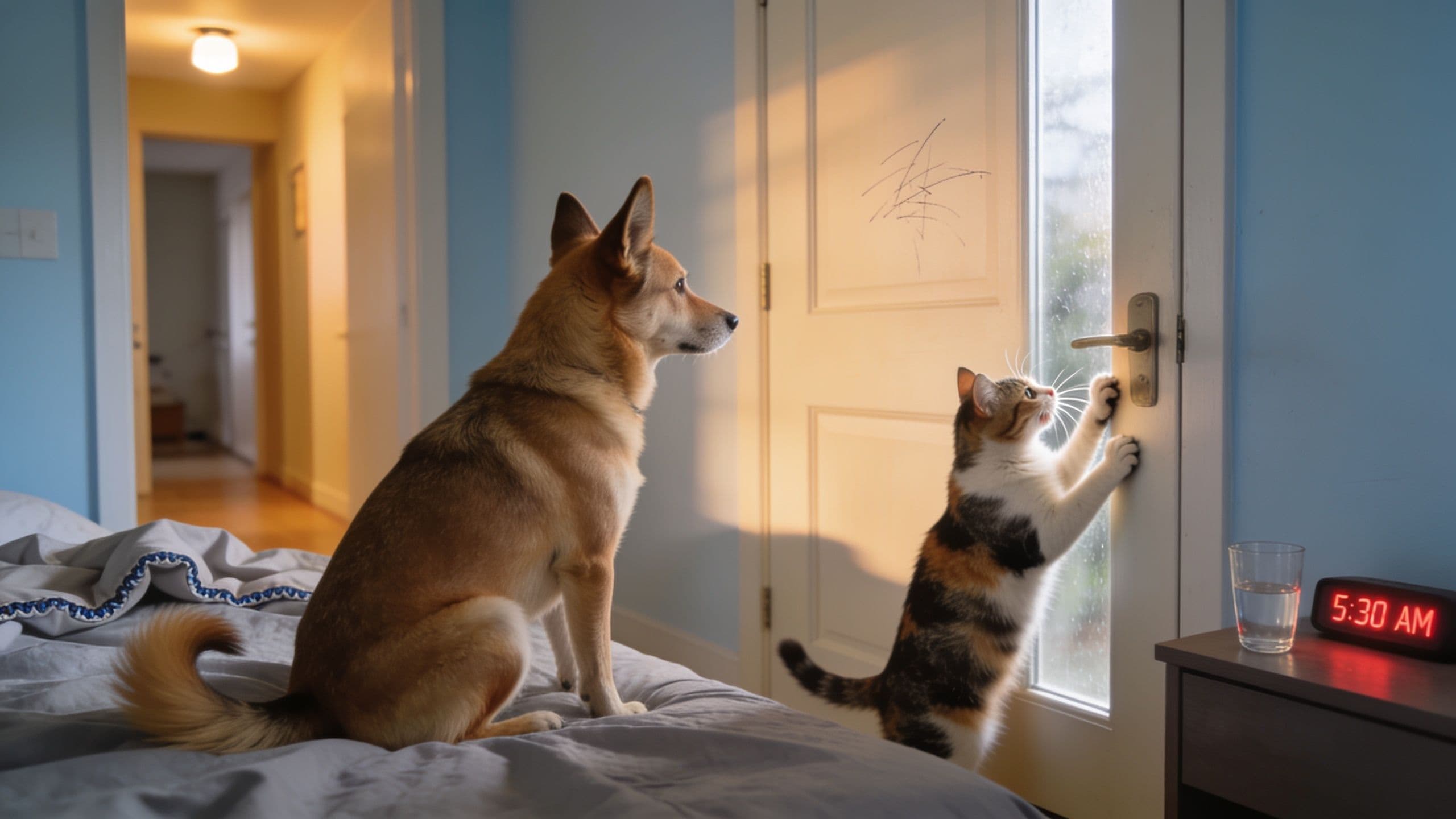
The most useful way to think about a pet who wakes the house at 5 a.m. is not that they are being stubborn, dramatic, or spiteful. They are usually repeating a routine that has been rewarded often enough to become reliable. If barking gets a person out of bed, if meowing leads to breakfast, or if pacing triggers a walk sooner, the behavior makes perfect sense from the animal’s point of view.
That is why the fix is rarely a single trick. A better morning routine comes from changing the sequence that pets have learned to expect: the sounds, movements, timing, and rewards that tell them dawn is when the household becomes negotiable.
The first problem is usually not the noise, but the payoff
Early wake-ups tend to look different from home to home, but the pattern is familiar: pawing at the bed, whining outside the bedroom door, meowing for food, restless pacing in the hallway, or a sudden burst of zooming just before sunrise. These behaviors often seem random because they happen when people are groggy and reactive. In reality, they are often highly patterned.
A dog may have learned that the moment someone sits up, a walk is coming. A cat may have linked the first alarm, the bedroom light, or even the owner rolling over with breakfast. Some pets are especially sensitive to weekday routines and begin stirring before the household normally moves.
The payoff does not have to be food. Attention can be just as powerful. Talking to the pet, pushing them off the bed, opening a door, checking the food bowl, or starting the morning negotiation can all reinforce the behavior. Even frustration can function like engagement.
This is why punishment usually backfires. It may increase excitement, create confusion, or simply become part of the ritual. What changes behavior more effectively is removing the accidental reward and creating a new one for calmness.
How the habit loop gets built the night before
Morning chaos rarely starts in the morning alone. It is often set up by what happens the previous evening.
If dinner is early, the pet goes to bed under-stimulated, and breakfast is always immediate, the animal has every reason to anticipate food before dawn. If the last bathroom break for a dog is too early, sunrise pacing may be partly physical discomfort rather than pure habit. If a cat spends the evening napping and gets lively at 4:30 a.m., the issue may be an energy mismatch rather than bad manners.
A better evening setup is practical, not elaborate:
Give dogs a final toilet break at a consistent, realistic time.
Avoid making the last household interaction wildly stimulating if the pet tends to wake overexcited.
For food-motivated pets, consider whether dinner timing is creating an unnecessarily long gap before breakfast.
For cats, add a short play session before bed so their most active period is not saved entirely for dawn.
Prepare the morning environment in advance so you are not scrambling and reinforcing demand behavior when half-awake.
Preparation matters because sleepy humans are inconsistent humans. If the leash, coffee, food scoop, or cat breakfast is not ready, pets end up watching a series of cues that can make them more agitated: footsteps, cupboard doors, voices, lights, and delayed responses.
A calmer first 15 minutes works better than a dramatic reset
Most households do not need a boot-camp transformation. They need a repeatable first 15 minutes that stops making early noise so profitable.
Start by separating you waking up from the pet getting what they want. That gap does not need to be long at first. Even a few quiet minutes can help if they are consistent.
A workable routine often looks like this:
1. Wake up without delivering the main reward immediately
If your pet woke you, do not make the very first outcome breakfast, outdoor access for fun, or intense attention. Get up, use the bathroom, wash your face, start the kettle, or open the blinds. Keep the sequence boring and predictable.
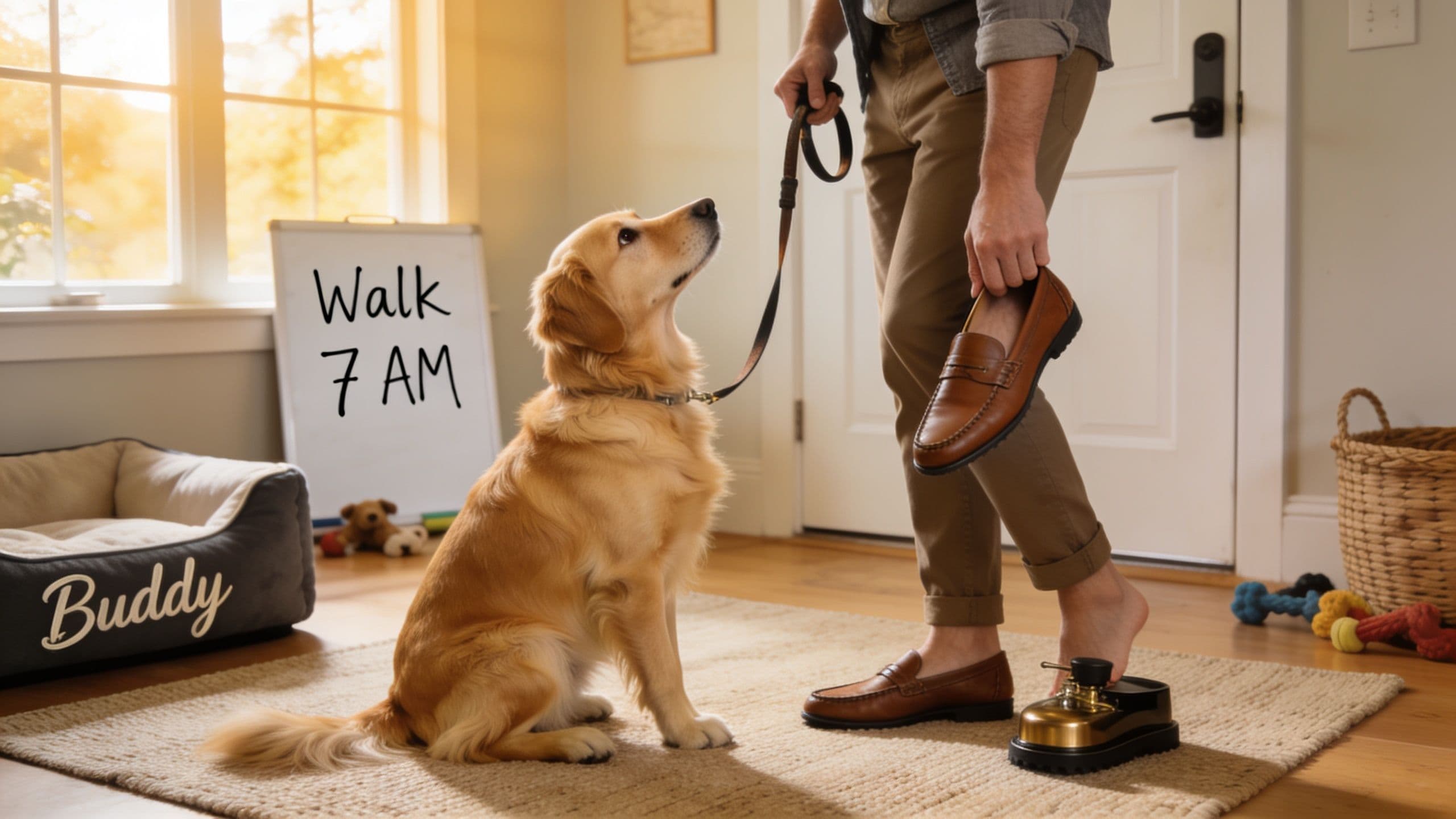
For dogs, this may mean a calm leash-on and brief toilet outing before breakfast rather than a high-energy walk the second they start whining. For cats, it may mean getting dressed and doing one or two neutral tasks before food appears.
2. Reward a pause, not the demand
You are looking for a moment of relative calm: four paws on the floor, a break in vocalizing, sitting instead of bouncing, standing quietly instead of pawing. Reward that moment by moving to the next step of the routine.
This does not mean waiting for perfection. Many owners make the mistake of holding out too long, then giving in during another burst of noise. Better to catch a brief calm pause and build from there.
3. Keep your own signals low-key
Morning conversation, repeated commands, or emotional back-and-forth can make pets more aroused. Short, neutral actions work better than lectures. Calm movement is part of the training.
4. Make breakfast or the walk predictable, not negotiable
Pets relax faster when they stop believing they can speed the routine up by escalating. If breakfast always follows a stable sequence, and never arrives earlier because of barking or meowing, the demand behavior loses value.
In some homes, timed feeders can be useful for cats fixated on human-delivered breakfast. When the machine becomes the predictor rather than the person in bed, some of the social pressure disappears. It is not a magic fix, but it can remove a strong reinforcement pattern.
Dogs and cats usually need different adjustments
Lumping all dawn disruption together can hide the real trigger.
Dogs often react to movement and access
Many dogs are less focused on a precise breakfast minute than on the household becoming active. They hear someone stir, then anticipate outdoors, social contact, or a walk. If a dog starts pacing before sunrise, ask a few plain questions:
Do they need a later last toilet break?
Are they hearing neighborhood activity before you do?
Is the first walk so exciting that the buildup starts early?
Do weekends and weekdays send mixed signals?
For dogs, the solution is often about smoother transitions. A brief, calm potty trip followed by a measured return indoors before breakfast can prevent the morning from turning into a sprint. If the dog is genuinely full of energy, shifting some enrichment or exercise to the evening may help reduce the early burst.
Cats are often sharper about food timing and dawn activity
Cats are naturally active around dawn and dusk, so early-morning agitation can line up neatly with their internal rhythm. If a cat has learned that human eyes opening equals instant breakfast, they may become increasingly creative about waking tactics.
For cats, owners often get better results by changing the food cue itself. A later evening meal, a small pre-dawn portion via automatic feeder, or a short bedtime play-and-snack routine can reduce the urgency. What matters is that the human in bed stops being the button that dispenses breakfast.
If a cat is meowing outside the bedroom door, consistency matters more than intensity. One day of feeding immediately at 5 a.m. can refresh the whole habit loop.
The mistakes that keep the problem alive
Owners usually know they are reinforcing the behavior, but not how many ways it is happening.
The most common mistakes are simple:
Feeding immediately after being woken. This is the clearest reward signal of all.
Being stricter on weekdays and looser on weekends. Pets are good at spotting exceptions.
Turning the routine into a debate. Repeated shushing, bargaining, or bed-based petting can become its own reward.
Expecting instant silence. If the behavior has been practiced for months, the first phase of change may include temporary pushback.
Ignoring physical needs. Hunger, bathroom discomfort, or an understimulated pet can all sit underneath the habit.
One useful mindset shift is to stop aiming for a silent pet and start aiming for a less reinforced one. Once the payoff changes, the volume often follows.
The households that improve fastest are usually not the ones using the fanciest tools. They are the ones with the clearest sequence: evening setup, low-drama wake-up, calm pause, then breakfast or walk. Repeated enough times, that new pattern can become just as strong as the old one.
A peaceful morning is rarely created by winning a battle at dawn. It comes from making dawn less exciting, less effective, and far more predictable for the pet who has learned that the day starts when they say it does.
Safety & Scope
This article is for general informational purposes and does not replace professional advice for complex repairs or installations.
Frequently Asked Questions
+How do I stop my cat from waking me for breakfast?
Break the link between you waking up and food appearing immediately. Use a consistent delay, reward quiet moments instead of meowing, and consider tools like an automatic feeder if your cat is strongly focused on human-delivered breakfast.
+Why does my dog start pacing before sunrise?
Dogs may pace early because they anticipate a walk, need a bathroom break, react to household or outdoor cues, or have learned that movement gets your attention. Check whether the last evening toilet break is too early and whether your morning routine has become highly predictable in a way that rewards pacing.
+Can a bedtime routine help early-morning pet behavior?
Yes. A later toilet break for dogs, a short play session for cats, realistic meal timing, and a calmer evening wind-down can reduce the buildup that leads to early-morning noise and restlessness.