A Two-Minute Pause Can Improve the Start of Every Walk
Many rough walks are set in motion before the door opens. A short pause during the pre-walk rush can lower excitement, reduce leash chaos, and make the first minutes outside noticeably easier.
Avery writes about trends, platforms, and strategic shifts in pets & animal lifestyle, with attention to what matters in practice.
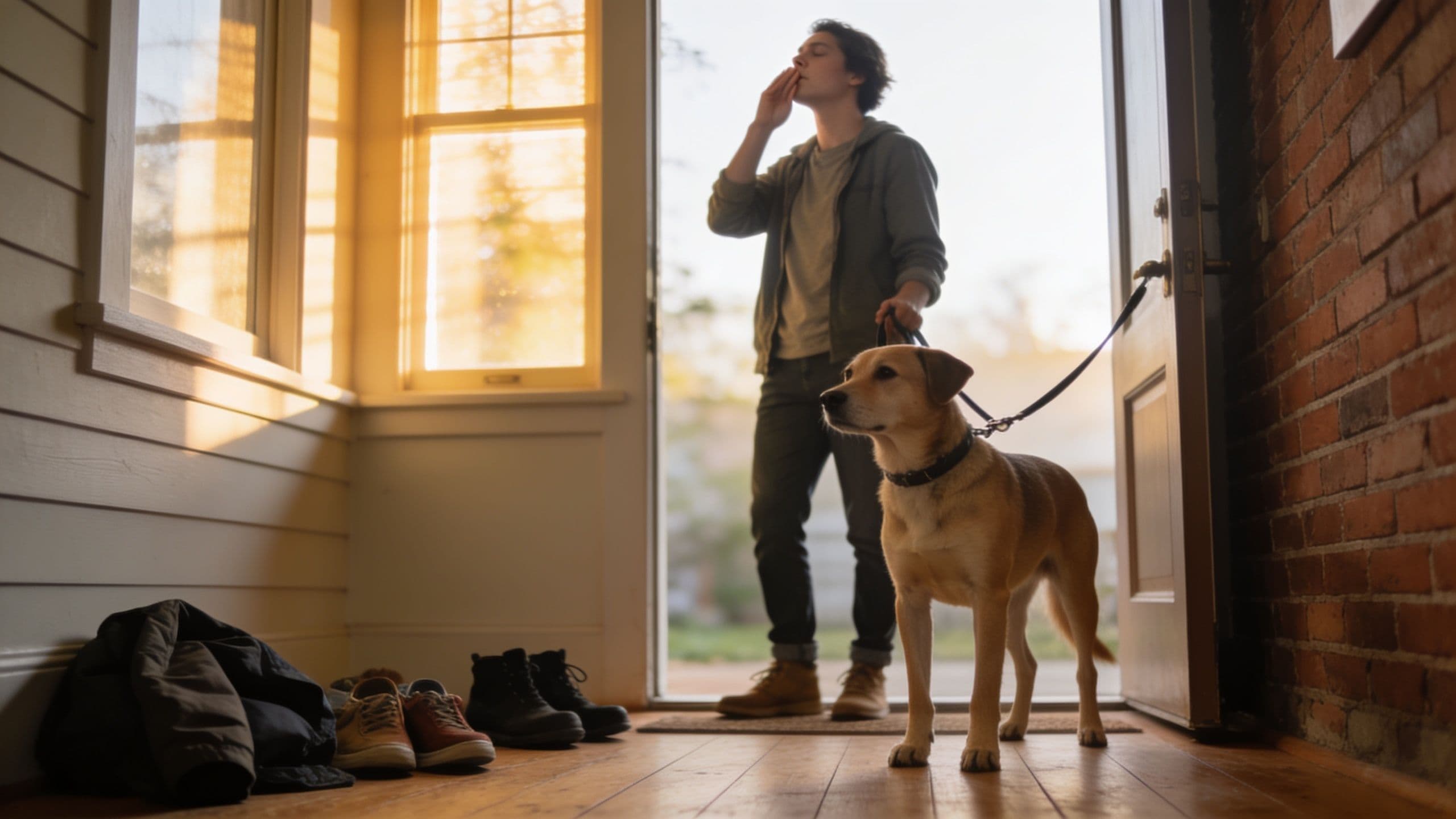
The hardest part of many dog walks is not the barking on the sidewalk or the pulling at the corner. It is the 90 seconds before you leave.
That is when anticipation spikes, people start moving faster, leashes appear, and the dog reads every signal as a countdown to launch. By the time the front door opens, the walk has already started emotionally. If that emotional start is frantic, the first block usually is too.
A two-minute pause can interrupt that chain reaction. Not as a strict obedience drill, and not as a promise that every dog will suddenly stroll out in perfect heel. The value is simpler: it gives your dog a chance to come down from the first wave of excitement so you are not beginning the walk at the highest possible intensity.
The walk begins when your dog notices your shoes
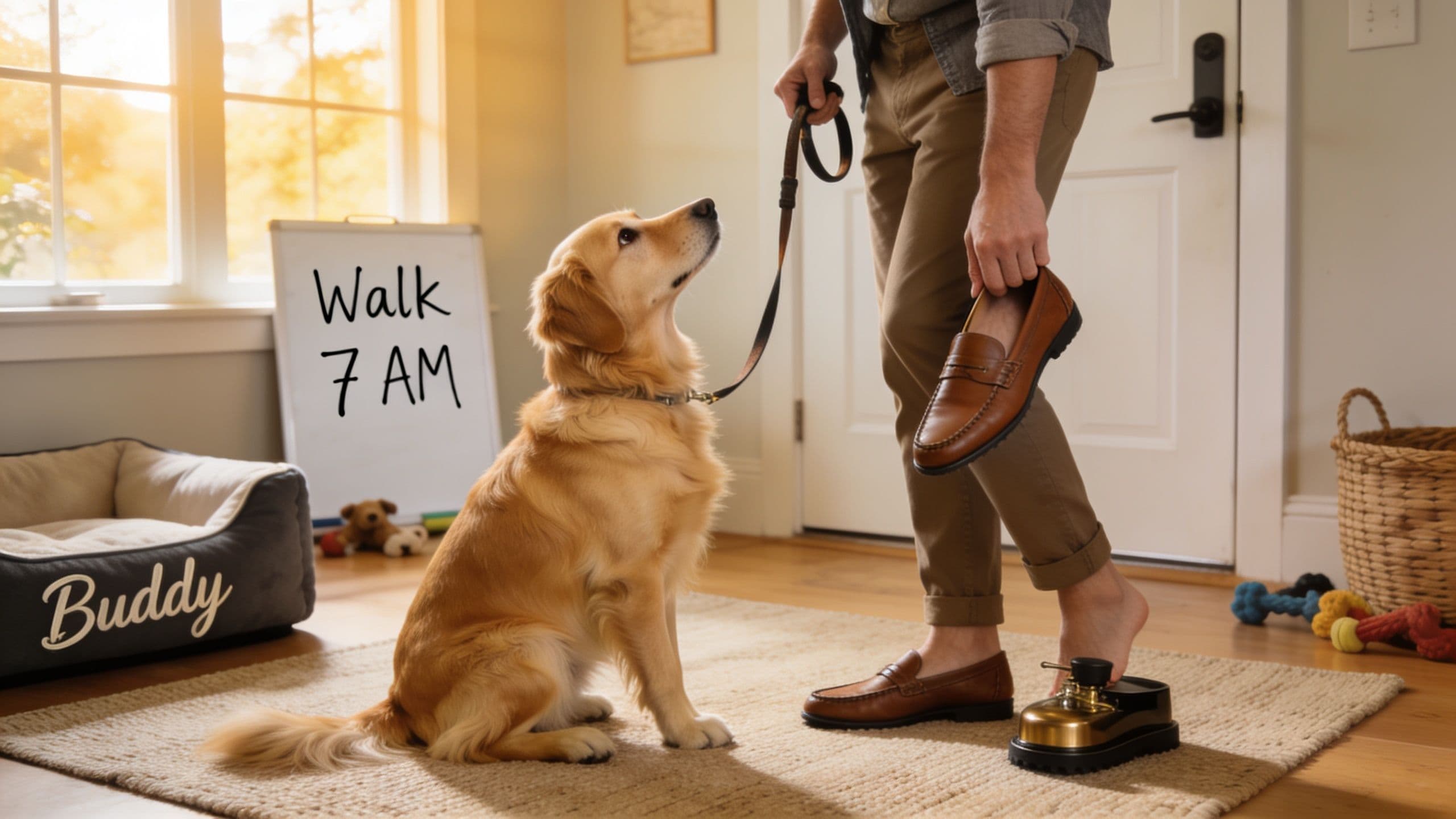
Dogs are excellent pattern readers. Picking up keys, putting on sneakers, reaching for the leash, or moving toward the door can all act like a starter pistol. For many dogs, the visible signs of a walk are more activating than the outdoors itself.
That matters because excitement has momentum. A dog that is already spinning, vocalizing, jumping, or grabbing the leash indoors is likely to carry that energy into the hallway, elevator, front step, or sidewalk. Owners then end up trying to solve outdoors what was actually set in motion inside.
The first five minutes feel especially hard because several things stack together at once:
anticipation from waiting to go out
sudden movement after a period indoors
environmental stimulation like sounds, smells, people, and other dogs
owner urgency, especially before work or first thing in the morning
When all of that hits at once, many dogs are simply too wound up to make good choices. That does not mean they are stubborn or badly behaved. It often means the threshold for calm behavior has already been exceeded before the walk properly begins.
What the two-minute pause actually looks like
The pause is not complicated. It is a brief reset between getting ready and stepping out.
Put the leash on without fanfare. Avoid hyping the moment with rapid praise, excited voice changes, or repeated phrases like "walk? walk? walk?" Then stop.
Stand still or sit nearby for a minute or two. Breathe. Let your dog shift from peak anticipation into a more manageable state. Some dogs will sit, some will stand quietly, some will look at the door and then back at you. The point is not a picture-perfect pose. The point is reducing intensity.
A useful version might look like this:
Quiet gear-up
Clip the leash on calmly. If your dog gets more excited when the leash appears, slow your own movements down rather than trying to talk over the excitement.
Brief stillness
Pause near the door, in the hallway, or even just after opening the apartment door if that space is less charged. Keep your body language neutral.
One simple cue, if needed
If your dog knows a cue like sit, wait, or settle, use it once. If not, do not turn the moment into a negotiation. Repeating cues ten times usually adds pressure and noise rather than clarity.
Calm release
Open the door when your dog is calmer than they were a minute ago, not at the exact peak of jumping or whining. You are looking for better, not perfect.
That last point matters. Many owners abandon this idea because they think it only counts if the dog is completely motionless. In reality, a modest drop in arousal can make a visible difference outside. A dog who exits at 60 percent excitement is often far easier to guide than one who exits at 100 percent.
Where this small habit pays off fastest
Some walks are especially vulnerable to chaotic starts, and that is where a two-minute pause often feels most effective.
Morning departures
Morning walks combine bladder urgency, overnight inactivity, and owner time pressure. Everyone is more likely to rush. A short pause can keep the first minute from becoming a sprint to the sidewalk.
Apartment buildings and elevators
Shared hallways concentrate stimulation. Doors open unexpectedly, neighbors appear, and sounds echo. If your dog enters that environment already over-aroused, small triggers feel bigger. A calmer exit indoors can soften the transition.
After long indoor stretches
Bad weather days, workdays, or post-nap outings often create a bottled-up burst of energy. These are classic moments when dogs hit the leash at full force the second they think the walk is happening.
Multi-dog households
Excitement is contagious. One dog bouncing can set off the other. A pause helps prevent the whole group from turning the doorway into a pileup.
The owner habits that make departures worse
The pre-walk scramble often escalates because humans add speed, noise, and inconsistency without noticing.
One common mistake is talking too much. Constant chatter can keep the dog engaged with the excitement rather than helping it settle. Another is rapid-fire cue repetition: sit, sit, sit, wait, no, sit. That usually communicates tension, not calm.
A third mistake is opening the door during the biggest surge of energy simply because the owner wants to get it over with. The dog learns that intense bouncing, vocalizing, or lunging is part of the successful sequence that gets the door open.
There is also a subtler issue: many people only focus on behavior once they are already outside. They start correcting pulling after the dog has rehearsed a frantic exit, charged through the threshold, and hit the sidewalk in overdrive. By then, you are working against momentum.
The pause changes the sequence. It makes calm part of the route to the walk, instead of something you hope appears halfway down the block.
Better than a dramatic fix, more realistic than perfect behavior
The appeal of this approach is that it is practical. It does not require a formal training session, special equipment, or a total rewrite of your routine. It asks for two things many walks already lack: a little time and a little quiet.
That also makes it easier to sustain. Dogs tend to improve with repetition when the pattern is simple and consistent. If every walk begins with leash on, brief pause, calmer exit, the doorway stops being only a launch zone. It becomes a predictable transition.
For some dogs, the effect is immediate. The leash grabbing decreases. The first corner is less dramatic. They check in more. For others, the benefit is cumulative and shows up over a couple of weeks as the departure ritual loses some of its intensity.
The goal is not to suppress joy. Most owners like that their dog loves walks. The problem is not enthusiasm; it is enthusiasm with no buffer between indoor anticipation and outdoor stimulation.
A short pause creates that buffer.
If the first minutes of your walks tend to feel like damage control, it is worth shifting attention to the moment before the door opens. That is often where the real setup happens. A calmer start will not solve every leash issue, but it can make the rest of the walk easier in a way mid-walk corrections often cannot.
Safety & Scope
This article is for general informational purposes and does not replace professional advice for complex repairs or installations.
Frequently Asked Questions
+How do I calm my dog down before a walk?
Keep the pre-walk routine quiet and predictable. Put the leash on calmly, avoid excited chatter, then pause for a minute or two before leaving. Wait for a noticeable drop in excitement rather than opening the door at the peak of jumping or whining.
+Should I wait for my dog to sit before opening the door?
If your dog already knows sit and can do it without getting more frustrated, it can help. But a sit is not the only valid goal. What matters most is a calmer state before you exit, not a perfect pose.
+Why does my dog seem hardest to manage in the first five minutes?
Those first minutes combine anticipation, pent-up energy, and sudden outdoor stimulation. If your dog starts the walk already overexcited, that momentum carries outside. A short pause before leaving can lower that initial intensity and make the opening stretch easier.