The Doorway Pause: What Pets Are Checking Before They Enter a Room
That brief hesitation at a room entrance is often a fast, thoughtful safety check. Dogs, cats, and small pets use thresholds to scan for sound, scent, movement, and control before deciding whether a space feels worth entering.
Avery writes about trends, platforms, and strategic shifts in pets & animal lifestyle, with attention to what matters in practice.
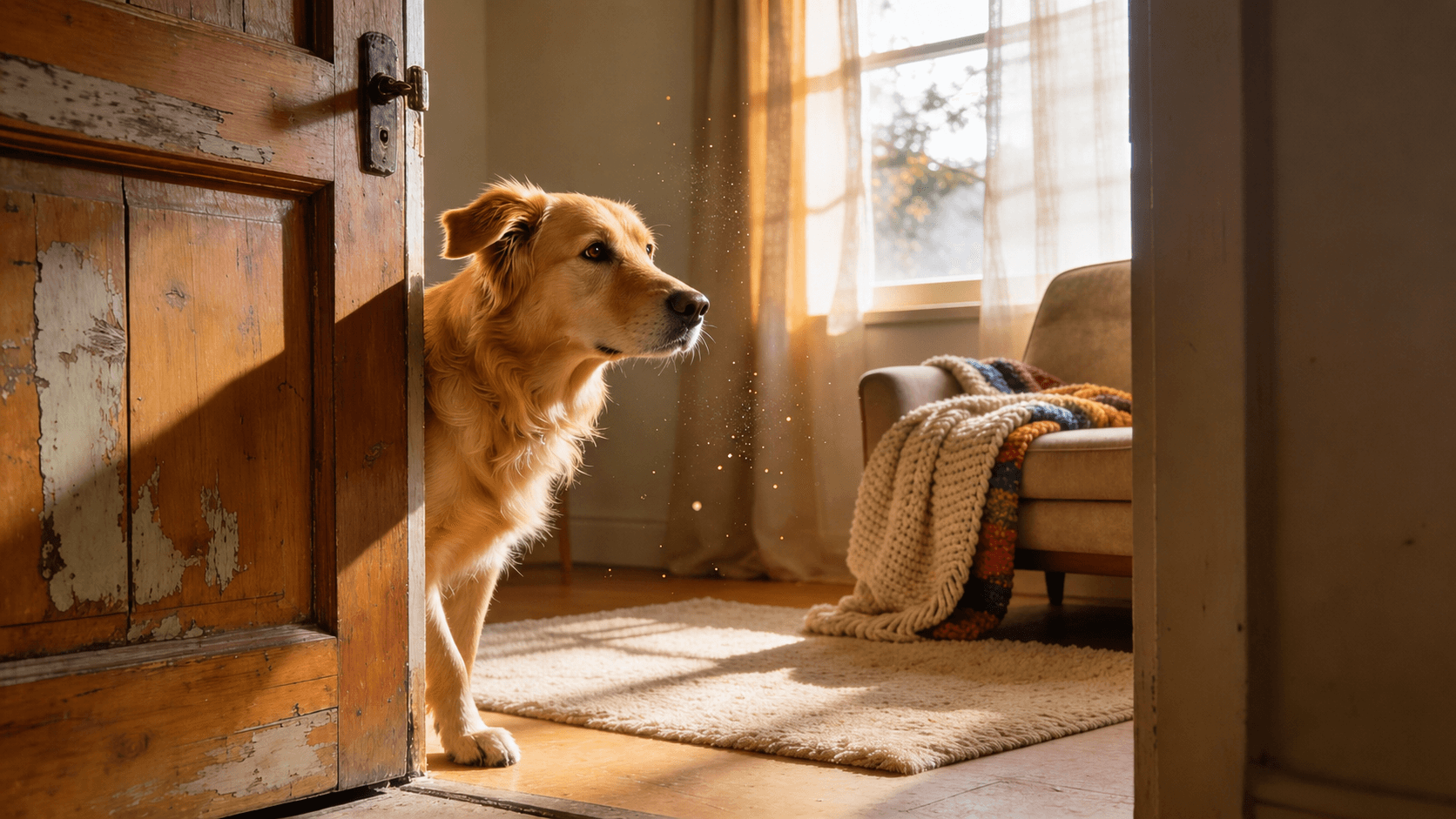
A pet that stops at a doorway is rarely doing nothing. In a second or two, many animals are running a quick survey: Who is in there? What changed? Is the floor safe? Is there food, noise, tension, or a better escape route somewhere else?
Owners often read that pause as stubbornness, distraction, or bad manners. More often, it is information-gathering. Thresholds are natural checkpoints, and home life gives pets plenty of reasons to treat them that way.
Why thresholds matter more than they seem
A doorway is a boundary between one set of conditions and another. From an animal's perspective, that boundary can mark a shift in scent, sound, lighting, footing, temperature, or social pressure.
A kitchen doorway may smell like dinner one day and floor cleaner the next. A hallway may be quiet in the morning, then echo with children, vacuum noise, or another pet's movement later on. Even small changes that humans barely register can matter to animals that rely heavily on smell, hearing, and pattern recognition.
That is why the pause often looks so deliberate. A dog may plant its front feet and lift one paw. A cat may lean forward, freeze, then step sideways to look from a better angle. A rabbit may stretch its neck, sniff rapidly, and remain ready to spring back. The behavior is less about indecision than about collecting enough information to predict what happens next.
What pets are checking in that split second
Sound, motion, and social activity
Many pets listen before they move. Dogs in particular are sensitive to whether a room sounds inviting, busy, or tense. The clatter of bowls, a television at an unusual volume, a person shifting in a chair, or another dog moving out of sight can all shape the decision to enter.
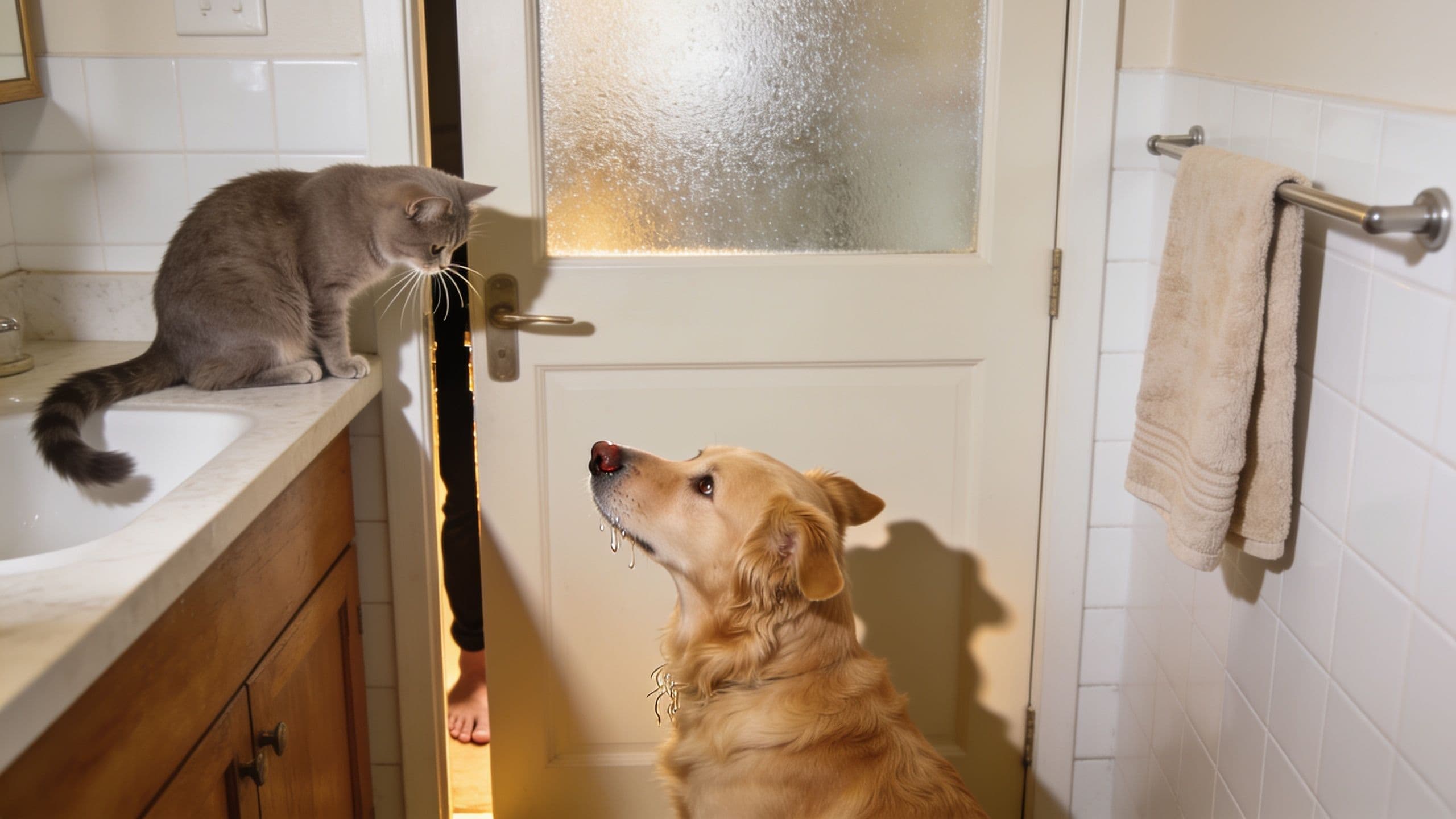
Cats also pay close attention to motion patterns. If a room contains unpredictable activity, such as a child running through, a robotic vacuum docked near the entrance, or another cat guarding a favorite perch, a brief hesitation makes sense. Entering means committing to a space where control could be reduced.
Small companion animals often make the same calculation in a more obvious prey-animal way. Guinea pigs, rabbits, and similar pets tend to assess whether they have cover, a clear retreat, and enough warning if something approaches.
Scent and recent changes
A room can look familiar and still smell completely different to a pet. New groceries, a guest's shoes, a recently cleaned rug, fresh paint, a litter box moved a few feet, or the scent of another animal tracked in from outside can all trigger a pause.
Dogs especially may stop at a doorway because it acts like a scent border. Airflow can carry information from inside the room out into the hall, allowing them to sniff before committing. Cats do this too, though often with subtler body language: a still head, focused whiskers, and a slight mouth opening if a scent is especially interesting.
Surface safety and physical comfort
Sometimes the issue is practical, not emotional. A room may have slippery tile, a metal transition strip, a new rug texture, scattered toys, or sunlight reflecting off a polished floor. Older pets and animals with pain can become much more cautious at thresholds because stepping through involves traction and balance, not just curiosity.
This is one reason a dog may pause at the kitchen doorway but not at the bedroom entrance. The difference may be less about the room itself than about what the feet expect when they cross into it.
Dogs, cats, and small pets do not read doorways the same way
Dogs often look for context and invitation
Many dogs are social checkers. They want to know not only what is in the room, but also whether they are meant to be part of it. If they have been told to stay out of certain areas, shooed away during cooking, or rewarded for waiting politely, the doorway becomes a place where they pause for guidance.
That can be mistaken for disobedience when it is actually learned caution. A dog that stops, looks at you, then enters after a cue may be showing exactly how attentive it is to household rules.
Some dogs also pause because threshold routines have become meaningful. If the kitchen predicts meals, the living room predicts nail trims, or the laundry room predicts the noisy dryer, the body will slow down before the mind seems to.
Cats tend to assess control, visibility, and exit options
Cats are less likely to seek invitation and more likely to evaluate whether they can move on their own terms. A doorway narrows options. Once inside, is there a high surface? A hidden dog under a table? A route back out if the room becomes overstimulating?
This is why cats may hesitate even in homes they know well. Their pause is often about preserving control. They are checking whether the room still works according to the map they expect.
A cat that pauses, listens, then enters with confidence is not necessarily anxious. It may simply be cautious in the way cats are built to be cautious: observant first, committed second.
Small animals make safety checks their default
For rabbits, guinea pigs, and other small companion animals, entering an open space can carry a different level of risk. They often prefer edges, cover, and predictable routes. A threshold can feel exposed, especially if the room beyond is bright, noisy, or lacking hiding options.
A pause here is often sensible self-protection. If owners rush it, the animal may become less willing to explore, not more.
The common ways people misread the pause
The biggest mistake is treating hesitation as defiance. Once owners assume a pet is being difficult, they tend to add pressure: repeating cues, stepping toward the animal, clapping, tugging a leash, or physically carrying the pet over the threshold.
That pressure can teach the wrong lesson. Instead of learning that the room is safe, the pet learns that doorways are moments when human tension increases.
Another common misread is assuming all pauses signal fear. Context matters. A calm dog with a relaxed tail and active nose is not displaying the same state as a dog that is tucked, low, and trying to retreat. A cat that pauses with neutral ears and curious sniffing is different from one that flattens its ears, crouches, and scans frantically.
The body language around the pause tells the real story:
Curious pause: forward interest, sniffing, steady posture, easy recovery
Cautious pause: weight shifted back, longer stillness, repeated checking, slower entry
Stressed pause: crouching, tail tucked or puffed, refusal to approach, rapid retreat
Watching those details is more useful than timing how long the hesitation lasts.
How to make room entrances easier without pushing
If a pet regularly pauses at the same doorway, look for patterns before trying to correct the behavior.
First, check the environment. Has anything changed in the room's smell, sound, or floor surface? Are there reflections, drafts, or noises people overlook? Is another pet blocking the entrance or creating tension nearby?
Second, keep thresholds predictable. Avoid crowding your pet at entrances. Give it visual space and a clear line through the room. For cats and small animals, make sure there are escape routes or hiding options beyond the doorway so entry does not feel like a trap.
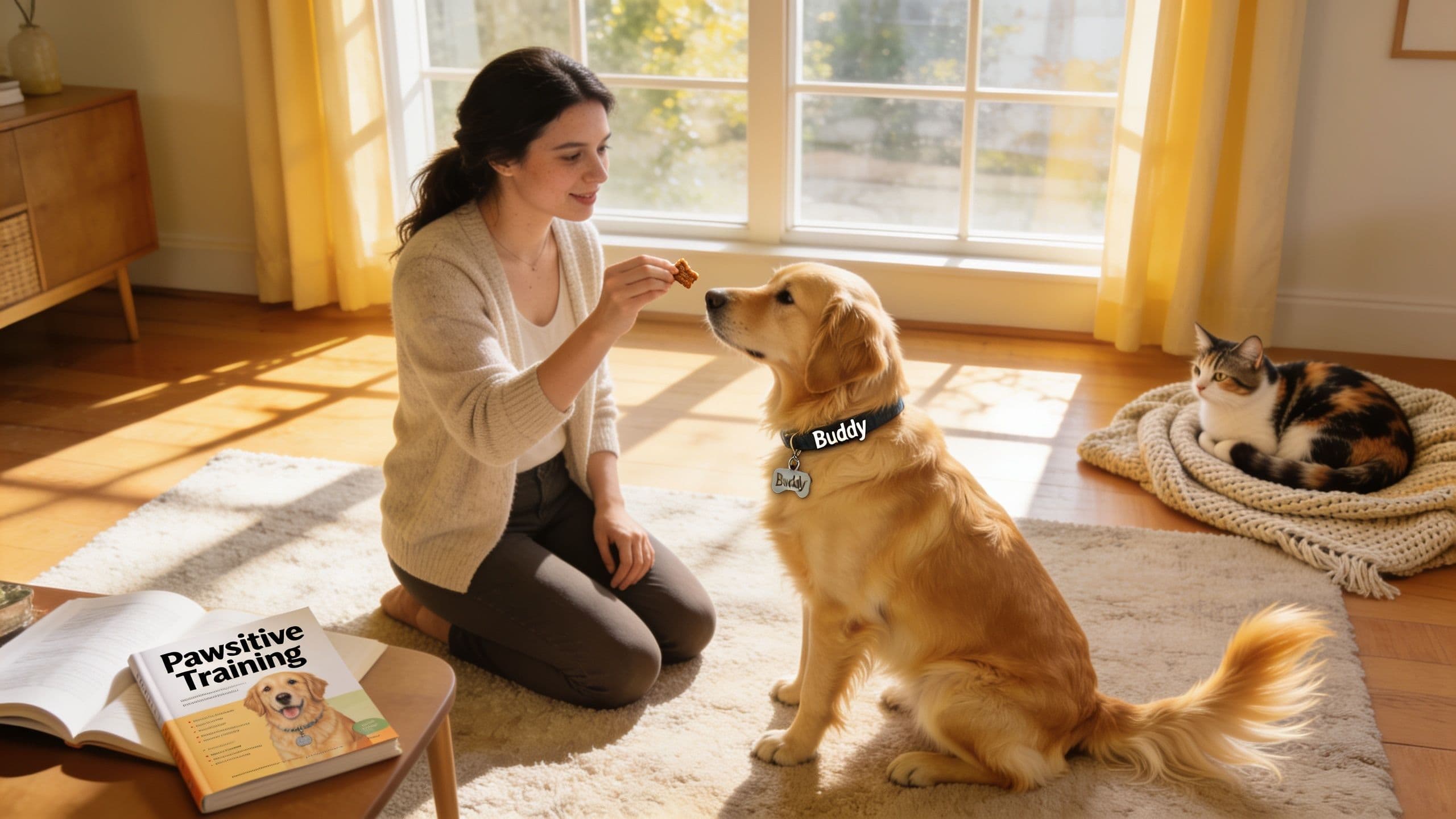
Third, reward calm movement rather than rushed movement. For dogs, that might mean quietly praising or offering a treat after they choose to walk through on their own. For cats, it may mean placing something appealing just inside the room without luring so aggressively that the cat feels conflicted. For rabbits or guinea pigs, it may be as simple as letting exploration unfold on familiar terms.
Finally, notice when the pause becomes bigger than usual. A sudden change in threshold behavior can point to stress, conflict with another pet, or discomfort with footing. If a once-confident animal begins avoiding certain surfaces or rooms entirely, the doorway may be revealing a problem rather than causing one.
A small habit that reveals how pets feel at home
The doorway pause is easy to overlook because it is brief and ordinary. Yet it shows pets doing something important: reading the room before they join it.
For dogs, that may mean checking activity, permission, and routine. For cats, it often means confirming control and safe exits. For small companion animals, it can be a straightforward survival-style scan for safety. In every case, the hesitation is information-rich.
Owners do not need to speed pets through these moments to build confidence. More often, confidence grows when an animal is allowed to observe, decide, and move forward without pressure. A threshold is not just a gap between rooms. It is one of the clearest places to see how a pet experiences home.
Safety & Scope
This article is for general informational purposes and does not replace professional advice for complex repairs or installations.
Frequently Asked Questions
+Why does my dog stop at the kitchen doorway?
Many dogs pause at the kitchen because it is a high-information area. They may be checking for food smells, noise, slippery flooring, people moving around, or whether they are allowed to enter. If the behavior is calm and consistent, it is often thoughtful checking rather than stubbornness.
+Do cats hesitate at doors because they are anxious?
Not always. Cats often pause at doorways to assess movement, scent, and escape options before entering. A brief, calm hesitation can be normal caution. It is more concerning if the cat also shows stress signals such as crouching, flattened ears, tail puffing, or repeated retreat.
+Should I encourage my pet to move faster through a room entrance?
Usually no. Rushing a pet through a doorway can add pressure and make the threshold feel more loaded. It is better to keep the area predictable, give the pet space to investigate, and reward calm voluntary movement into the room.