The Daily Routine Difference Between Cats and Dogs
Cats and dogs do not just express affection differently. They move through the day on different clocks, with distinct patterns of social check-ins, rest, play, and dependence that can reshape the rhythm of home life.
Avery writes about trends, platforms, and strategic shifts in pets & animal lifestyle, with attention to what matters in practice.
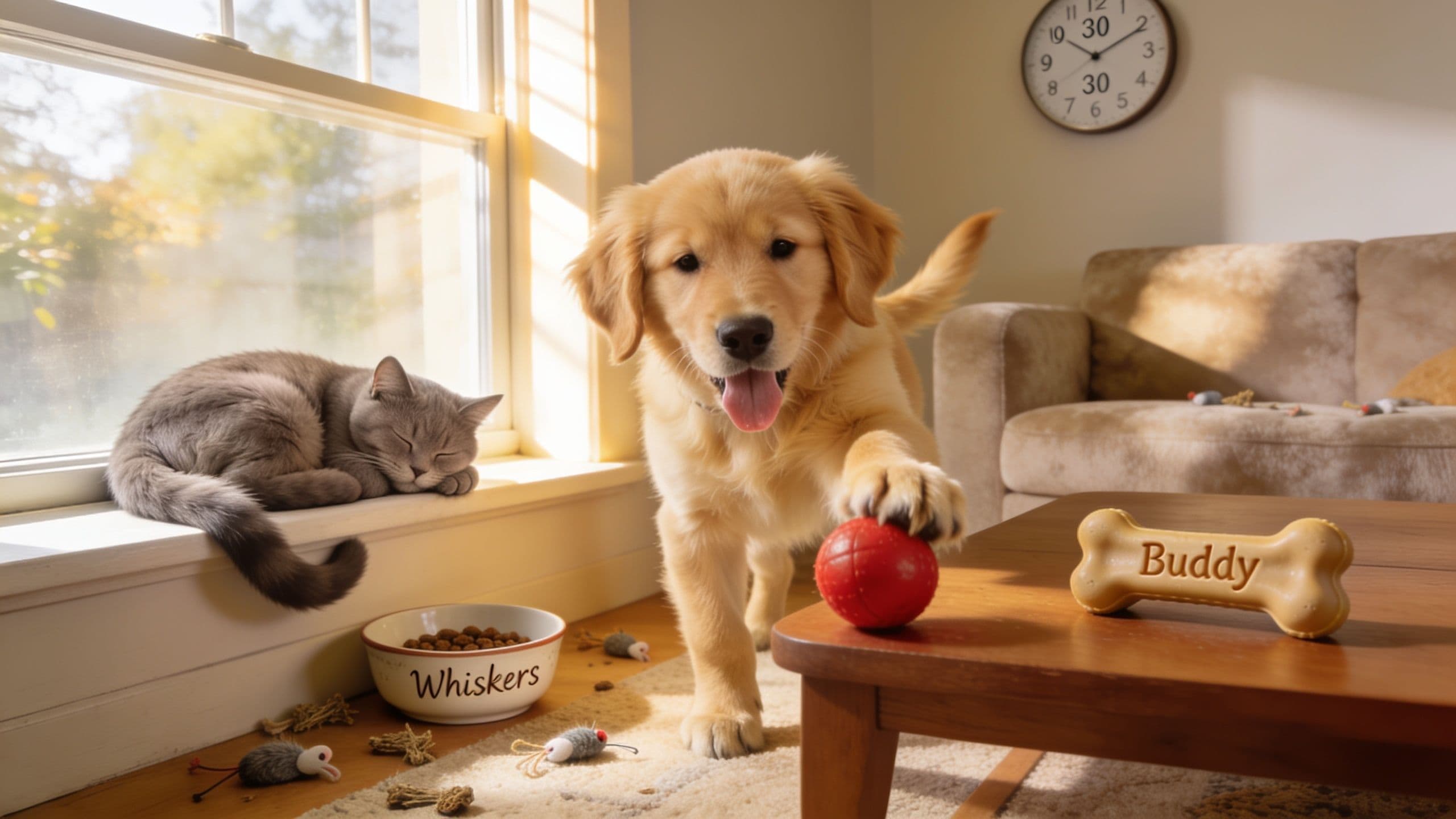
Cats and dogs can both be affectionate, playful, and deeply attached to their people. The bigger day-to-day difference is not personality in the abstract. It is pacing. A dog often pulls the household into a more scheduled rhythm, while a cat tends to weave around it, checking in and dropping out on its own terms.
That difference matters more than many first-time owners expect. It shapes mornings, workdays, evenings, travel plans, and even the emotional feel of a home. If you want to predict what living with either animal is actually like, it helps to look at how each species organizes an ordinary day.
Morning starts: one species prompts the day, the other joins it
Dogs usually greet morning as a shared event. Many are ready for immediate engagement: outside, breakfast, attention, movement. Even a calm adult dog often wakes with a practical agenda. There is a body to stretch, a bladder to empty, a meal to expect, and a person to recruit into all of it.
Cats vary more in how visible their morning energy is, but they are less likely to require the whole household to mobilize around them right away. Some cats are vocal before breakfast, especially if feeding times have become rigid, but many move through a quieter sequence: patrol the home, watch a window, nudge for food, then settle again. Their morning often looks less like a group activity and more like a series of brief requests.
This changes owner expectations immediately. With dogs, the morning routine is usually non-negotiable. Someone has to participate. With cats, owners often feel that the animal is fitting into the home rather than orchestrating it, even when the cat is very bonded and observant.
Feeding and first contact
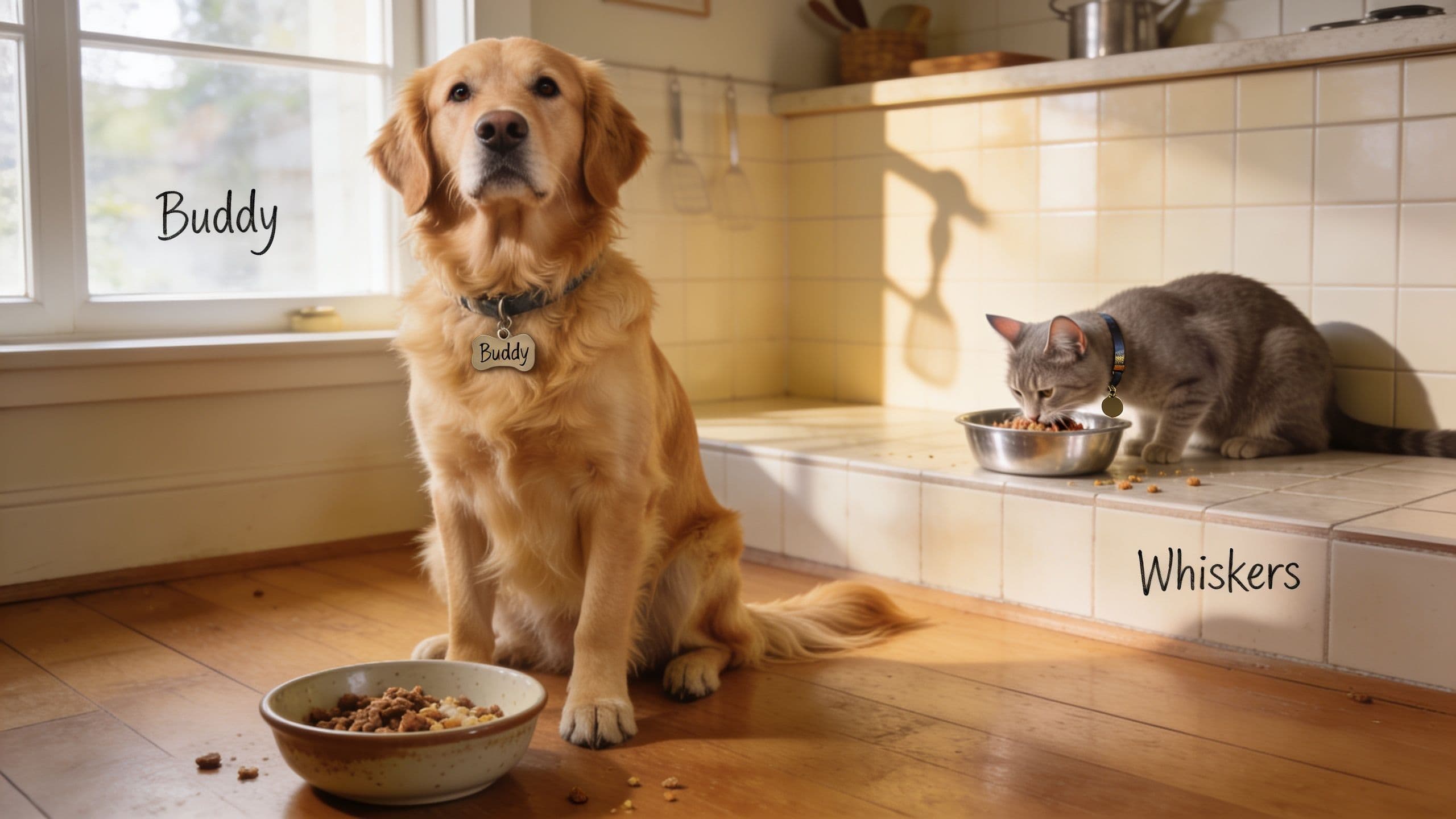
Dogs commonly treat breakfast as a major event. The meal may be followed by play, a walk, or simply staying close to the owner as the household gets moving. A dog often uses the morning to reestablish the social bond after the night.
Cats also care about feeding routines, but the social meaning can be more intermittent. A cat may wind around your legs, eat, and then disappear for a nap or a windowsill watch. That is not detachment so much as a different pattern of connection. Many cats prefer recurring short interactions over one long, morning-centered block of attention.
The workday divide: sustained participation versus periodic check-ins
This is where the contrast becomes most obvious.
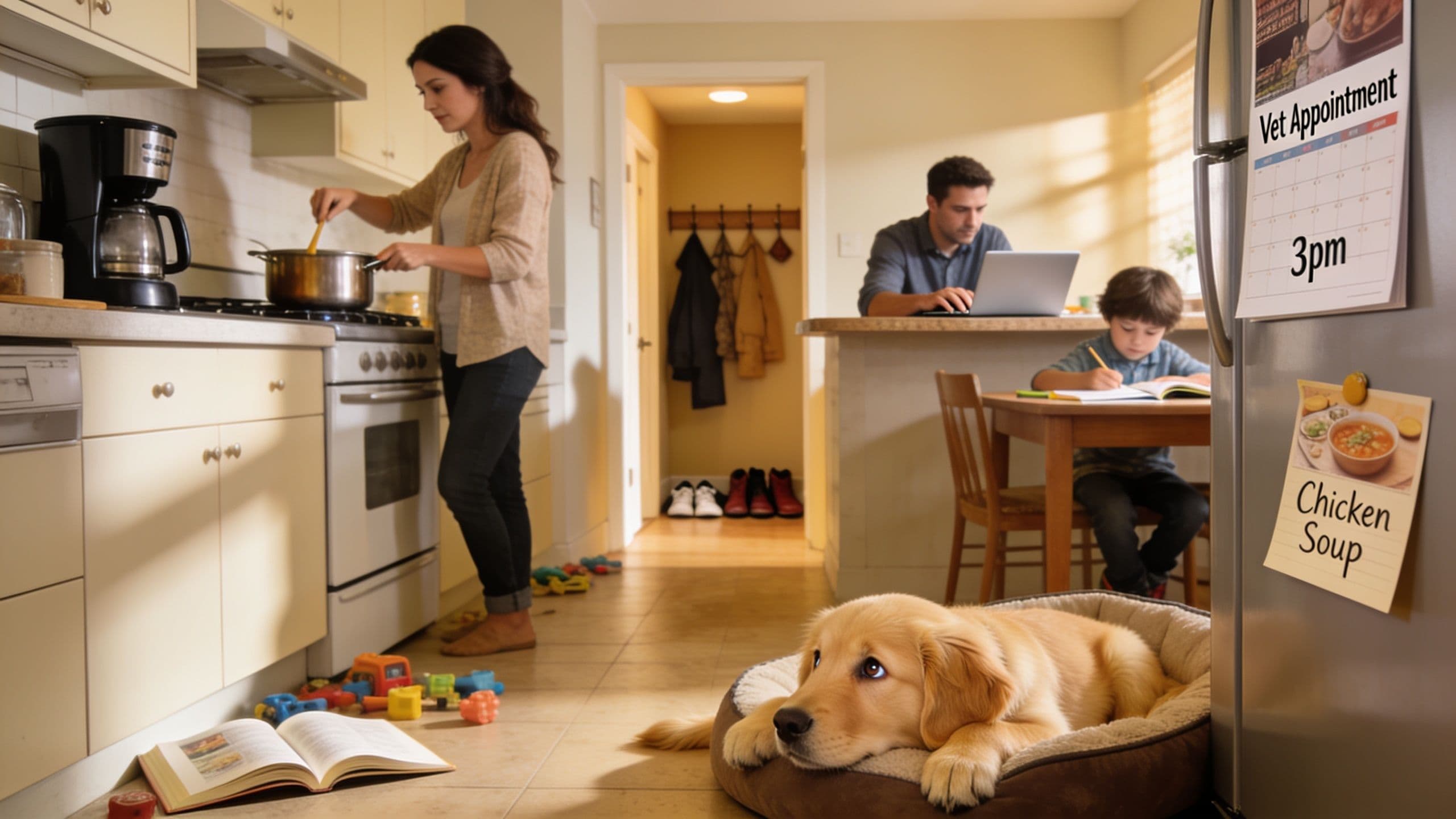
Dogs generally orient themselves around human activity. If you work from home, many dogs want to be where the action is, even when the action is just typing at a desk. They may settle nearby, ask to go out, prompt breaks, monitor movement from room to room, and become noticeably alert when you shift tasks. A dog often experiences the day as shared territory and shared time.
Cats tend to break the day into independent segments. A typical indoor cat may patrol the home, nap in multiple locations, watch birds or street activity, use the litter box, groom, then briefly return to check on a person before leaving again. The relationship is still active, but it is punctuated. Rather than sustained participation, cats often prefer periodic contact.
This is why cats are often described as independent. The label is partly true, but it can be misleading. Many cats are highly tuned to their people. They simply do not express that attachment through constant involvement. A cat may follow you for five minutes, sit on your laptop for ten, vanish for two hours, then reappear exactly when the room becomes quiet.
Dogs, by contrast, can find too much independence stressful. That is especially true for puppies, highly social breeds, and dogs prone to separation distress. A dog left alone for long stretches may not just get bored. The lack of routine interaction can become a welfare issue, which is why shelters and trainers often emphasize realistic planning around exercise, enrichment, and time at home.
Rest, patrol, and play happen on different clocks
Both cats and dogs sleep a lot more than many people assume, but the structure of that rest is different.
Cats are masters of distributed downtime. They nap repeatedly through the day, often in short to medium blocks, then become briefly alert and investigative before settling again. Their routine can look deceptively uneventful from the outside, but it includes a lot of environmental scanning: listening, watching, scent-checking, shifting positions, and selecting vantage points. A windowsill, hallway corner, bed, and chair back can all be part of one cat's daily circuit.
Dogs usually rest in a more socially anchored way. Many like to nap near their owners or in areas where they can monitor household movement. Their rest can be deep and contented, but it is often easier to interrupt. If someone stands up, opens a cabinet, picks up keys, or heads toward the door, many dogs instantly reassess whether the next important event is happening.
Short bursts versus sustained activity
Play style reinforces the difference in daily rhythm.
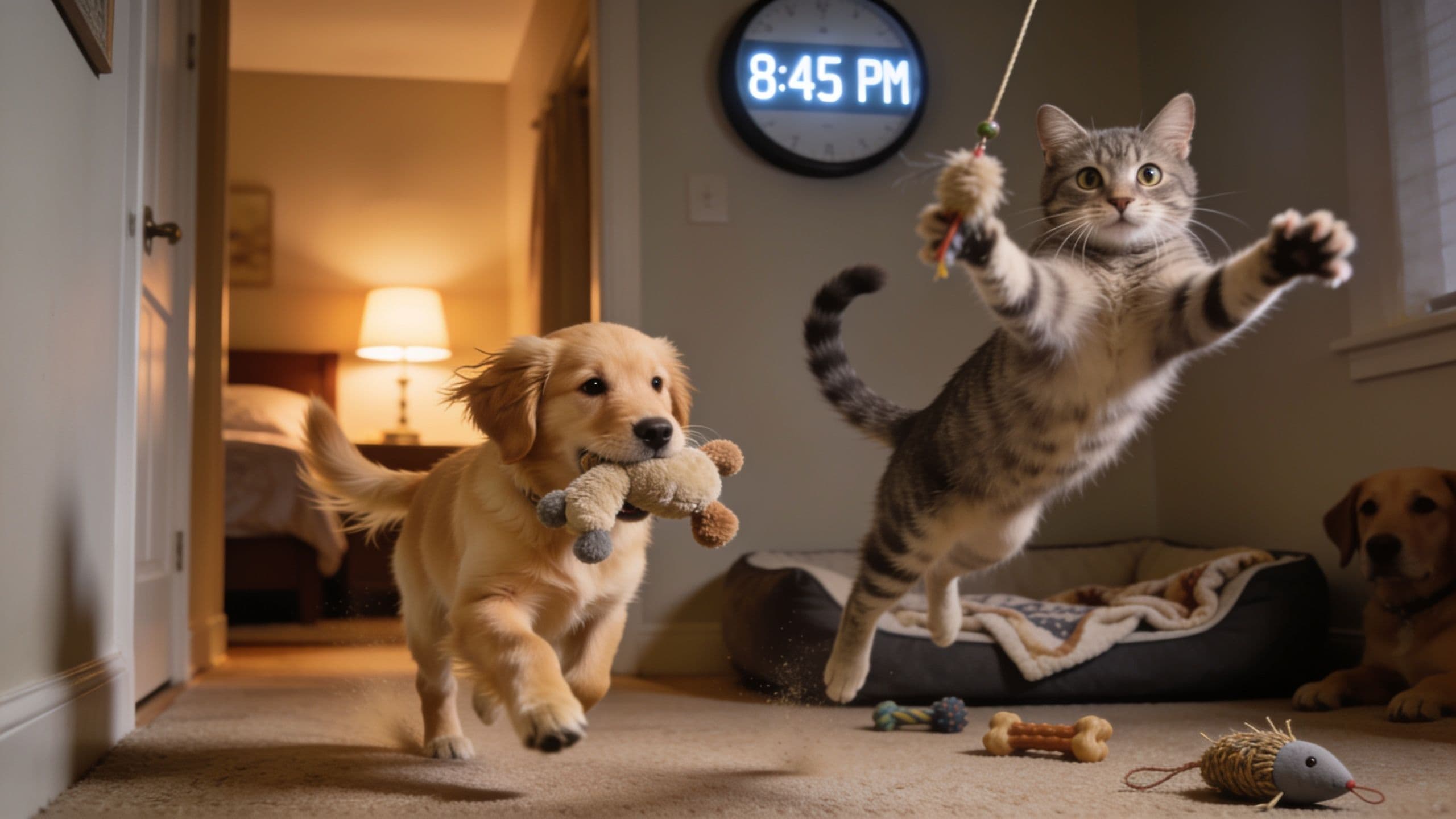
Cats often prefer intense but brief activity bursts. A wand toy session, chase sequence, sprint through the hallway, or pounce game may last only a few minutes before the cat resets. This mirrors the stop-start pattern many owners observe all day: rest, watch, burst, pause.
Dogs are more likely to need longer stretches of organized activity, especially younger dogs and working or sporting breeds. A real walk, training session, fetch game, or play period often does more for a dog than scattered micro-interactions. Five minutes with a toy may entertain a dog, but it usually does not replace a proper outing or mentally engaging routine.
That difference can reshape a household calendar. Cat care often fits into several smaller touchpoints. Dog care more often requires protected blocks of time.
What owners most often misread
One of the most common mistakes is expecting dog-style enthusiasm from cats. A cat that does not greet every return home with dramatic excitement may still be strongly attached. Affection in cats is often quieter and more situational: sitting nearby, sleeping on the bed, slow blinking, following into one room but not the next, arriving when the house calms down.
The opposite mistake is expecting cat-style self-sufficiency from dogs. Even easygoing dogs usually need more active management of the day. Meals, walks, bathroom breaks, training consistency, and social contact all matter. The modern dog world reflects that reality, from midday dog walkers to daycare services and enrichment products like puzzle feeders and snuffle mats.
Another frequent misread is assuming that a pet's schedule will naturally adapt to any household. To a point, yes. But species-level patterns persist. A cat may adapt by finding alternate rest zones and private routines. A dog may adapt by waiting, but waiting is not the same as thriving.
Which household rhythm each pet tends to suit
There is no universal winner, only better fits.
For busy homes with unpredictable hours, adult cats often slot in more smoothly, provided they still receive attention, play, and environmental enrichment. Their ability to self-pace through the day can make them easier companions for people who cannot promise structured outdoor activity at fixed times.
For highly structured households, dogs often feel naturally integrated. If your day already includes regular wake times, walks, family activity, and consistent evenings, a dog can mesh with that pattern beautifully. Many dogs thrive when the household itself acts as a framework.
Work-from-home households can suit both, but in different ways. A dog may turn the day into a more interactive routine, with breaks and companionship built in. A cat may make the space feel companionable without demanding continuous participation. The better choice depends on whether you want a co-worker or an intermittent observer.
Quiet apartments can work for both species too, but expectations matter. A cat may use vertical space, windows, and toy rotations to create a rich indoor life. A dog in the same setting may still need substantial outdoor time and training to stay settled. Size alone does not determine fit; routine does.
The most useful question is not whether cats or dogs are friendlier, smarter, or easier. It is whether you want a pet that shares your day in a continuous loop or one that moves around it in recurring, lighter contact.
Understanding that daily rhythm can prevent a lot of disappointment. Cats and dogs are not just different kinds of companions. They ask for different kinds of time, and they give back presence in different patterns. For most homes, that rhythm difference is the one that matters most.
Safety & Scope
This article is for general informational purposes and does not replace professional advice for complex repairs or installations.
Frequently Asked Questions
+Are cats really more independent than dogs day to day?
Usually yes, in the sense that cats often break the day into self-directed periods of rest, observation, and brief social contact. Dogs are generally more likely to rely on owners for structured activity, bathroom breaks, and sustained interaction.
+How do dog routines differ from cat routines?
Dog routines are typically more scheduled and owner-led, with clear times for walks, meals, play, and social activity. Cat routines are often more fluid, built around naps, patrols, short play bursts, and periodic check-ins with people.
+Which pet fits a more structured household better?
Dogs often fit highly structured households well because they thrive on predictable walks, feeding times, and shared activity. Cats can also enjoy consistency, but they usually place less pressure on the household to maintain a tightly organized daily schedule.