Small Pets Have Daily Routines Owners Miss in Plain Sight
Rabbits, guinea pigs, hamsters, and other small companions often reveal themselves through repetition rather than spectacle. Once owners notice the routes, pauses, feeding rituals, and lookout habits built into each day, these animals start to look far more expressive.
Jordan specializes in turning complex pets & animal lifestyle topics into clear, useful explainers for everyday readers.
What looks like randomness in a rabbit, guinea pig, or hamster is often a well-rehearsed daily pattern. Small pets rarely advertise their preferences with the kind of obvious drama people associate with cats and dogs. Instead, they communicate through routes they repeat, corners they claim, times they become active, and tiny changes in posture that say more than many owners realize.
That quiet regularity is not a lack of personality. It is often the personality.
The day is structured long before owners notice
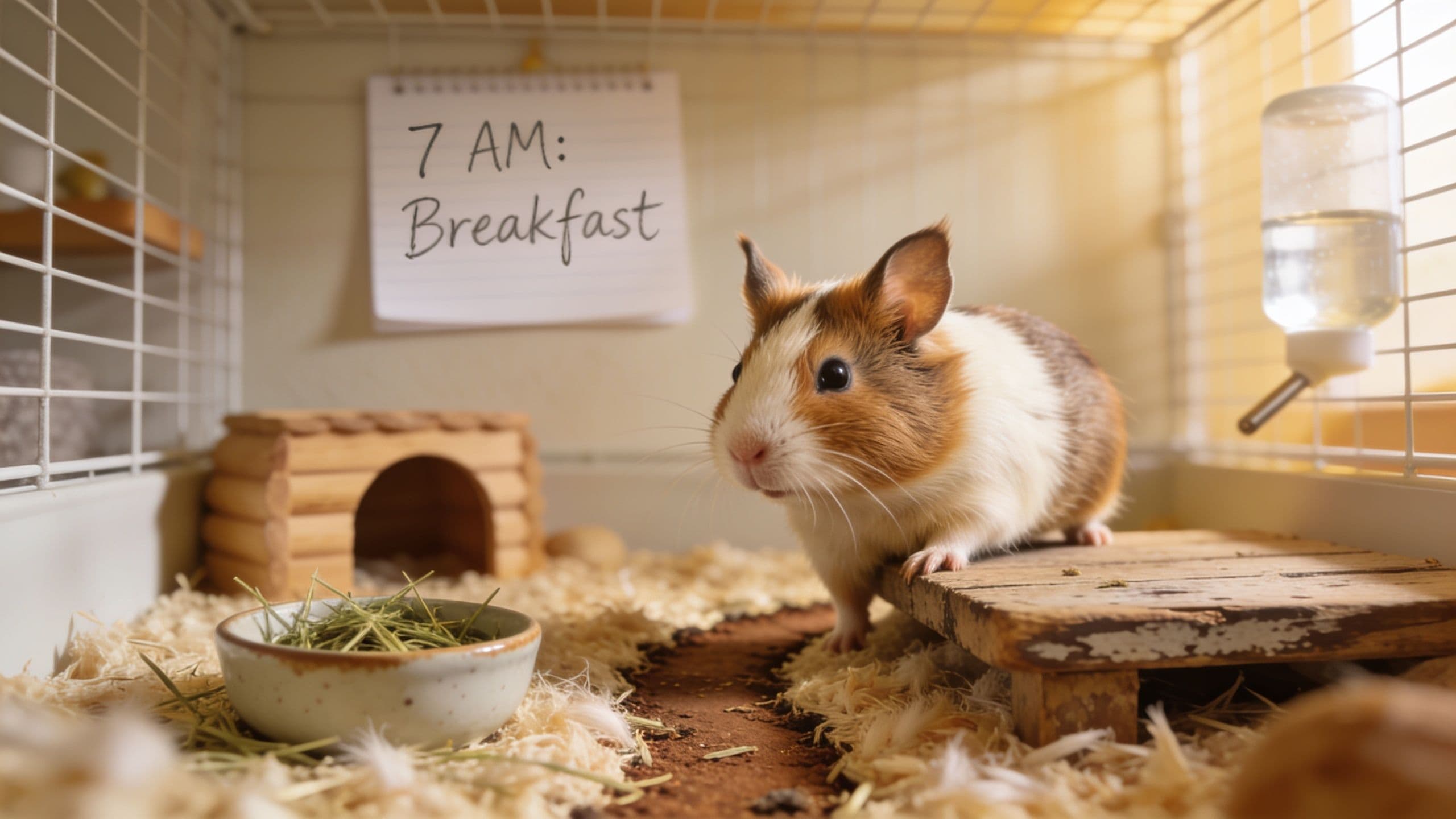
Many small companion animals build a reliable rhythm around safety, food, and observation. A rabbit may leave the same resting area each morning, loop past a water bowl, pause under a chair, then settle in a particular lookout spot before fully relaxing. A guinea pig may start calling for food at nearly the same time every day, then return to one preferred hide after eating. A hamster may emerge in the evening, circle the enclosure perimeter, inspect bedding changes, check the wheel, and only then begin foraging.
These patterns are not trivial habits. They are often how the animal maps security.
Rabbits are especially route-oriented. Owners frequently notice a “lap” around a room and assume it is just aimless movement. More often, the rabbit is running a familiar patrol: checking exits, scent points, favorite textures, and safe hiding options. If the route repeats daily, it usually means the layout has become meaningful.
Guinea pigs often organize their day around social and food cues. They may become animated before vegetables arrive, rest in predictable windows, and return to specific tunnels or shelters in a stable order. In pairs or groups, even the sequence of who emerges first can become part of the routine.
Hamsters, meanwhile, can look secretive until their timing becomes clear. Because many are crepuscular or nocturnal, owners miss much of their most purposeful activity. A hamster that “suddenly” becomes energetic every night at the same hour is not being erratic. It is following a schedule that makes perfect sense to the animal.
The overlooked signals hidden inside ordinary behavior
The most important small-pet signals are often subtle enough to be dismissed.
Freezing is not the same as relaxing
A still rabbit or guinea pig can mean two very different things. One kind of stillness is tense: body ready to move, ears or eyes tracking, breathing a bit sharper. The other is settled: body weight dropped, muscles softer, attention less fixed on escape. Learning that difference changes how owners read the room.
The same goes for hamsters. A hamster that pauses to assess a new object is different from one that flattens into caution or retreats abruptly after detecting a change it dislikes.
Repeated routes are often a vote of confidence
When a rabbit takes the same path from pen to rug to sofa edge every day, that route is usually doing emotional work. It links safe zones. It lets the animal move without improvising in open space. If a guinea pig repeatedly exits the hide, grabs hay, then backs into the same side entrance, that pattern may reflect where it feels least exposed.
Owners often try to enrich spaces by rearranging them constantly. Sometimes that helps. But frequent redesign can also erase the very landmarks that make a small pet brave enough to explore.
Curiosity has a recognizable shape
Curiosity in small pets is usually cautious before it is bold. Rabbits may stretch forward with hind feet planted, sniff, then retreat and return. Guinea pigs often perform stop-start investigation, peeking from cover before committing. Hamsters may circle an object multiple times, testing it through scent and brief contact rather than immediate use.
Those repeated checks are not hesitation in a human sense. They are how many prey animals gather information while preserving an exit plan.
Confidence can change by time of day
Some owners think their pet has “mood swings” when the real difference is timing. A rabbit that seems withdrawn in bright midday may become sociable at dawn or evening. A guinea pig may be bolder when the room is quiet. A hamster that ignores interaction during the day may become observant and interactive once household activity drops.
Routine is often tied to light, sound, and foot traffic as much as to feeding.
Why predictability matters more than people think
Small companion animals are often at their best when daily life feels legible. Predictability reduces the need to constantly reassess risk. That opens the door to exploration, appetite, play, and social behavior.
This is one reason owners sometimes report that a pet’s personality “suddenly appeared” after several weeks. In many cases, the animal did not transform. It simply learned the sequence of the home: when people wake, when food arrives, which noises mean danger, which hands bring hay, which areas stay quiet.
For rabbits, a stable floor plan can encourage more relaxed movement and even playful bursts of speed. For guinea pigs, consistency around feeding and hiding spaces can reduce frantic darting and make social pecking order easier to read. For hamsters, a predictable evening environment supports normal foraging, nesting, and exercise patterns.
Routine also makes change easier to detect. If a rabbit always visits a water bowl first and suddenly stops, or a guinea pig that usually wheeks for breakfast becomes quiet, or a hamster that normally emerges at a reliable hour stays hidden, owners have useful context. Pattern is what makes deviation visible.
How to read the routine without disrupting it
The best observations usually happen before owners intervene.
Start by watching the sequence rather than any single behavior. Which spot does the animal visit first after waking? Where does it pause before eating? Which hide is used during noisy parts of the day, and which one during quiet periods? Does it prefer to travel along edges, under furniture, through tunnels, or across open ground only when necessary?
A simple note on your phone for a few days can reveal more than memory alone. You may notice that your guinea pig drinks after social excitement, that your rabbit always rests where it can watch a doorway, or that your hamster spends the first fifteen minutes after waking inspecting any disturbed bedding.
Once those patterns are clear, adjust the environment with restraint.
Keep favorite paths open instead of blocking them with new toys.
Preserve successful lookout points, especially for rabbits and guinea pigs.
Add hiding options without removing the hide already used most.
Introduce new objects to the side of an established route rather than in the middle of it.
Be consistent with feeding windows when possible, particularly for animals that anticipate care through sound and timing.
This does not mean a pet’s space should stay static forever. It means changes should respect the map the animal has already built.
The most expressive pets are not always the loudest
Small pets are often underestimated because their communication is patterned rather than theatrical. A rabbit circling the same chair leg, a guinea pig waiting at the same tunnel entrance before dinner, or a hamster checking the same corner after lights dim is not just passing time. Each is repeating a choice.
Those choices reveal preference, confidence, caution, and expectation. They show which spaces feel safe, which moments feel social, and which routines make daily life manageable.
Owners who learn to see those repetitions usually stop describing their pets as quiet or simple. The animals were communicating all along. They were just doing it in a language made of timing, pathways, pauses, and return visits.
That is why small companions can feel suddenly more vivid once their routines come into focus. The drama was never missing. It was simply happening at a lower volume, every day, in plain sight.
Safety & Scope
This article is for general informational purposes and does not replace professional advice for complex repairs or installations.
Frequently Asked Questions
+How do small pets show they feel comfortable?
Comfort often appears as relaxed stillness, repeated use of favorite spots, predictable exploration, normal eating, and confident movement along familiar routes. A comfortable small pet usually looks less vigilant and more willing to rest, forage, or investigate without abrupt retreat.
+Why does my rabbit repeat the same route every day?
Rabbits often build stable pathways between safe areas, food, water, and lookout points. Repeating the same route can help them move confidently through a space they have mapped as secure. It is usually a sign that the environment has become meaningful and predictable.
+Do guinea pigs and hamsters prefer strict routines?
Many do well with consistent timing and familiar layouts, though each animal has its own tolerance for change. Guinea pigs often respond strongly to feeding routines and hide placement, while hamsters may follow reliable evening patterns tied to light and household quiet. Predictability tends to support confidence.