Rabbits, Guinea Pigs, and Hamsters Read a Room Too
Small companion animals do not need to bark, meow, or demand attention to show what they think of a space. Rabbits, guinea pigs, and hamsters respond constantly to noise, routine, traffic, and human behavior, often in subtle patterns that reveal when a home feels safe, busy, or calm.
Avery writes about trends, platforms, and strategic shifts in pets & animal lifestyle, with attention to what matters in practice.
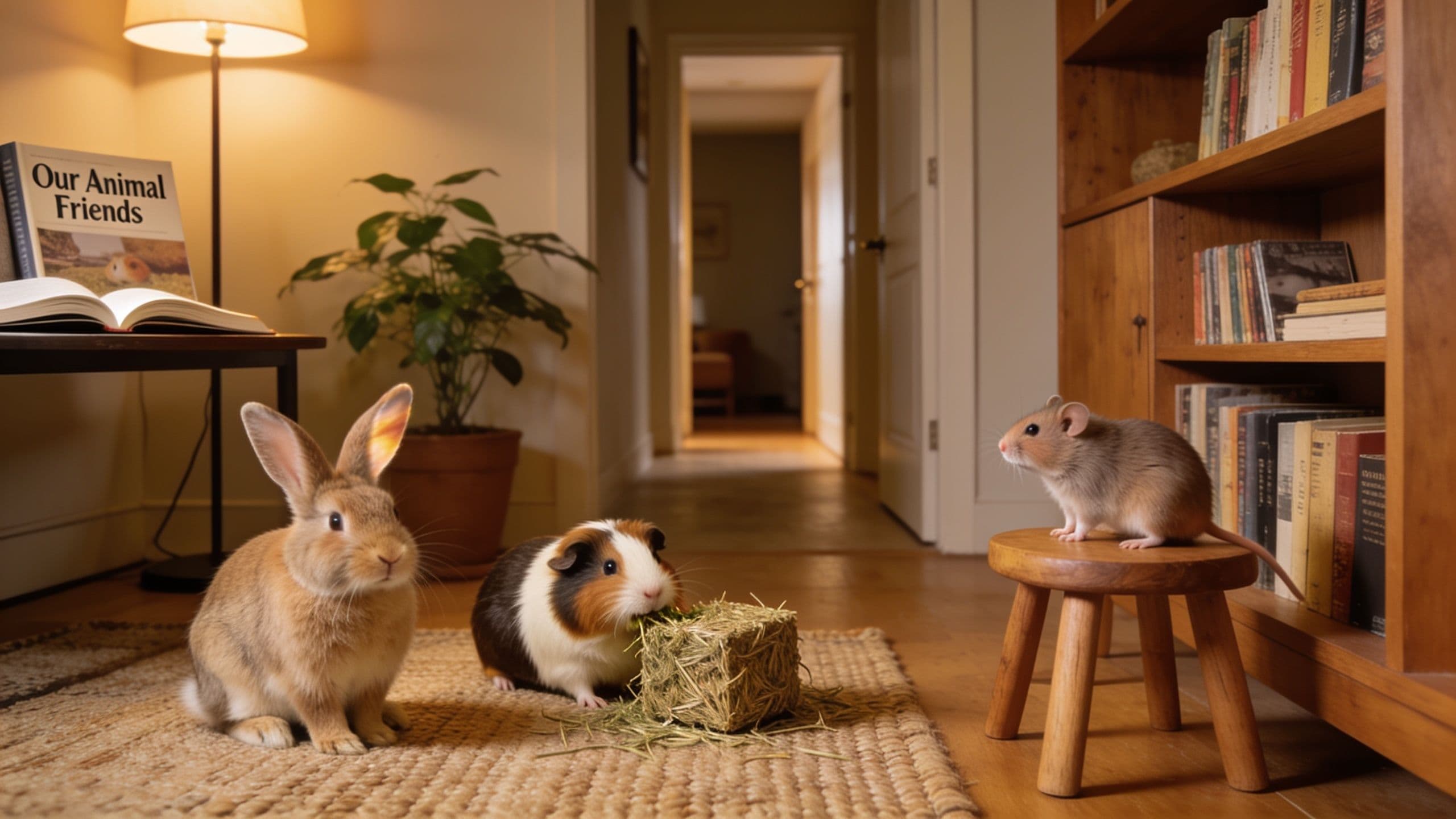
Quiet pets are not passive pets. Rabbits, guinea pigs, and hamsters are constantly assessing the spaces around them: who is moving, where sound is coming from, whether the usual routine is intact, and how exposed they feel. What looks like shyness or randomness often turns out to be a clear response to atmosphere.
For owners, that is useful news. Once you start noticing how small pets react to the tone of a room rather than just the objects in it, their behavior makes more sense. A rabbit that suddenly stays under a chair when guests arrive, a guinea pig that becomes chatty when the kitchen quiets down, or a hamster that waits for the house to settle before emerging is not acting mysteriously. Each is responding to the rhythms of home.
What “reading the room” looks like in a small pet
Small companion animals do not interpret a room the way humans do, but they are highly tuned to patterns. They notice vibration, footsteps, sudden voices, light changes, door sounds, and whether movement is predictable or chaotic.
That sensitivity tends to show up in a few familiar ways:
Freezing and scanning: A rabbit may pause mid-hop, lift its head, and orient its ears toward a new sound. A guinea pig may stop eating for a moment and hold still. A hamster may retreat to a hide, then reappear once the disturbance passes.
Delayed exploration: Many small pets wait until traffic slows before investigating toys, hay piles, tunnels, or new enrichment.
Routine-based boldness: Animals that know when feeding, cleaning, and social time usually happen often act more confident during those windows.
Selective social interest: Some pets like observing household activity from a safe distance. They are not necessarily hiding from people; they may simply prefer controlled engagement.
Owners often miss these cues because they expect communication to be obvious. With small animals, body language is usually quieter. The most telling signs can be timing, posture, and location. Did the rabbit stay in the open through a normal evening but disappear during a loud family gathering? Did the guinea pig popcorn and vocalize during a calm morning but remain withdrawn while children ran through the room? Did the hamster come out late on a weekend because lights and sound stayed active longer than usual? Those are meaningful responses, not background noise.
Atmosphere matters more than many setups acknowledge
Enclosures, exercise pens, and free-roam areas are often planned around convenience, but placement shapes confidence. A well-equipped habitat can still feel stressful if it sits in the wrong part of the home.
Noise is not just volume
A television at steady low volume may bother a pet less than intermittent bursts of laughter, kitchen clatter, barking, or doors slamming. Repetition helps animals map their environment. Unpredictability keeps them on alert.
Rabbits, as prey animals, are especially quick to monitor sound direction and motion. Guinea pigs tend to respond strongly to repeated household patterns; many become noticeably more expressive when they can predict what comes next. Hamsters, which are often most active in the evening or at night, may postpone normal behavior if late-night light and noise remain intense.
Placement changes behavior
A small pet enclosure usually works best where the animal can observe daily life without being trapped in its busiest stream. That often means:
not directly beside a blaring television or speaker
not in a hallway with constant foot traffic
not isolated in a room where the animal rarely sees anyone
not at floor level in a spot where people suddenly loom overhead without warning
The sweet spot is usually a stable area with moderate activity, visible routines, and enough shelter for the animal to opt in or out. Covered hideouts, tunnels, fleece forests, cardboard houses, or partially screened corners help create that choice.
For rabbits with more freedom in the home, the same principle applies. Many prefer to rest where they can watch household movement from the edge rather than the center. That is not antisocial behavior. It is strategic comfort.
Three species, three styles of noticing
These pets share prey-animal instincts, but they do not all process home life in the same way.
Rabbits: alert observers with a strong sense of space
Rabbits often seem emotionally legible once you know what to watch for. Ear position, body tension, willingness to sprawl, and whether they choose elevated attention or low-profile retreat can say a lot about how secure they feel.
A relaxed rabbit may loaf in the open, groom, stretch out, or casually monitor activity without leaving. A room that feels too intense can produce the opposite: crouching, staying close to cover, moving in quick dashes, or avoiding central areas.
Many rabbit owners notice that confidence rises when household movement becomes familiar. The same vacuum, same footsteps, same feeding sequence, same evening wind-down: repetition lowers the need for constant assessment.
Guinea pigs: routine-sensitive communicators
Guinea pigs are often underestimated because their communication is easy to label as simple squeaking. In reality, they are sharp readers of timing and association. They quickly learn which sounds predict food, which people move gently, and which periods of the day feel safest.
A guinea pig that seems timid at noon may be much bolder in a quiet early evening. Another may remain hidden during active family breakfast but become outgoing when one person sits nearby reading or working. Their confidence is deeply linked to whether the environment feels legible.
This is also why enclosure consistency matters. A guinea pig with reliable hideouts, feeding times, and social handling often shows more curiosity. It can afford to.
Hamsters: explorers who keep their own schedule
Hamsters are especially easy to misread because many owners expect affection or visibility on human terms. But hamsters often reveal comfort through steady, self-directed activity rather than overt sociality.
A hamster that emerges, forages, runs, rearranges bedding, and checks the perimeter is telling you the room feels manageable. One that waits unusually long to come out or startles back into hiding may be responding to light, noise, or disruption.
Timing matters here more than with many other pets. If the home stays active well into the hours when a hamster would normally explore, the animal may shift its routine. What looks like laziness may simply be environmental negotiation.
The household habits that build confidence
Small pets usually do best when they can anticipate the shape of the day. That does not require a silent house or a perfect schedule. It requires patterns that make sense from their point of view.
A few changes often have outsized effects:
Keep rhythms recognizable
Try to make feeding, spot-cleaning, play, and lights-out happen in roughly similar windows. Consistency helps animals stop treating every movement as a possible disruption.
Offer both cover and visibility
Animals relax more when they can choose how much of the room to engage with. A hide without any view can feel isolating; a fully exposed setup can feel risky. The best environments usually include both sheltered and open zones.
Let observation count as participation
Not every pet wants active handling every time you are nearby. Sitting close, speaking softly, moving predictably, or letting the animal watch your routine can be meaningful social contact.
Notice patterns before changing things
Before assuming a pet is moody, look at context. Did visitors stay late? Was furniture moved? Did a new appliance start running? Was the enclosure shifted to a busier wall? Small pets often react first and explain later, through behavior.
Subtle animals still have strong preferences
One of the most useful shifts an owner can make is to stop viewing calm, cautious, or delayed behavior as lack of personality. Rabbits, guinea pigs, and hamsters all develop preferences about vantage point, noise, timing, and proximity. They may not announce those preferences loudly, but they live by them.
That is why two pets of the same species can act completely differently in similar homes. One rabbit may lounge near the sofa during movie night while another prefers the edge of the room. One guinea pig may whistle the moment the refrigerator door opens while another only relaxes after the house quiets. One hamster may start its evening rounds at 9 p.m. sharp while another waits until midnight because that is when the environment finally feels steady.
The takeaway is simple: these animals have a point of view about domestic life. When owners respect that point of view, behavior often becomes calmer, clearer, and easier to understand. A small companion animal may not command a room, but it is almost always reading one.
Safety & Scope
This article is for general informational purposes and does not replace professional advice for complex repairs or installations.
Frequently Asked Questions
+Can rabbits tell when a room feels busy or calm?
Yes. Rabbits are highly alert to movement, sound, and changes in routine. In a busy room, many will pause more, stay closer to cover, or avoid open spaces. In a calm, predictable room, they are more likely to stretch out, groom, explore, or rest in the open.
+Why does my guinea pig act braver at certain times of day?
Guinea pigs often become more confident when the environment is predictable and quiet. If your home is calmer at certain hours, your guinea pig may feel safer exploring, vocalizing, or interacting then. They also learn routines quickly, so confidence often increases around familiar feeding or social times.
+Where should I place a small pet enclosure in the home?
Aim for a spot with moderate, predictable activity rather than constant noise or total isolation. A good location lets the animal observe household life without being in the direct path of heavy foot traffic, loud electronics, or frequent sudden movement. Include hideouts and partially sheltered areas so the pet can choose when to be visible.