Pets Learn the Weekend Schedule Faster Than We Realize
Many pets seem to know it is Saturday before anyone says a word. They are not reading calendars; they are reading tiny changes in our alarms, clothes, pace, sounds, and habits with remarkable precision.
Maya covers pets & animal lifestyle with an emphasis on practical analysis, products, and real-world impact.
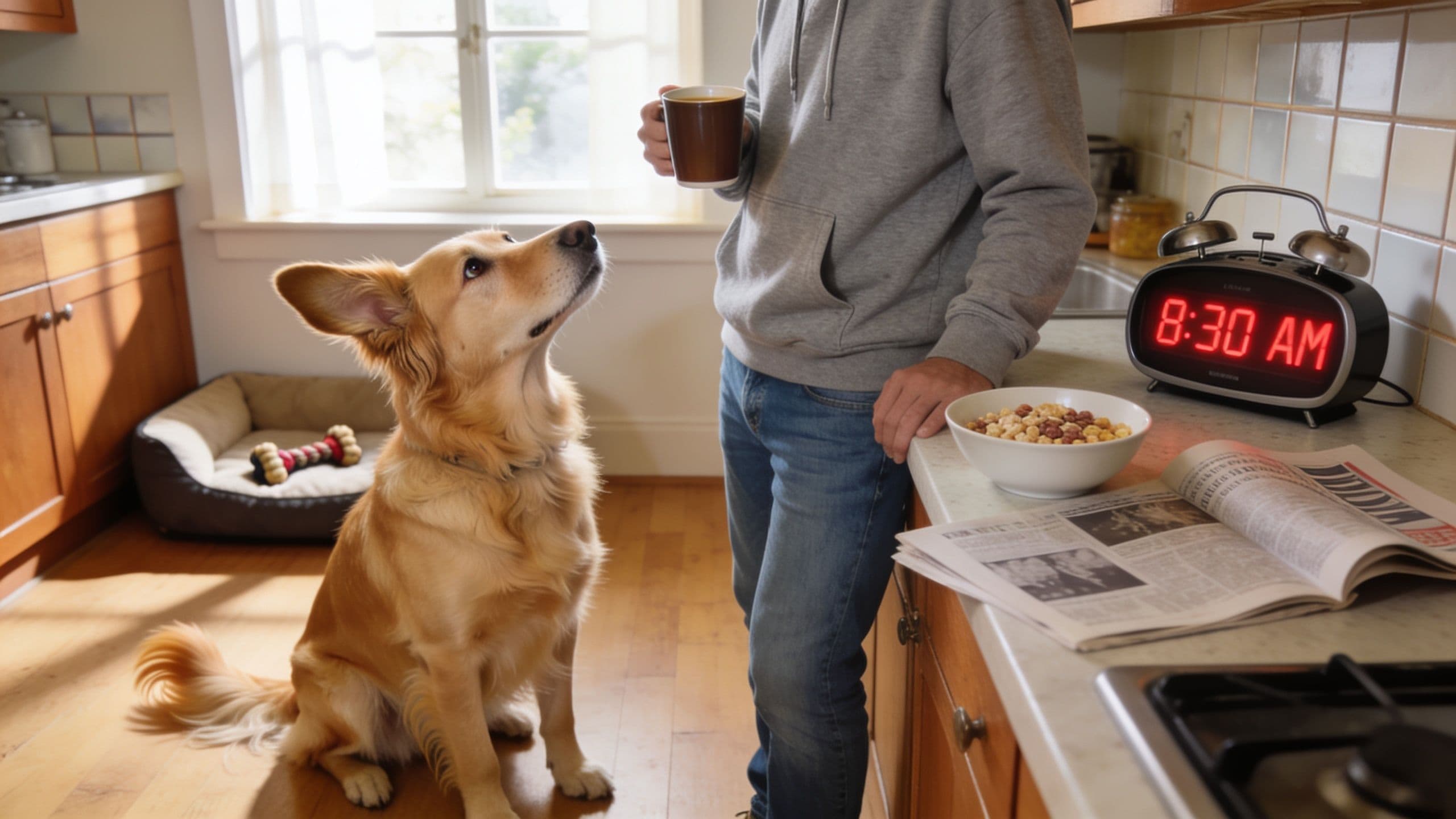
Your pet may be the first one to notice that the house has slipped into weekend mode. Not because dogs and cats understand Saturdays in the human sense, but because they are experts at tracking patterns. A skipped alarm, a slower walk to the kitchen, different shoes by the door, extra coffee grinding, a laptop left closed: to an animal that lives inside the rhythm of a household, those details are not background noise. They are the schedule.
That is why so many pet owners swear their dog gets excited earlier on Saturday mornings or their cat settles in closer on Sundays. The animal is not guessing. It is responding to a chain of familiar signals that tends to appear together, week after week.
Weekend starts with micro-changes, not major events
Humans often think of routine in broad strokes: workday versus day off, school run versus lazy morning, weekday dinner versus brunch. Pets tend to notice routine at a much finer level.
A dog may register that the bedroom door opens 20 minutes later than usual. A cat may notice that the shower starts later, that no one reaches for office clothes, or that the kitchen stays occupied longer. These are small shifts, but animals are unusually good at linking repeated cues to expected outcomes.
On weekdays, the sequence might be almost mechanical:
alarm
bathroom light
fast dressing
keys
shoes
short goodbye
On weekends, the sequence changes:
no alarm or a softer one
slower movement
different clothes
longer breakfast preparation
more conversation
a leash appearing earlier, or not at all
To people, this can feel casual and unplanned. To a pet, it is a recognizable pattern with strong predictive value.
Dogs and cats build a household calendar out of behavior
Research on animal cognition consistently shows that companion animals are excellent observers of human routines and social cues. They do not need a concept of "Saturday" to anticipate what usually happens when the house sounds, smells, and moves a certain way.
Dogs, in particular, are highly tuned to human action patterns. Much of dog training relies on this sensitivity: posture, hand position, tone of voice, timing, and repetition all shape expectation. Weekend recognition is the same process in everyday life rather than in a formal training setting.
Cats are often underestimated here. They may seem independent, but many are deeply routine-oriented. Anyone who has been reminded of breakfast at exactly 6:03 a.m. knows that cats track timing with startling confidence. They also monitor traffic patterns in the home: who sits where, when a room becomes available, when a lap is likely to appear, when the front door usually opens, and when the house becomes quiet.
In effect, pets build a practical calendar from recurring household signals:
Time cues
Light in the room, alarm timing, meal timing, and the interval between one event and the next.
Visual cues
Work clothes versus sweatpants, handbags versus tote bags, school uniforms, gym shoes, or the absence of a coat.
Sound cues
A weekday alarm, a coffee grinder, a hair dryer, children getting ready, a garage door, a video call voice, or weekend music.
Pace cues
Fast walking, rushed speech, distracted movement, versus lingering in the kitchen or settling on the couch.
Opportunity cues
The chance of a longer walk, a car ride, open doors, visitors, shared couch time, or extra treats.
For an animal, these cues are useful because they reliably predict what comes next.
Why the weekend gets a bigger reaction
The reason pets often seem more animated on weekends is simple: weekends tend to bring more access to people.
For many dogs, Saturday means longer walks, later mornings with everyone home, errands that might include a car ride, or at minimum a less hurried household. That makes the opening cues of the day unusually exciting. A dog that starts wagging the moment it hears a different alarm pattern is not being mystical; it is anticipating a better set of odds.
Cats may react differently but just as clearly. Some become more social when the household slows down. Others hover nearby, claim preferred chairs sooner, or nap in the center of activity because the environment feels more predictable and occupied. If weekdays mean empty rooms and weekends mean warm laps and open doors, the difference matters.
This is also why some pets seem confused or restless on long holiday weekends, remote-work days, or days when a normal weekday suddenly looks like a Sunday. Their internal model says one thing, while the human schedule says another. The mismatch can produce clinginess, extra excitement, or repeated checking behaviors.
The clues owners miss because pets do not
People are surprisingly inconsistent narrators of their own behavior. Many owners say, "I did not do anything different," while a pet has already cataloged half a dozen changes.
Maybe you did not set the usual phone alarm. Maybe you stayed in slippers. Maybe the children were louder in the hallway. Maybe the kitchen smelled like eggs and toast instead of a protein bar grabbed on the way out. Maybe no work bag landed in its usual spot.
Pets notice these details because their lives depend on reading environments closely. A dog watching for a walk, a cat waiting for a quiet perch, or a rabbit anticipating feeding time is not casually observing. The animal is constantly matching present cues to past outcomes.
That sensitivity can make pets look almost comedic in their certainty. The dog who parks at the door when you put on hiking clothes. The cat who appears the instant a weekend blanket comes out. The bird who starts vocalizing when the household breakfast becomes a long one instead of a rushed one. These behaviors feel charming because they reveal how much attention animals pay to our smallest habits.
What weekend awareness says about pet perception
The larger point is not that pets understand the seven-day week. It is that they understand us far better than we tend to assume.
Companion animals are immersed in human routines and are rewarded for learning them. Sometimes the reward is obvious, like a walk or meal. Sometimes it is social, like company, touch, play, or access to a favored room. Over time, they become specialists in pattern reading.
That has a few implications for owners.
First, apparent "intuition" is often close observation. Your pet may seem uncannily psychic, but the explanation is usually sharper perception rather than mystery.
Second, routine changes have emotional weight. A weekend schedule can lift a pet's mood because it increases interaction and predictability in a preferred direction. By the same logic, abrupt household changes can create uncertainty.
Third, paying attention to what your pet anticipates can teach you something about your own habits. If your dog gets excited before you have consciously decided on a longer walk, it may be because your body language has already made the decision for you. If your cat appears when you switch into softer clothes and settle on the couch, that pairing has probably happened dozens of times before.
The weekend, then, is a useful reminder of how closely pets study human life. They do not need a wall calendar, a smartwatch, or a day planner. They have the scrape of a chair, the time the kettle goes on, the shoes you did not put on, the pace of your footsteps, and the fact that everyone stayed home just a little longer.
And often, that is more than enough for them to know that the house has changed gears before the people in it fully have.
Safety & Scope
This article is for general informational purposes and does not replace professional advice for complex repairs or installations.
Frequently Asked Questions
+Do pets know when it is the weekend?
Not in the human calendar sense, but many pets can recognize the pattern of cues that usually comes with weekends. They notice changes in alarm timing, clothing, sounds, meal routines, and how quickly people move through the house.
+Why is my dog more excited on Saturday mornings?
Your dog may associate Saturday mornings with better outcomes, such as longer walks, more people at home, extra play, or a less rushed routine. Small early-morning cues can be enough to trigger that expectation.
+Can cats recognize changes in household routine?
Yes. Cats are often highly sensitive to timing, room use, noise patterns, and human availability. A slower morning, different seating habits, or more time spent at home can be very noticeable to them.