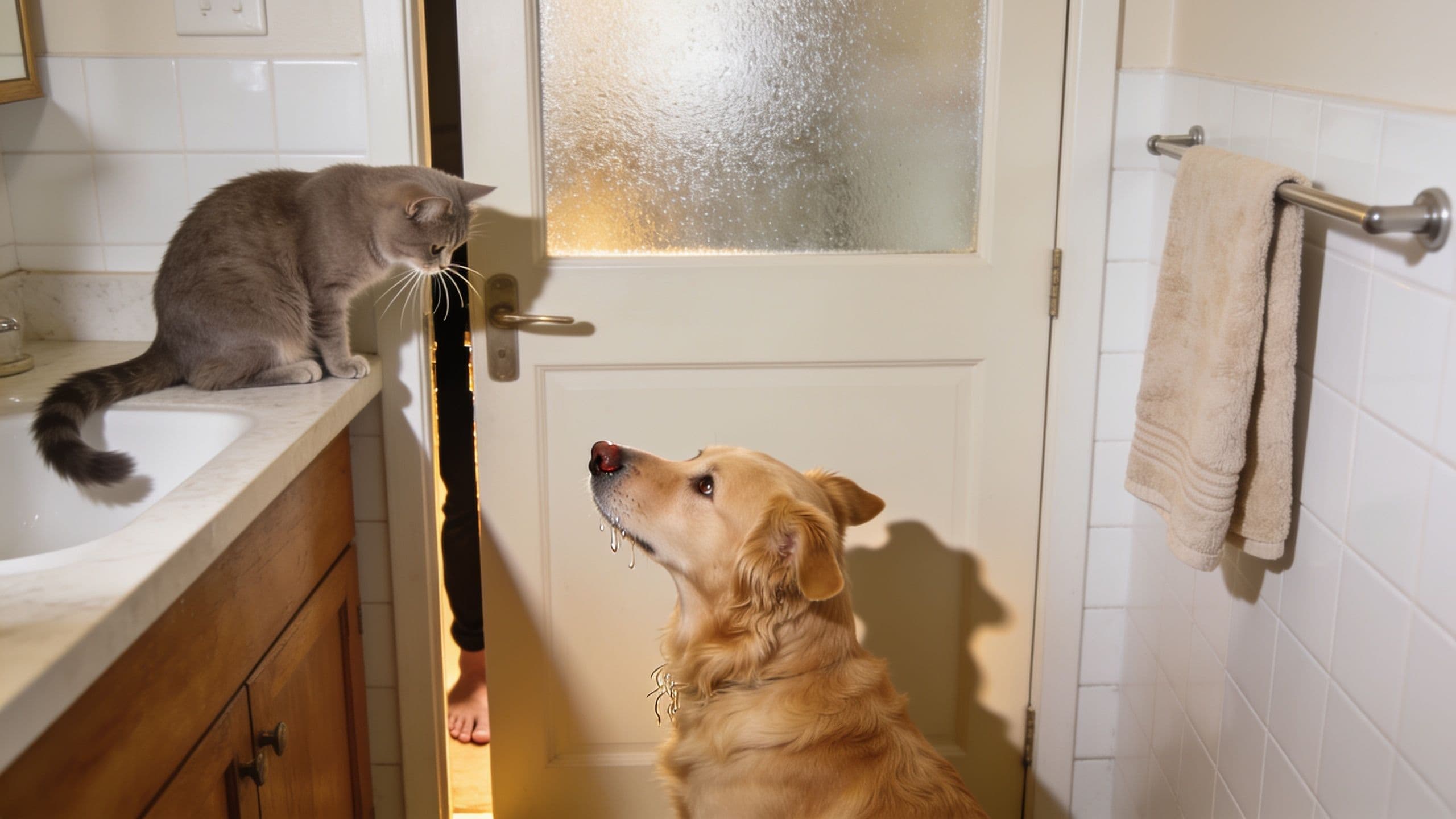
Morning Pets and Night Owls: How Household Schedules Shape Behavior
Many pet behavior mysteries are really schedule mysteries. Dogs and cats learn the timing patterns of a home with surprising precision, but their own species-level and individual rhythms still matter—especially when early wakeups, late-night zoomies, and weekend disruptions collide.
Avery writes about trends, platforms, and strategic shifts in pets & animal lifestyle, with attention to what matters in practice.

Pets often seem psychic about household timing, but what they are really showing is pattern recognition. They notice the alarm that usually leads to breakfast, the first footsteps that predict a walk, the laptop closing that means the day is done, and the subtle slowdown that happens before bed. Over time, they do not just respond to the people in a home. They respond to the sequence.
That is why so many annoying pet habits feel uncannily punctual. The cat starts pawing at the bedroom door at 5:42 a.m. The dog gets restless at 9 p.m. sharp. The rabbit rattles the pen when the kitchen lights come on. These behaviors are not random, and they are not always about hunger or stubbornness. They are often the product of a pet learning the timing logic of a household, then blending it with the animal’s own natural preferences.
Pets learn routines faster than people realize
Most pets do not need a clock to understand the day. They build a practical version of one from repeated cues.
Light is one of the biggest anchors. Morning brightness, evening dimness, and seasonal shifts all affect activity levels. But light is only part of the story inside a home. Pets also track sounds, movement, and social habits with remarkable precision. An alarm tone, a coffee grinder, a shower, a child coming downstairs, keys jangling near the door, the television turning off—each can become a signal that predicts what happens next.
Meal timing is especially powerful because it creates a strong feedback loop. If breakfast usually appears ten minutes after the first human gets out of bed, a pet may start acting up five minutes before that person rises. From the animal’s perspective, that early behavior may seem effective. If it reliably precedes food, the habit sticks.
Weekends add another layer. People often assume pets cannot tell weekdays from Saturdays, yet many clearly respond differently when the usual pattern changes. Dogs may sleep in if no one moves around at the normal work-hour pace, or they may become agitated because the walk is late and the cues are scrambled. Cats may hover earlier if they have learned that a slower human morning still eventually leads to feeding. They do not understand the concept of a weekend. They understand that the sequence has changed.
Dogs synchronize socially; cats hedge for opportunity
Dogs and cats both adapt to household rhythms, but often in different styles.
Dogs tend to be strong social synchronizers. Centuries of living closely with humans have made many dogs highly responsive to our timing, attention, and shared activity. They often align sleep, movement, and anticipation with the people around them. A dog may become energetic when the family gathers by the door, sleepy when everyone settles on the sofa, or anxious when a usual after-work ritual does not happen. For many dogs, routine is not just comforting. It is the framework that makes the day legible.
Cats usually look more independent, but they also study routine closely. The difference is that they often combine household cues with an opportunity-based strategy. A cat may adapt to your schedule while still preserving its own preferred activity windows, especially around dawn and dusk, when many cats are naturally more alert. That is why a cat can seem perfectly tuned to your workday yet still decide that 4:30 a.m. is a great time to sprint down the hallway.
Individual temperament matters just as much as species. One dog may be calm until breakfast and then bounce off the walls if the walk is delayed by fifteen minutes. Another may handle schedule drift with no visible complaint. One cat may wake a household with theatrical insistence, while another simply waits near the bowl. Age also changes timing style: puppies and kittens cycle through activity and rest differently than adults, and senior pets may wake earlier, need more bathroom breaks, or become less tolerant of disrupted habits.
Why schedule mismatches create so much friction
Many common complaints are really timing conflicts between human expectations and pet expectations.
Dawn wakeups are often trained, not chosen
Early wakeups can start with biology—especially in cats or in dogs that genuinely need an early bathroom break—but they are often reinforced by the household. If pawing, whining, or pacing regularly leads to breakfast, attention, or access to the yard, the pet learns that pre-dawn activity works. Even if the owner feels they are giving in “just this once,” pets experience the pattern, not the excuse.
Evening chaos can be a release valve
Late-night silliness, zoomies, or pestering often happens when a pet has spent the day under-stimulated or out of sync with the household. If the family is busy all day and finally becomes available at 9 p.m., that hour may become the pet’s biggest social and activity window. What people read as random madness can be pent-up energy meeting predictable availability.
Weekends confuse pets because anchors move
Sleeping late sounds luxurious to humans. To a pet who expects breakfast, exercise, or company at a set time, it can feel like a glitch in the system. Some pets adapt easily. Others become more demanding precisely because the reliable cues are missing.
Shift changes and travel can scramble the whole map
A new job schedule, a baby, school holidays, or a houseguest can alter pet behavior quickly because the pet’s learned predictions stop working. During those periods, animals often become clingier, noisier, more wakeful, or more withdrawn. The behavior is not always a sign of deep emotional trouble. Sometimes it is the visible effect of a disrupted timetable.
Small schedule changes usually work better than dramatic resets
When owners want a calmer morning or a smoother evening, the instinct is often to force a totally new routine overnight. That can backfire. Pets usually do better when the structure changes gradually but clearly.
Start by identifying the strongest anchors in the day. For many homes, those are wake-up time, first meal, walk time, evening play, and bedtime. If a pet is waking the household too early, moving breakfast later in one big jump may create more noise, not less. A slower shift—ten to fifteen minutes every few days—gives the pet time to relearn the sequence.
It also helps to separate your movement from the pet’s reward. If getting out of bed instantly triggers feeding, the pet may focus on making you get up. A brief buffer between rising and serving breakfast can weaken that association over time. The same logic applies at night. If a pet gets wild when the household finally relaxes, a planned play session or walk before the usual chaos window can redirect the energy before it spills over.
Consistency matters more than perfection. Pets do not need military precision, but they benefit from stable anchors. A dog may tolerate a walk at 6:30 one day and 7 the next if meals, bedtime, and attention remain broadly predictable. A cat may handle minor weekend drift if morning feeding does not swing wildly.
For homes with irregular schedules, the goal is not strict sameness. It is clarity. Even when work hours vary, pets cope better if certain events keep a recognizable order: bathroom break, breakfast, rest, evening interaction, last outing, lights down.
The best clue is often the pattern before the behavior
Owners understandably focus on the obvious problem: the meowing, the barking, the hallway sprinting, the dramatic stare from the edge of the bed. But the most useful question is usually what happened before that behavior started to feel inevitable.
Did breakfast creep earlier because someone wanted a few more minutes of sleep? Did evening walks get shorter during winter? Did remote work teach a dog to expect daytime company that disappeared once the office reopened? Did a cat begin waking everyone after a vacation scrambled feeding times?
Once the pattern comes into focus, the behavior often looks less mysterious. Pets are not merely reacting to isolated moments. They are responding to the daily architecture of the home. That architecture includes our alarms, our habits, our inconsistencies, and the rewards we deliver without meaning to.
The broader lesson is simple: many pet behavior puzzles are schedule puzzles in disguise. Dogs and cats do adapt to us, often with impressive precision. But they do not stop being dogs and cats in the process. Their natural activity windows, energy levels, and individual quirks still shape how they fit into the household clock. The smoother that clock is, the fewer battles it tends to create.
Safety & Scope
This article is for general informational purposes and does not replace professional advice for complex repairs or installations.
Frequently Asked Questions
+Why does my pet wake me up at the same time every day?
Usually because your pet has learned a reliable chain of cues and outcomes. If waking you leads to food, a walk, attention, or access to another room, the behavior becomes part of the routine. Light levels, internal body rhythms, and habit all contribute.
+Do cats and dogs understand weekends?
Not as a human concept. They respond to changed patterns instead. Pets notice when alarms do not go off, people sleep later, meals shift, or the usual walk happens at a different time. What looks like weekend awareness is often strong sensitivity to routine changes.
+How can I change a pet routine without causing chaos?
Change a few key anchors gradually rather than overhauling everything at once. Shift meal or walk times in small increments, keep the order of major events predictable, and avoid rewarding the exact behavior you want to reduce, such as feeding immediately after an early wakeup.