How to Help Pets Adjust to a New Sofa or Rearranged Room
A new sofa or shifted floor plan can unsettle pets more than owners expect. Small changes in scent, pathways, and resting spots can affect confidence, routines, and behavior, but a few thoughtful adjustments can make the transition much smoother.
Maya covers pets & animal lifestyle with an emphasis on practical analysis, products, and real-world impact.
To people, a new sofa is a style update. To a dog or cat, it can feel like the home map has been redrawn overnight. Pets build comfort through scent, familiar routes, predictable sightlines, and favorite resting places. When a couch disappears, a coffee table moves, or a once-open corner fills with furniture, some animals adapt instantly and others act strangely for days.
That reaction is usually not stubbornness or bad behavior. It is a practical response to an environment that suddenly feels different.
Why furniture changes register so strongly for pets
Pets do not experience a room the way humans do. They are not evaluating whether the new sectional looks better with the rug. They are tracking where they can rest, observe, move, hide, and smell familiar cues.
Scent is a major part of that. An old sofa often carries months or years of household odor: people, laundry, treats, naps, and the pet's own fur. A brand-new couch may smell like packaging, warehouse dust, fabric treatments, leather, or cleaning products. Even if it looks inviting to you, it may smell wrong to your pet.
Pathways matter too. Dogs often repeat the same routes between the front door, food area, bed, window, and favorite person. Cats are just as route-oriented, especially if they move along edges, behind furniture, or up to elevated perches. Rearranging a room can interrupt those patterns and force pets to recalculate how they move through space.
Observation spots are another overlooked detail. Many pets rely on a few strategic places to monitor the household. That may be the arm of a couch facing the hallway, a window-adjacent chair, or a tucked-away corner behind the loveseat. Remove or rotate those spots, and some animals lose a key source of confidence.
The most common reactions after a room reset
Some pets inspect every change immediately. Others act as if the room has become slightly unsafe.
Typical reactions include:
prolonged sniffing around the new furniture
hesitating to enter the room
avoiding the new sofa at first
pacing or choosing a different place to rest
jumping onto the new couch instantly and claiming it
barking or staring at familiar spaces that now look different
hiding more than usual, especially in cats
None of those reactions automatically signal a problem. They usually reflect adjustment.
What matters is duration and intensity. A dog that pauses before walking around a moved ottoman is adapting. A cat that skips one evening nap on the new couch is adapting. But if your pet stops eating, seems highly distressed, vocalizes constantly, or remains withdrawn for several days, it is worth looking more closely at whether the environment feels secure enough.
Make the new setup smell and feel familiar
The fastest way to make a new furniture piece less alien is to layer in familiar scent and texture.
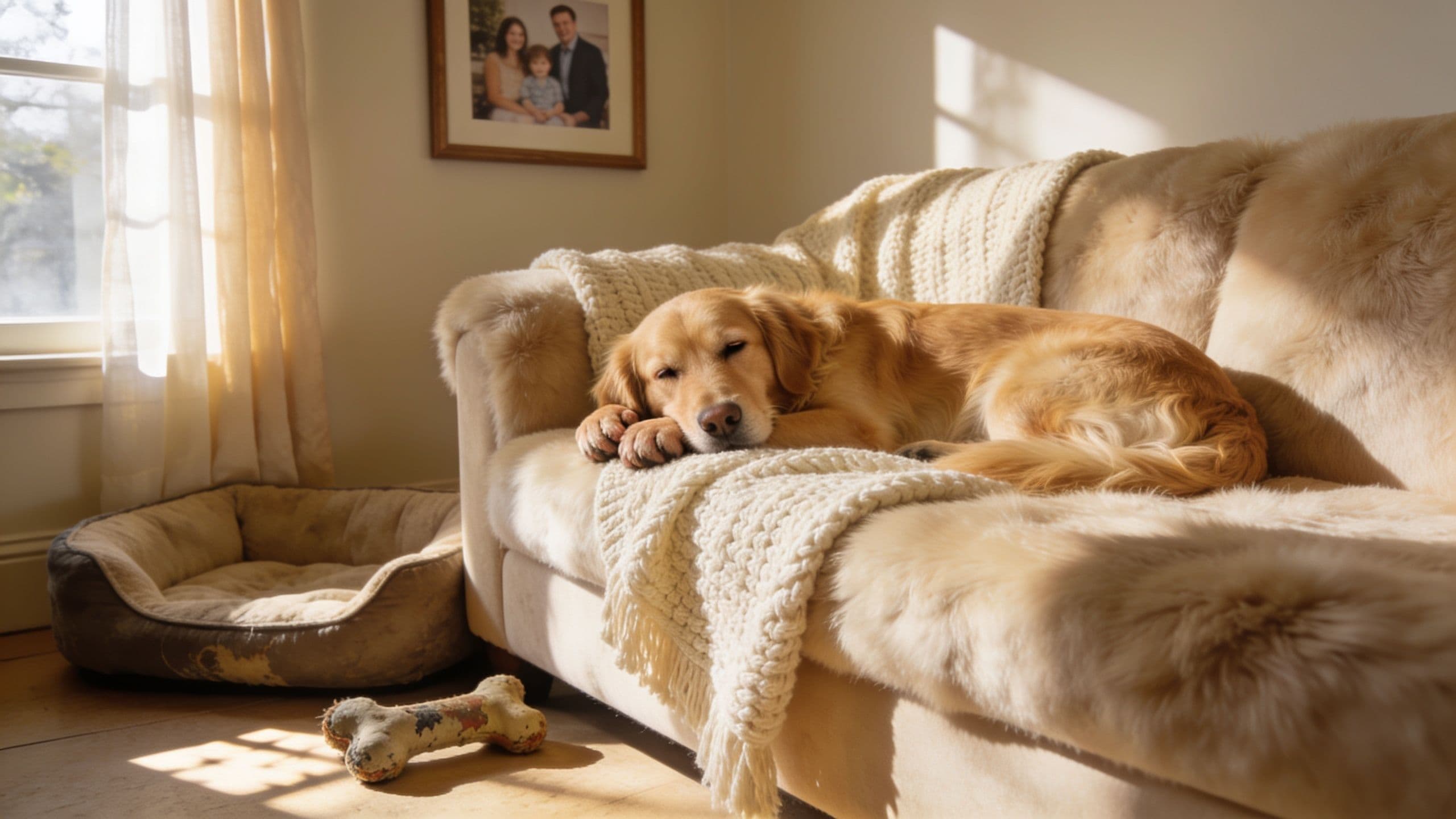
Place a favorite blanket, washable pet throw, or bed near the new sofa or directly on it if that is allowed in your home. If your cat already loves a certain cushion or your dog always sleeps on one fleece mat, move that item into the updated space right away. Familiar materials help bridge the gap between the old room and the new one.
Avoid aggressively cleaning every surrounding surface at the same time. If you introduce a new couch, deep-clean the rug, wash all pet bedding, and diffuse a strong room fragrance on the same day, you remove too many familiar scent anchors at once.
For cautious pets, it also helps to let the furniture exist without pressure. Do not repeatedly pat the cushion and insist they jump up. Let them investigate on their own timeline. Curiosity usually works better than coaxing.
A few simple tactics often help:
keep one or two established resting items in the same room
reward calm investigation with praise or a treat
leave the room quiet during first exploration
avoid blocking the new item with people crowding around it
skip heavily perfumed sprays on the furniture
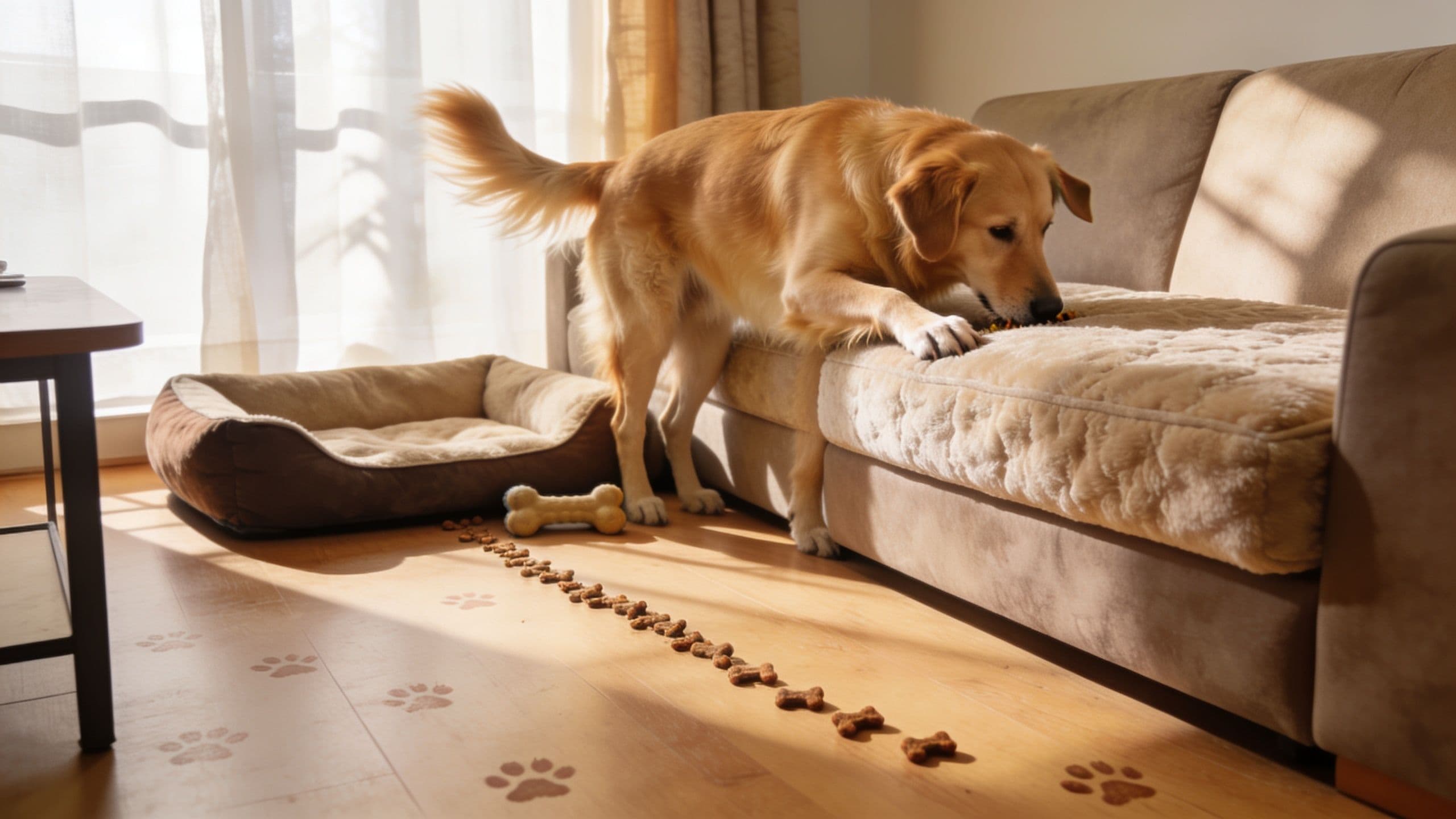
For cats, tossing treats onto the sofa or placing a known blanket on one corner can create a low-pressure invitation. For dogs, sitting calmly on the sofa with a relaxed posture can signal that the new object belongs to the normal household routine.
Protect routine even if the room layout changes
When the environment shifts, routine becomes more valuable. Feeding time, walks, play sessions, bedtime, and morning rituals should stay as stable as possible for the first few days.
That consistency tells pets that while the room looks different, the life happening inside it is still predictable.
If the rearrangement changes access to important resources, fix that early. A food bowl that used to sit in a low-traffic corner may now be beside a loud TV speaker. A litter box may suddenly feel exposed if a console table was removed. A dog bed that once sat against a wall may now be in the middle of a path, where nobody can truly relax.
Look at the room from your pet's perspective and ask:
Can they still move between key areas without squeezing through obstacles?
Do they still have a quiet place to rest without being startled?
Can they watch household activity from a safe spot?
Have their usual routes become slippery or blocked?
Even minor changes can matter. A new rug may shift under a senior dog. A different coffee table may narrow the turn a large dog takes at full speed. A bulkier sofa can remove the under-furniture hiding option a shy cat relied on.
Dogs and cats notice different things
Dogs often react most to route changes and social access. If the new sofa blocks a path to the window, separates them from their usual place near you, or changes where guests sit, they may hover, circle, or try to restore the old flow. Dogs that like open floor space may need a little extra room around beds and walkways before they seem fully settled.
Cats are more sensitive to territory structure. They tend to care about climbing options, hidden retreats, escape routes, and stable observation points. If the old couch had a backrest that doubled as a perch and the new one is low and sleek, a cat may lose a favored surveillance station. Add a nearby cat tree, stool, or window perch to replace that function.
In multi-pet homes, watch shared zones closely. A rearranged room can alter who controls the best resting spot or the easiest route through the space. Two animals that tolerated each other before may show tension if one now has to pass too closely by the other's preferred bed or perch.
Design choices that make the transition easier
Some furniture and layout decisions support pet confidence better than others, especially in homes with older animals, shy pets, or busy family traffic.
Prioritize traction. Smooth floors paired with a new sofa can make jumping on and off harder, especially for small dogs, large senior dogs, and less athletic cats. A rug pad, runner, or pet step can reduce hesitation.
Keep pathways clear. Pets generally prefer obvious movement lanes rather than obstacle courses. Leave enough room around coffee tables, side chairs, and ottomans that your dog does not have to thread through tight gaps and your cat still has edge routes.
Preserve at least one dependable lounge spot. If everything changes at once, the pet loses every familiar anchor. Keeping one bed, one chair, or one sunny resting zone in place can soften the adjustment.
Think about height and cover. Cats often benefit from one elevated option and one hidden option in the same room. Dogs usually benefit from a bed placed against a wall or in a corner rather than in the center of household traffic.
And if the new sofa is off-limits, be especially clear and consistent from day one. Confusion is harder on pets than a simple rule. Offer an attractive alternative nearby, such as a bed with a familiar blanket, so the prohibition does not feel like a loss without replacement.
A rearranged room rarely looks dramatic to the people living in it for long. To pets, though, those changes can shape confidence, rest, and movement in ways owners miss. The best response is not overreaction; it is thoughtful continuity. Keep scent familiar, protect routines, leave routes open, and let your pet learn the new map at their own pace. Most do, as long as home still feels like home.
Safety & Scope
This article is for general informational purposes and does not replace professional advice for complex repairs or installations.
Frequently Asked Questions
+Why is my pet acting weird after I moved the furniture?
Pets rely on familiar scent, pathways, and resting spots. When furniture moves, the room can feel unfamiliar even if it looks minor to you. Sniffing, hesitation, avoidance, or extra clinginess are common short-term adjustment behaviors.
+How can I help my cat adjust to a new couch?
Place a familiar blanket or cushion on or near the couch, let your cat investigate without pressure, and make sure the room still offers a perch or hiding option. Treats and calm exploration usually work better than forcing contact with the new furniture.
+Do dogs care when you rearrange a room?
Many dogs do. They often notice blocked pathways, changed lounging spots, and shifts in how they access people, windows, or doors. Most adjust quickly if routines stay consistent and the new layout remains easy to move through.