From Vacuum to Visitors, Pets Create a Home Noise Ranking Fast
Pets do not hear a home as harmless background. They sort its sounds by meaning, building a fast mental ranking that tells them what predicts food, play, strangers, disruption, or nothing worth noticing.
Maya covers pets & animal lifestyle with an emphasis on practical analysis, products, and real-world impact.
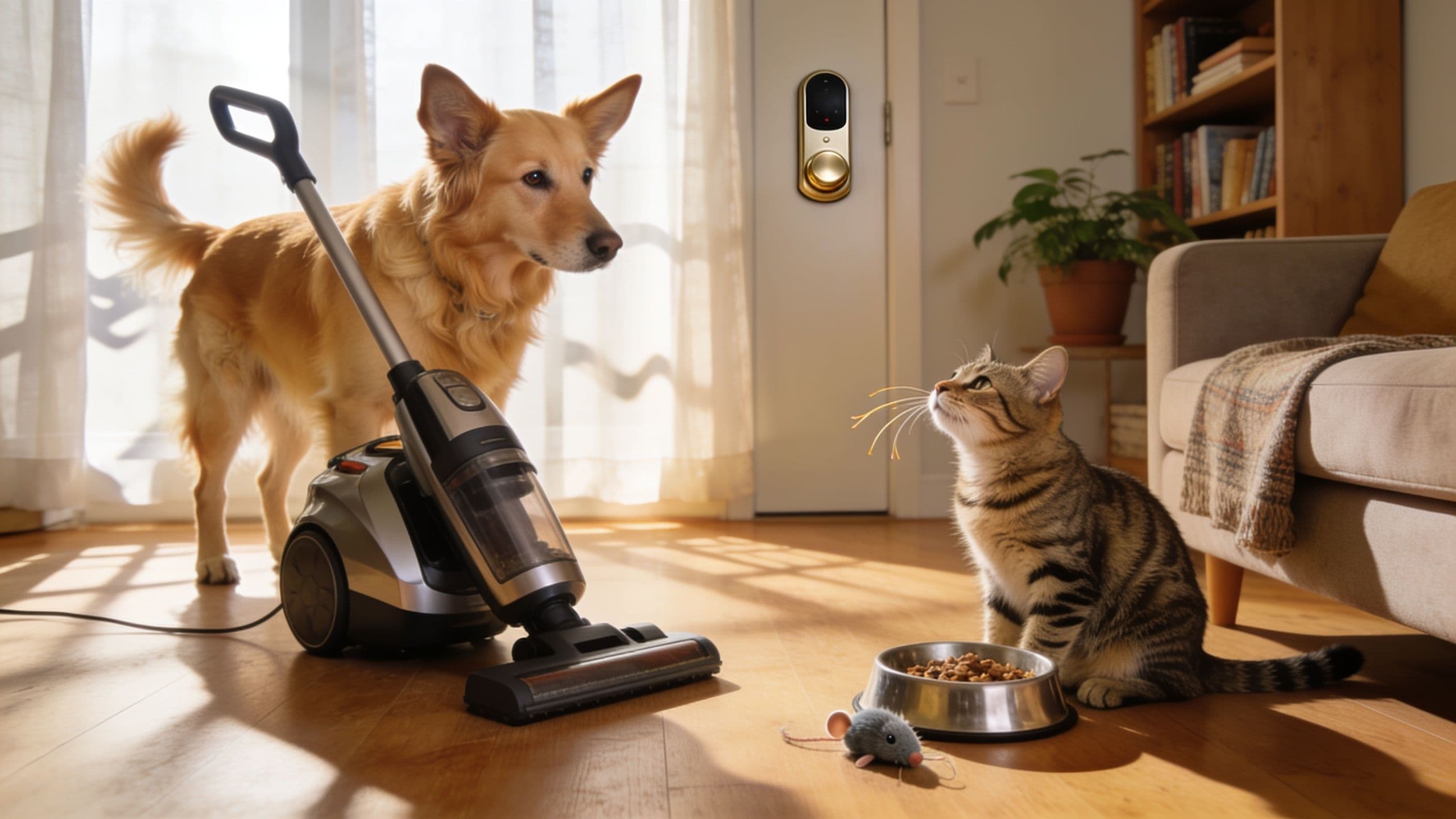
Pets are remarkably efficient at turning household noise into useful information. What sounds random or routine to people often becomes a highly organized signal system for dogs and cats: one drawer means treats, the hallway keys mean someone is leaving, the building buzzer means a stranger is coming, and the vacuum means disruption is about to roll across the floor.
That is why a pet may sleep through a loud television but sprint into the kitchen at the soft click of a cabinet latch. The difference is not simply volume. It is meaning. Over time, animals build a mental ranking of sounds based on what tends to happen next.
Pets listen for consequences, not just loudness
A pet's home sound map forms through repetition and outcome. If a sound consistently predicts something important, the brain starts treating it as high priority.
The crackle of a food pouch is a classic example. It may be quieter than a dropped pan, but if it reliably leads to dinner, it earns immediate attention. The same goes for leash clips, freezer doors, a particular closet, or the squeak of the cabinet where toys are stored.
Behavior researchers often describe this in terms of association and predictive value. A noise becomes meaningful when it helps an animal anticipate an event. For companion animals, that event usually falls into a few major categories:
reward, such as food, treats, play, or a walk
disruption, such as the vacuum, blender, or garbage truck
social change, such as visitors, delivery workers, or a family member leaving
irrelevance, meaning the sound happens often and changes nothing
This is why one tiny sound can outrank a much louder one. The pet is not making a mistake. It is prioritizing the cue with the clearest history.
How the household noise ranking forms
Most pets seem to build these rankings quickly, but they are constantly updating them. Four factors usually matter most.
Repetition teaches the pattern
Repeated pairings are powerful. If every morning starts with the coffee grinder, then breakfast bowls, many pets begin reacting before the food appears. The grinder itself may not be inherently interesting. Its value comes from the routine attached to it.
Cats are especially good at noticing these narrow patterns. Many cat owners know the experience of opening ten drawers with no reaction, then touching the one drawer that holds the treats and suddenly finding a cat at their ankles.
What happens after the sound matters even more
A sound tied to strong consequences gets promoted fast. If the apartment buzzer means a stranger will enter the space, that sound may trigger alertness, barking, hiding, or a sprint to the door. If the same buzzer repeatedly rings with no direct impact on the pet, its importance may fade.
This helps explain why pets in the same home can rank the same noise differently. One dog may see keys as a hopeful sign of a walk. Another may associate keys with being left alone. The sound is identical; the emotional history is not.
Location helps pets decode the signal
Animals also track where a sound comes from. A rustle in the kitchen differs from a rustle at the front door. A footstep on the stairs differs from one outside the bedroom. Pets often combine sound with spatial memory to decide whether they should approach, stay put, or prepare to retreat.
That is one reason the vacuum can be so salient. It is not just loud. It moves through the home, changes location, and is difficult to predict with precision. For many animals, that makes it more intrusive than a stationary appliance.
Human reactions become part of the cue
Owners unintentionally teach sound meanings all the time. If a person perks up at the delivery buzzer, says "who's here?" and walks to the door, the pet learns that this noise matters. If someone reaches for shoes, grabs a bag, and changes tone of voice, the entire sequence becomes readable.
Pets are often responding to a bundle of signals rather than one isolated sound. The jingle of keys may matter because it arrives with body language, movement, and expectation.
Why the quietest noises can trigger the biggest response
People tend to assume animals react most strongly to sounds that are loud, shrill, or sudden. Sometimes they do. But everyday behavior shows that predictiveness often beats raw intensity.
A soft zipper can mean the travel carrier is coming out. A closet door can mean the leash is nearby. The barely audible slide of a freezer drawer can signal a favorite snack. These sounds stand out because they are specific and dependable.
By contrast, many homes are full of noise that has little practical meaning to a pet. A television soundtrack, a washing machine hum, or ordinary conversation may fade into the background once the animal learns that nothing follows.
Emotional history sharpens this sorting process. If a noise has previously led to excitement, frustration, fear, or relief, the response becomes faster and more durable. A rescue dog may react strongly to hallway footsteps but ignore kitchen clatter. A confident house cat may barely notice guests but instantly orient toward the can opener.
The ability to prepare also matters. Sounds that give a pet time to act are especially valuable. If the front gate clicks before a visitor enters, the dog can run to the door. If the treat drawer opens before food appears, the cat can arrive early. Predictive sounds are useful because they create a window for action.
The familiar sounds that split into very different meanings
Household noises may seem generic to humans, but pets often separate them into fine-grained categories.
Keys are not just keys
Many dogs distinguish between keys picked up for a quick errand and keys paired with shoes, a coat, and a bag. The sound itself is only part of the message. Context tells them whether this means a walk, a car ride, or being left behind.
Delivery buzzers and door sounds signal social uncertainty
Apartment intercoms, doorbells, knocks, and elevator sounds often carry strong weight because they predict change. Someone new may appear. A person in the home may become animated. The pet may gain access to the hallway, lose access to a room, or decide to hide.
For territorial or socially sensitive animals, these cues can outrank many louder household noises.
The vacuum is a category of disruption
The vacuum often lands high on the household noise hierarchy because it combines volume, motion, proximity, and unpredictability. It alters the environment and can follow the pet from room to room. Even when an animal becomes more tolerant over time, the sound rarely becomes meaningless.
Packaging sounds can become precise food codes
Pets frequently learn the difference between a potato chip bag and the pouch that contains their actual treats. Dogs and cats are better at pattern recognition than people give them credit for. If one specific crinkle predicts reward often enough, it gets stored as important.
Drawers and closets become memory landmarks
A single drawer may hold brushes, catnip, or dental chews. A closet may contain the harness or carrier. Once those links are established, the pet can ignore twenty irrelevant openings and still react instantly to the one that has consequences.
What your pet's reactions reveal about daily life
A pet's sound ranking is a useful window into its routines and expectations. Reactions can show what the animal values, what it worries about, and how closely it tracks human behavior.
Anticipation is often the clearest clue. If your cat appears before you have even prepared the meal, it is likely reacting to an earlier cue in the chain. If your dog becomes alert when you open a laptop bag at the wrong time of day, that may indicate a learned association with departures or schedule changes.
Sensitivity to change matters too. A pet that suddenly reacts to a once-ignored noise may be noticing a new consequence, or it may be responding to a broader shift in routine. New neighbors, delivery frequency, a different feeding setup, or changes in work-from-home habits can all reshape the sound map.
Owners can learn a lot by watching which noises cause orienting, approach, avoidance, or no response at all. The pattern usually reflects memory and expectation more than simple startle. A home, from a pet's perspective, is not a wash of background sound. It is a layered forecast system.
And once that system is in place, pets use it brilliantly. They know which click means dinner, which rumble means retreat, and which buzz means the world outside is about to enter the room.
Safety & Scope
This article is for general informational purposes and does not replace professional advice for complex repairs or installations.
Frequently Asked Questions
+Why does my pet react to one tiny sound but ignore louder noises?
Pets often prioritize sounds by predictive value rather than volume. A quiet drawer slide that always leads to treats can matter more than a loud television because it reliably signals something important.
+Do pets learn the sounds of daily routines?
Yes. Pets quickly associate repeated sounds with regular events such as meals, walks, departures, visitors, or bedtime. Over time, those sounds become part of a mental map of the household.
+Why does my cat come running when I open one specific drawer?
Your cat has likely learned that this particular drawer predicts something rewarding, such as food, toys, or catnip. Cats are very good at distinguishing between similar sounds when one has a strong history of positive consequences.