Dogs Read Tension on Walks Faster Than Owners Expect
Many walks go sideways before the obvious trigger appears. Dogs often pick up leash pressure, breath changes, pace shifts, and posture long before owners realize they are broadcasting concern.
Avery writes about trends, platforms, and strategic shifts in pets & animal lifestyle, with attention to what matters in practice.
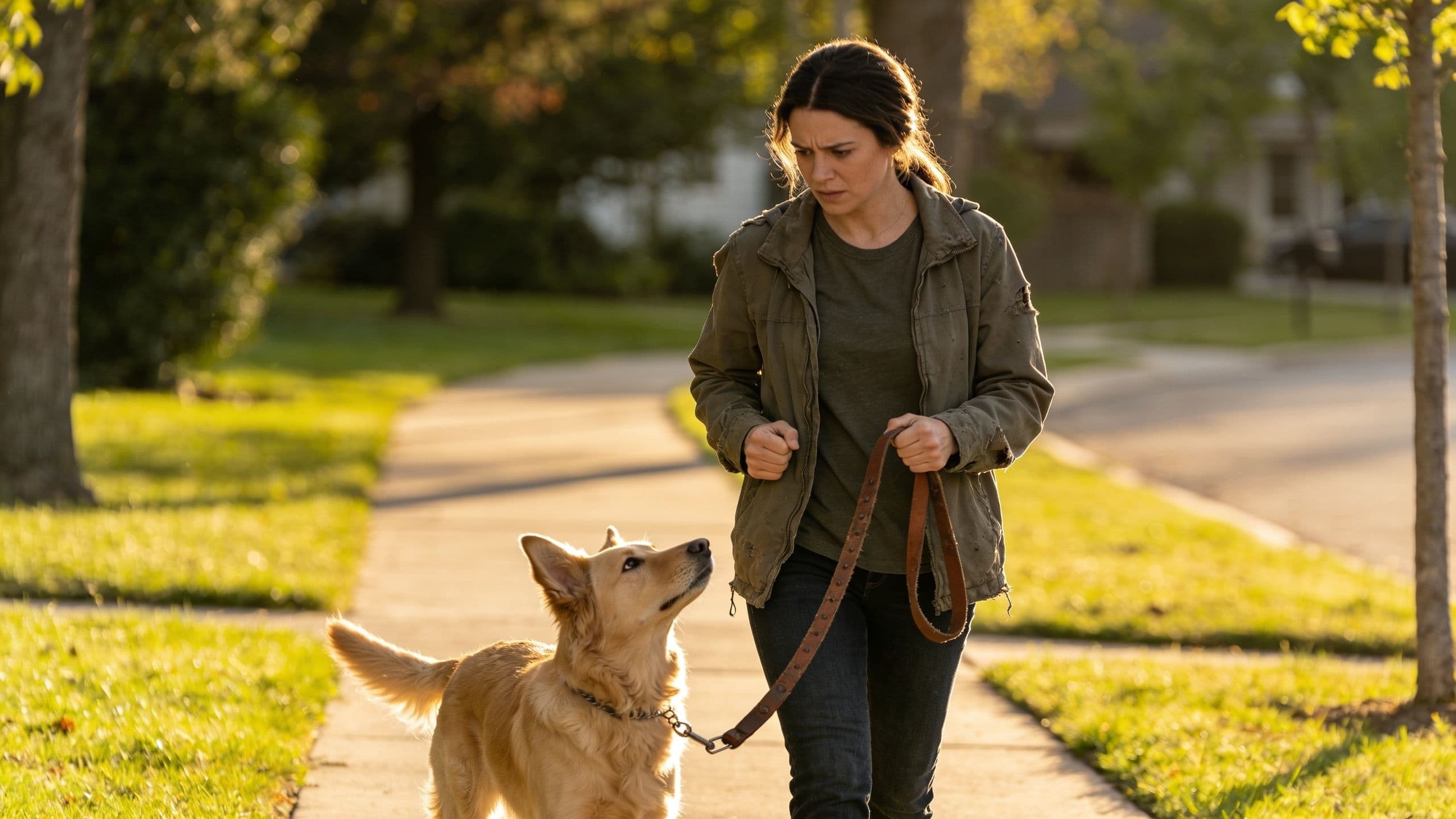
A walk can change mood in seconds, and not always because of the thing ahead. Often the shift starts at the human end of the leash.
Owners tend to focus on the visible trigger: another dog, a scooter, a tight sidewalk, a delivery truck. But many dogs are reacting before that moment fully arrives. They feel a hand tighten, a stride shorten, a shoulder lock, a voice go bright and strained. By the time the owner says, “He reacted out of nowhere,” the dog may have been reading the situation for half a block.
That is what makes walking such a subtle communication story. A dog is not only navigating the street. The dog is also continuously sampling the person attached to the other end of the lead.
The walk starts changing before the trigger appears
Anyone who lives with a sensitive dog knows the pattern. You spot another dog in the distance. Your mind starts running calculations: Is that one calm? Can we pass? Should I cross? Without realizing it, you gather the leash an inch shorter. Your elbow firms up. Your pace gets more deliberate.
To a dog, those are not minor edits. They are information.
Leash pressure is especially powerful because it is immediate and physical. Unlike voice, which can be noisy or inconsistent, a tightening lead is a direct signal that something in the environment matters. If that pressure reliably appears before a difficult passing encounter, the dog can begin to associate the pressure itself with trouble. Over time, the lead stops being neutral transportation and starts functioning like an early warning system.
That is one reason some dogs seem to tense up before they have clearly seen the other dog, person, or bicycle. They may be responding to the owner’s pre-reaction rather than the trigger alone.
This does not mean owners cause every problem on walks. Plenty of dogs are naturally vigilant, excitable, or noise-sensitive. Genetics, past experiences, age, pain, and environment all matter. But it does mean the human contribution is often larger than it looks in the moment.
What dogs notice in us, often faster than we notice ourselves
Dogs are unusually good at reading human movement and emotional cues. Research over the last two decades has repeatedly shown that dogs attend closely to human gestures, facial expressions, and vocal tones. In everyday life, that sensitivity shows up less like a laboratory trick and more like pattern recognition.
The lead tells a story
A leash carries tiny changes in intention. A smooth, slack line feels different from a line that pulses, shortens, or stays taut. Many owners tighten the leash “just in case,” especially near blind corners, parked cars, elevators, or narrow paths. The dog then walks into the next moment already under restraint.
That restraint can do two things at once: increase physical frustration and signal that caution is warranted. Neither helps a dog stay loose.
Pace and breathing are part of the message
Dogs are rhythm readers. If your walk usually flows at one tempo and suddenly becomes clipped or hurried, the dog notices. The same goes for breathing. Owners often hold their breath or breathe shallowly when preparing for a pass. That may sound too subtle to matter, but paired with firmer posture and leash tension, it contributes to a whole-body message.
Voice tone can undercut the words
People often use upbeat language when they are worried: “It’s okay, buddy, it’s fine, good job, good job.” The words sound reassuring, but the pitch may go high and tight. Dogs do not parse reassurance the way humans do. They hear the strain in the voice and compare it with everything else they are feeling through the leash and your body.
That is why frantic cheerfulness often fails. The emotional texture does not match the intended message.
Posture gives away anticipation
A dog can feel when a person leans back, braces their legs, stares at an oncoming dog, or angles the torso as if preparing for impact. Even looking fixedly at the trigger can change the atmosphere. Many dogs follow that line of attention and conclude that the thing ahead deserves concern.
How anticipation travels down the leash
The most important moment on many difficult walks is not the bark or lunge. It is the few seconds before.
Picture a familiar sequence. You turn onto a block where a reactive dog often appears behind a fence. Before the fence is even in sight, your body remembers. The leash shortens. Your shoulders rise. Your dog feels that change and begins scanning. The environment has not done anything yet, but the expectation of stress is already moving through the pair.
Repeated enough times, places themselves become loaded. A corner predicts skateboard noise. A strip of sidewalk predicts an awkward dog pass. The entrance to the building predicts the excitement of seeing neighbors. Dogs learn those emotional maps quickly.
That can make owners feel as if their dog is “randomly anxious” or “always on edge outside.” In reality, the dog may have built highly specific associations:
this block means the leash gets tight
this crossing means my person gets tense
this hallway means everyone speeds up
this park entrance means arousal starts before we even arrive
The owner is part of that pattern, not as a villain but as a repeating cue.
This is also why some dogs escalate at surprising distances. If leash tension and body bracing start when another dog is still far away, the dog spends a long stretch marinating in anticipation. By the time the actual pass happens, the nervous system is already primed.
What repeated patterns teach a dog about the world
Dogs are excellent statisticians of daily life. They do not need a dramatic event to learn. They need repetition.
If every time a jogger appears the leash tightens and the owner says the dog’s name in a clipped voice, the dog may start treating joggers as significant before any direct problem occurs. If every noisy intersection leads to hurried movement and restraint, the dog can begin to approach that intersection keyed up.
This is one reason “nothing happened, but he was weird the whole walk” is such a common owner report. Something did happen. The walk was full of predictions.
Training culture sometimes frames this too narrowly as obedience: the dog should not react, should keep moving, should focus better. But many dogs are not simply choosing badly. They are responding to a social and physical atmosphere that has become charged.
That atmosphere can be especially strong with owners who are conscientious. People trying very hard to prevent problems often get vigilant early, and that vigilance becomes legible to the dog. The irony is familiar to anyone who has handled a reactive or sensitive pet: the more you try to make sure nothing goes wrong, the more your dog learns that something is likely to.
Small resets that can change the feel of the walk
The goal is not to perform fake calmness or blame yourself for every rough outing. It is to notice how much information you are sending and make that information cleaner.
One useful shift is earlier decision-making. If you already know a narrow pass will be hard, change the route before your body starts bracing. Cross the street while you still have room. Pause behind a parked car. Arc away sooner. The best adjustment often happens early enough that it does not feel dramatic.
Another is checking the leash before you check the trigger. Ask a simple question: am I tightening because I need to, or because I am anticipating? A shorter leash is not automatically wrong, but constant pre-loading can create the very state you are trying to avoid.
Body softness matters too. Dropping your shoulders, unclenching your arm, and keeping movement more fluid can make the walk feel less like a confrontation. Some handlers do well with silent breaths or a practiced exhale before passing a known challenge. Not because the dog understands breathwork, but because your whole body becomes less abrupt.
Voice works best when it is sparse and genuine. A low, steady cue tends to carry more clearly than a stream of bright reassurance. If you sound like yourself, the message is easier for the dog to trust.
Finally, pay attention to location memory. If one route repeatedly produces tension for both of you, it may not be the best place to rehearse calm walking. Management is not failure. Sometimes the smartest move is choosing a wider sidewalk, a quieter hour, or a more forgiving loop while you rebuild a better pattern.
Professional trainers and behavior consultants often talk about “trigger stacking,” where stressors accumulate across a walk or day. That concept matters here because owner anticipation can become one of those stacked stressors. A tight lead, rushed pass, loud truck, and barking dog behind a fence may each be manageable alone, but together they change the dog’s threshold. Organizations such as the ASPCA note that leash-related frustration and arousal can play a major role in outdoor behavior.
The encouraging part is that communication patterns can change as quickly as they form. Dogs notice when the lead stays softer, when routes become more predictable, when corners stop feeling like ambushes, and when the human at the other end feels less like a warning beacon.
A better walk is often less about commanding the perfect heel and more about interrupting the silent chain reaction that starts in the handler’s body. Dogs read tension fast. They also read relief fast. That gives owners more influence than they may realize, and in many cases, it begins before the obvious trigger ever appears.
Safety & Scope
This article is for general informational purposes and does not replace professional advice for complex repairs or installations.
Frequently Asked Questions
+Can dogs sense when their owner is nervous on walks?
Yes. Dogs often pick up physical and vocal signs of tension such as leash pressure, posture changes, altered pace, and strained voice tone. They may react to those cues before the owner realizes they are showing them.
+Why does my dog tense up before we even reach another dog?
Your dog may be responding to anticipation rather than the other dog alone. If you shorten the leash, brace your body, or change pace as soon as you spot a potential trigger, your dog can learn that those signals predict a stressful encounter.
+Does leash tension affect dog behavior outdoors?
Often, yes. A consistently tight leash can increase frustration, reduce freedom of movement, and act as a cue that something important or concerning is nearby. For some dogs, that makes outdoor reactions more likely or more intense.