Dogs and Cats Use Eye Contact for Different Reasons
A dog’s steady gaze often means connection, expectation, or a request for guidance. A cat’s look is more likely to be observational, evaluative, or quietly social depending on context. The difference matters because the same behavior can signal very different intentions across species.
Maya covers pets & animal lifestyle with an emphasis on practical analysis, products, and real-world impact.
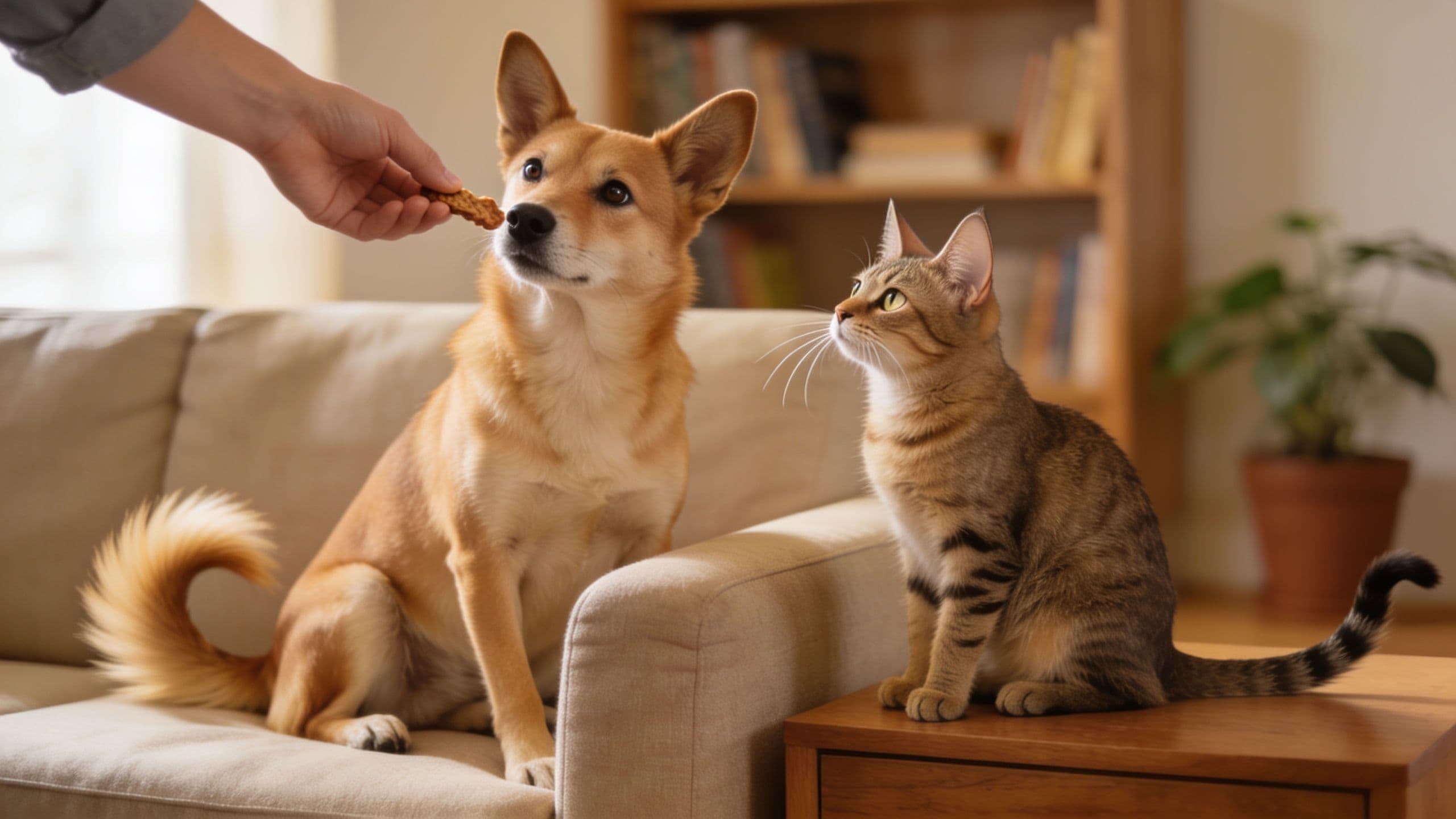
A dog looking straight into your face and a cat doing the same may seem like the same behavior, but it often reflects two different social systems. Dogs, shaped by domestication to work closely with people, commonly use eye contact as part of active communication. Cats, even when deeply bonded with their owners, are usually more selective. Their eye contact tends to be less about direct coordination and more about monitoring, assessing, or offering subtle social signals on their own terms.
That contrast explains why owners so often misread pet looks. A dog’s gaze can be a clear bid for interaction. A cat’s may simply mean, “I see you, I’m aware of what you’re doing, and I’m deciding whether it matters.”
Why dogs look directly at people so often
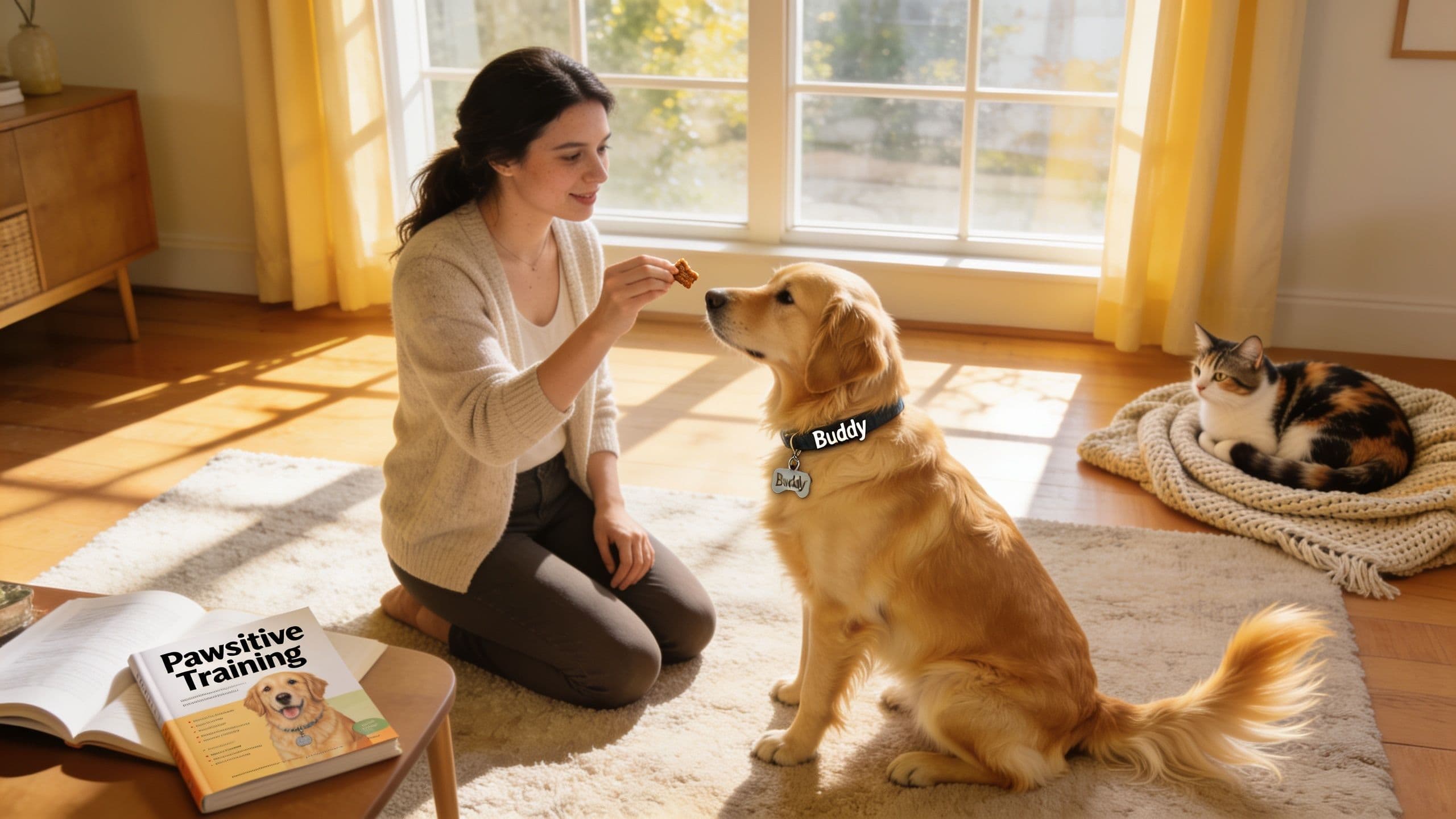
For many dogs, eye contact is built into the relationship with humans. Trainers, behaviorists, and pet owners all rely on it because dogs naturally check in with us. A glance can be affiliative, expectant, or information-seeking.
A dog’s gaze often means connection and coordination
Dogs frequently use eye contact to maintain social contact. If your dog looks at you during a walk, pauses and checks your face in a new environment, or watches you before taking action, that is often a form of coordination. The dog is using your face as a reference point.
This is especially obvious in familiar routines. Before meals, before a ball is thrown, before the leash comes off the hook, dogs often lock onto their owner’s eyes because they have learned that human faces predict outcomes. The gaze is not always a demand. Sometimes it is anticipation mixed with attention.
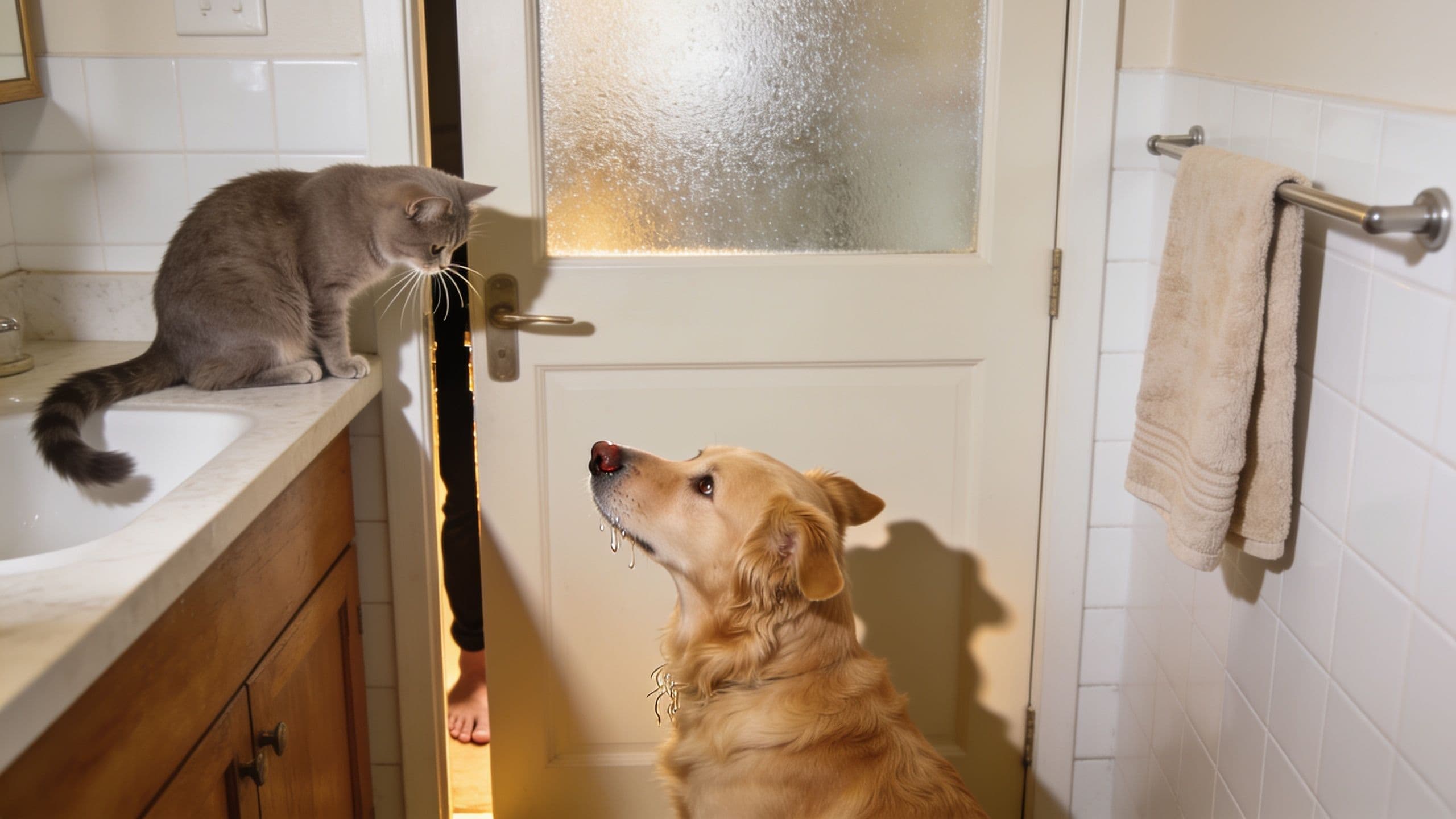
In problem-solving situations, dogs may also look at people when they want help. Research on canine-human communication has repeatedly noted this “referential looking” pattern: dogs alternate between an object and a person, effectively signaling that something is wanted or unresolved. That is one reason a dog staring at you near a high shelf, a closed door, or an empty food area can feel unusually purposeful.
Not every dog stare is friendly
Context still matters. Hard eye contact in dogs can also signal tension, arousal, guarding, or uncertainty. A relaxed dog who is watching you with soft eyes, neutral posture, and loose facial muscles is communicating very differently from a stiff dog freezing over a toy or food bowl.
Owners often miss the difference because both behaviors involve looking. But body language changes the meaning. Soft blinking, a wagging tail with a loose body, and easy movement suggest comfort. A closed mouth, stillness, forward weight shift, or visible tension around the face suggest caution.
That is why dog eye contact works best as one piece of a broader picture, not a standalone message.
What a cat’s eye contact usually means
Cats are fully capable of strong social bonds with people, but their communication style is generally less direct than a dog’s. Prolonged eye contact is not automatically a request, and it is not always an invitation either.
Cats often look in order to observe and assess
A cat may hold eye contact simply because it is monitoring you. Cats are alert to movement, routine, access, and change. If you stand up from the couch, open a cabinet, approach a doorway, or interact with another animal, your cat may watch carefully without any intention of engaging.
This kind of look is often calm and informational. The cat is taking stock. In multi-pet homes, this can be especially noticeable. A cat may quietly observe a dog’s movement, an owner’s path through the room, or the arrival of a visitor, all without stepping closer or vocalizing.
Cats also use visual assessment when they are uncertain. In that case, the gaze may be still but paired with a cautious posture: ears angled outward, body slightly lowered, tail wrapped in, or readiness to move away. The message is not hostility so much as evaluation.
The soft stare is one of a cat’s friendlier signals
When cats are comfortable, eye contact can become more nuanced. A relaxed gaze with slow blinks is widely recognized by cat owners as an affiliative signal. It is less like a dog’s “What next?” look and more like a low-pressure acknowledgment of safety and social ease.
This matters because people often expect cats to communicate warmth in dog-like ways. Many cats do not hold direct eye contact for long periods in a highly demonstrative way. Their friendlier signals are often quieter: soft eyes, a blink, a half-closed gaze, a subtle approach, or choosing to remain nearby.
A fixed stare from a cat without those softening cues can mean curiosity, but it can also mean wariness or heightened alertness. Once again, the eyes alone do not tell the whole story.
The same moment means different things by species
Daily life creates situations where dogs and cats appear to be doing the same thing while communicating something different.
At feeding time
A dog staring at you near the kitchen is often engaging in expectation. The dog may be reminding you of the routine or waiting for a cue. Many dogs will intensify eye contact as mealtime approaches because they have learned that watching the owner pays off.
A cat at feeding time may also look intensely, but the style is often more observational and positional. The cat may watch from the counter, doorway, or feeding area, tracking your movements with precision rather than seeking reciprocal engagement. Some cats vocalize instead of holding a social gaze.
During play
Dogs commonly use eye contact to keep the game going. A dog with a ball may stare at your face because your attention controls the next throw or chase sequence.
Cats are more likely to focus on the toy, the motion, and the timing of the hunt. They may glance at you, but direct eye contact is often secondary to movement patterns. If a cat does stare during play, it may be gauging whether you are about to animate the toy again.
Around new people
Many dogs look to their owners for guidance when someone unfamiliar arrives. The gaze can mean, “How should I respond?” This is especially common in dogs that are social but cautious.
Cats facing a new person are often more likely to observe from a distance. Their eye contact may be part of environmental scanning rather than social consultation. A cat watching a guest from across the room is often gathering information, not asking for help.
During quiet shared time
When a dog settles and gazes at you from the couch or floor, the look often carries a distinctly social quality. Dogs are unusually comfortable using direct human-focused attention as part of bonding.
When a cat does something similar, the signal is often softer and less insistent. A cat resting nearby and blinking slowly may be expressing trust in a way that is easy to overlook if you expect a dog-style stare.
The mistakes owners make most often
The biggest mistake is assuming all staring is a demand. Dogs do sometimes look because they want something, but many gazes are simply check-ins or social attention. Cats can look for practical reasons too, but just as often they are monitoring the environment.
The second mistake is expecting identical meanings across species. Dogs are generally more face-oriented with humans. Cats often communicate more indirectly, with eye contact woven into posture, location, ear position, and willingness to stay present.
A third common misread is treating prolonged eye contact as universally positive. In both species, a soft gaze differs sharply from a hard stare. Tension, arousal, or uncertainty can turn looking into a warning sign. Owners who learn to read the whole body usually become much better at distinguishing affection from pressure, anticipation from stress, and curiosity from discomfort.
Read the look in context, not in isolation
The most useful question is not “Why is my pet staring?” but “What is happening around this look?” Species, setting, routine, posture, and recent events all shape the meaning.
With dogs, eye contact is often part of an active social exchange: guidance, coordination, anticipation, reassurance. With cats, it is often more measured: observation, assessment, quiet affiliation when conditions feel safe. Both animals use their eyes socially, but they do not use them in the same way or with the same intensity.
That difference is easy to miss and valuable to understand. A look from a dog often invites response. A look from a cat often invites interpretation.
Safety & Scope
This article is for general informational purposes and does not replace professional advice for complex repairs or installations.
Frequently Asked Questions
+Why does my dog stare into my eyes?
Dogs often use eye contact to connect, seek guidance, anticipate an action, or ask for help. The meaning depends on context and body language. A soft gaze with a relaxed body is usually social or expectant, while a hard stare with stiffness can signal tension.
+What does it mean when a cat holds eye contact?
A cat’s eye contact is often observational or evaluative. The cat may be monitoring your movement, assessing a situation, or deciding whether to engage. If the gaze is soft and paired with slow blinking or relaxed posture, it can also be a subtle sign of trust.
+Do cats and dogs use eye contact differently?
Yes. Dogs commonly use eye contact as a direct social tool with humans, especially for coordination, reassurance, and anticipation. Cats use eye contact more selectively and often combine it with quieter signals such as posture, distance, ear position, and slow blinks.