A Window Perch Changes How Indoor Cats Experience the Day
For an indoor cat, a well-placed window perch can turn ordinary hours into a richer routine of watching, warming up, resting, and quietly surveying the world. It is one of the simplest home upgrades that can make a cat’s day feel larger without overwhelming the room.
Avery writes about trends, platforms, and strategic shifts in pets & animal lifestyle, with attention to what matters in practice.
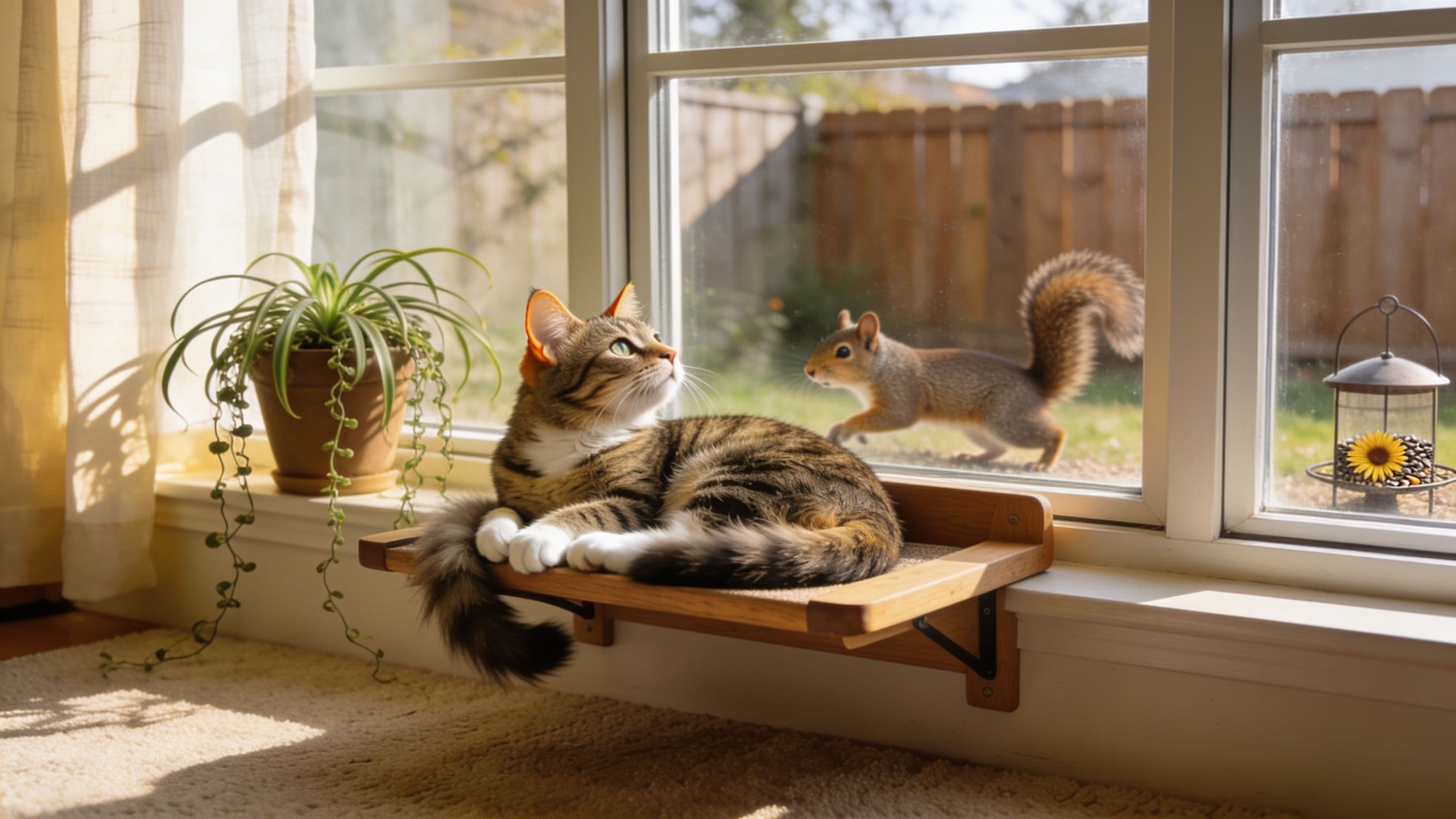
For many indoor cats, the window is not background scenery. It is the busiest channel in the house: birds crossing a fence line, delivery vans arriving, leaves shifting in the wind, neighbors passing by, light moving across the floor. A window perch turns that passive view into a place a cat can actually use, and that small change can reshape the rhythm of the day.
This is why so many indoor cats return to windows again and again. The appeal is not just sunlight or curiosity. It is the combination of movement, warmth, elevation, and choice. A perch gives those elements structure. Instead of balancing on a narrow sill or stretching awkwardly from the sofa arm, the cat gets a defined spot that supports watching, resting, and retreating.
Why the window becomes a destination
Indoor life can be comfortable and safe, but it is also repetitive. A cat that spends every day inside has fewer changes to track than one moving through a yard or neighborhood. Windows introduce variation without adding chaos. Even a quiet residential street offers enough motion to hold attention: birds landing on wires, tree shadows shifting, people walking dogs, rain starting and stopping.
Cats are built to notice small changes in their environment. A perch near a good view gives that instinct somewhere to go. The result is often a more engaged kind of rest. A cat may lounge for an hour, nap for twenty minutes, then wake to watch a squirrel cross a branch. From the outside, it looks like idling. For the cat, it is a sequence of small observations that breaks up the day.
Sunlight matters too. Many cats seek warm patches instinctively, and a perch positioned where morning or afternoon light lands can become a favorite for reasons that have nothing to do with the view. Heat, brightness, and an elevated resting place are a strong combination. That is especially true in colder months, when a sunny window becomes one of the coziest zones in the home.
There is also the territorial aspect. Cats often like to monitor familiar spaces. Looking outward from a stable perch seems to satisfy some of that supervisory instinct. They are not only seeing the world; they are occupying a vantage point within it.
What a perch adds that a sill usually cannot
A bare windowsill can work for some cats, but many sills are too narrow, too cluttered, or too uncomfortable for a real stretch of time. A dedicated perch changes the experience in practical ways.
First, it creates comfort. A padded surface, enough width to turn around, and a stable base invite longer visits. Cats are far more likely to settle when they do not have to brace themselves or squeeze between objects.
Second, it improves the viewing angle. Some perches lift a cat slightly above sill height, which can open a better line of sight to a garden, courtyard, or street. Others extend into the room, making the spot easier to access for older cats or less agile cats that do not want to leap onto a narrow ledge.
Third, it becomes a reliable retreat. Cats value places that feel predictably theirs. Once a perch is associated with warmth and calm, it often functions as a low-key safe zone. That is useful in homes where the floor level is busy, whether because of children, frequent guests, or a dog that means well but lacks subtlety.
The design options have improved, too. Not every cat perch looks like bulky pet gear. Brands now make suction-mounted hammocks, slim wood-and-metal shelves, neutral fabric platforms, and wall-mounted steps that can blend into a living room or bedroom without making the space feel overrun by accessories. The best choice is usually the one that suits both the cat’s habits and the room’s actual style.
Placement matters more than the product
A beautiful perch in the wrong window may get ignored. The most successful setups start with location, not shopping.
A window with regular but not overwhelming activity is often ideal. A garden view, a tree with bird traffic, or a calm street can be more appealing than a blank alley or a noisy area with constant startling sounds. Cats usually prefer observation over commotion.
Sun pattern matters as much as scenery. East-facing windows can be excellent for cats that like morning warmth. West-facing windows often draw long afternoon lounging sessions. In hotter climates, direct sun can become uncomfortable, so filtered light may work better than a full blast of midday exposure.
Height and access deserve attention. A perch should be easy for the cat to reach without awkward jumps. For kittens and athletic adults, that can mean a higher mount. For seniors, larger cats, or cats with mobility issues, a lower platform or a route that includes a nearby chair, bench, or step is usually smarter.
Room tone matters too. A perch in a hectic part of the house may still appeal to a highly social cat, but shy cats often prefer windows in quieter rooms. Bedrooms, home offices, and calm corners of living rooms tend to work especially well because they allow the cat to observe without feeling exposed.
Safety should be part of the decision. Check that the window screen is secure, the mount can handle the cat’s weight, and the surface will not overheat. If the perch uses suction cups, installation quality matters; the best products are still only as good as the clean glass and careful setup behind them.
Making it work in a real home
The biggest hesitation many owners have is aesthetic. They want to improve daily life for the cat without turning the room into a pet zone. That is a fair concern, and it usually comes down to scale and materials.
In smaller spaces, a compact hammock-style perch can be less visually intrusive than a freestanding cat tree. If floor space is tight, a window-mounted model keeps the footprint essentially at zero. In more design-conscious rooms, a wood-toned shelf with a removable neutral cushion may blend better than plush fabric in a bright color.
For multi-cat homes, one perch is sometimes enough, but not always. If both cats value the same view, competition can develop. That does not always mean conflict, but it can mean one cat silently losing access. Two adjacent spots, staggered shelves, or one prime perch plus a secondary seat nearby can prevent that dynamic.
It also helps to think beyond the perch itself. A lightweight curtain that still allows visibility, a nearby side table that does not block the jump, or a small washable blanket can make the whole area feel integrated instead of improvised. The goal is not to disguise the cat’s presence. It is to make the setup look intentional.
How to tell whether the perch is actually enriching the day
A cat does not need to use a perch constantly for it to be worthwhile. The clearest sign of success is repeat, voluntary use. If the cat returns at similar times each day, settles there during sunny hours, or chooses it when the room is quiet, the perch is likely doing its job.
Body language matters. A cat that lounges with a loose posture, slow blinks, half-naps, or relaxed tail movement is using the spot comfortably. A cat that watches with focus but remains physically at ease is often getting exactly what the setup should provide: stimulation without stress.
Some cats need an adjustment period. If a new perch is ignored at first, the issue may be unfamiliarity rather than dislike. Moving it to a better window, adding a favorite blanket, placing treats on it, or sitting nearby during quiet parts of the day can help. Cats often accept environmental changes on their own timetable.
It is also worth distinguishing interest from agitation. If a cat becomes fixated and frustrated by outdoor cats, loud traffic, or repeated startling events at a specific window, a different location may be better. The best perch supports calm engagement, not constant arousal.
A good window perch does not need to be elaborate to be effective. It just needs to align with what indoor cats already seek: a warm place, a secure platform, and a live feed of the world beyond the glass. For owners, that makes it one of the rare pet upgrades that is simple, space-efficient, and genuinely useful. For the cat, it can make the boundaries of indoor life feel a little wider every single day.
Safety & Scope
This article is for general informational purposes and does not replace professional advice for complex repairs or installations.
Frequently Asked Questions
+Do indoor cats need a window perch?
Not every indoor cat must have a window perch, but many benefit from one. It gives them a comfortable place to watch movement, enjoy sunlight, and spend time in a way that adds variety to the day. For cats that already gravitate toward windows, a perch often improves comfort and makes that habit more rewarding.
+Where should I place a cat perch in the home?
Choose a window with a pleasant view, some daily activity, and safe light exposure. Garden-facing windows, tree views, or calm street-facing windows often work well. Make sure the perch is easy for your cat to reach, securely installed, and placed in a room that matches your cat’s temperament, whether social or quiet.
+What if my cat ignores a new window spot at first?
That is common. Give the cat time, and try making the perch more familiar with a blanket, treats, or a nearby resting spot they already like. If there is still no interest after a while, the location may be the problem rather than the perch itself. A better view, more sun, or a quieter room can make a big difference.