A Two-Zone Feeding Setup Can Reduce Everyday Pet Friction
If pet meals feel crowded, tense, or oddly chaotic, the problem is often the layout rather than the pets. A two-zone feeding setup creates space, reduces hovering, and makes daily routines calmer without turning mealtime into a training project.
Maya covers pets & animal lifestyle with an emphasis on practical analysis, products, and real-world impact.
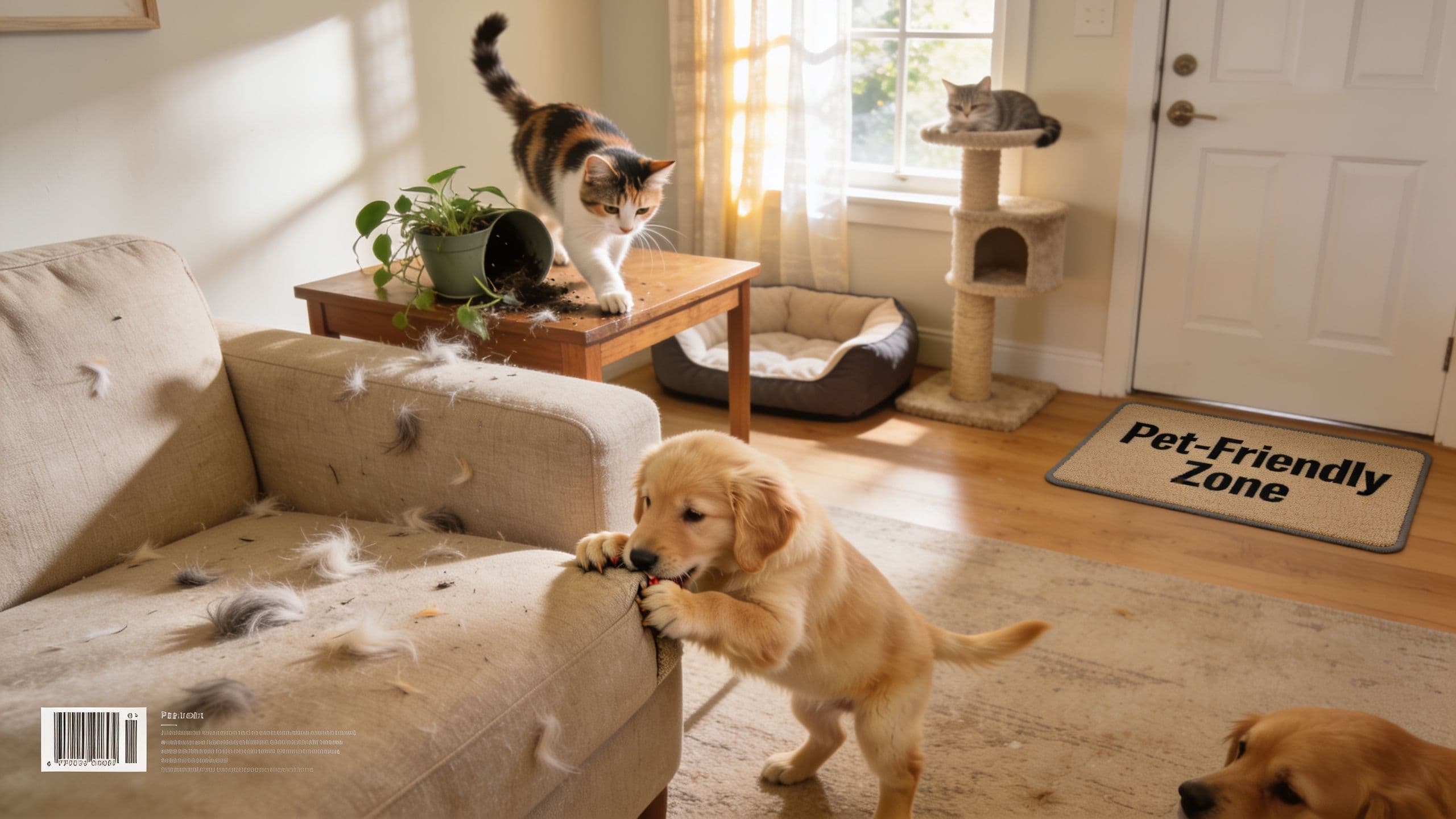
Mealtime drama in multi-pet homes often starts with the floor plan, not bad manners. When bowls are clustered in one corner, pets end up managing each other as much as they manage their food. They rush, hover, stare, circle, switch bowls, or park themselves nearby to monitor the other animal’s progress. Owners get pulled into the bottleneck too, stepping around bodies, wiping one messy splash zone, and refereeing a scene that repeats twice a day.
A two-zone feeding setup solves a surprising amount of that friction with a simple idea: stop treating feeding as a single shared event in a single shared spot. Give each pet, or each type of pet, its own practical zone with enough distance and a cleaner path in and out. The goal is not to isolate everyone dramatically. It is to reduce competition cues, crowding, and traffic conflicts so the routine feels ordinary instead of charged.
One feeding cluster creates problems before food even hits the bowl
When multiple bowls sit side by side, animals tend to eat with one eye on the meal and one eye on the other pet. Even in homes where nobody is overtly aggressive, that constant monitoring creates pressure.
A few common patterns show up fast:
Hovering: One pet finishes first and drifts toward the other bowl.
Rushing: A slower eater speeds up because another pet is nearby.
Checking and switching: Pets leave their own bowl to inspect the other one.
Doorway congestion: Everyone enters and exits through the same narrow path.
Human crowding: Owners refill, supervise, and clean in one cramped area.
This matters because low-level tension is still tension. Pets do not need to be fighting for meals to be stressful. A dog that bolts food because another dog is three feet away is not having a calm feeding experience. A cat that pauses between bites to scan the room is telling you something about the setup. So is the owner who describes breakfast as “manageable, but annoying.”
The layout can accidentally amplify all of those signals. A corner can trap a timid pet. A hallway can force nose-to-nose passing. Bowls near a heavily used kitchen route can make every family member part of the event. In many homes, what looks like a behavior problem is actually a traffic problem.
What a two-zone setup actually looks like
Two-zone feeding does not require a remodel, custom furniture, or a dedicated pet room. It means defining two distinct meal areas that do not overlap in pressure.
That can look like:
One dog eating in the kitchen, the other in the dining area
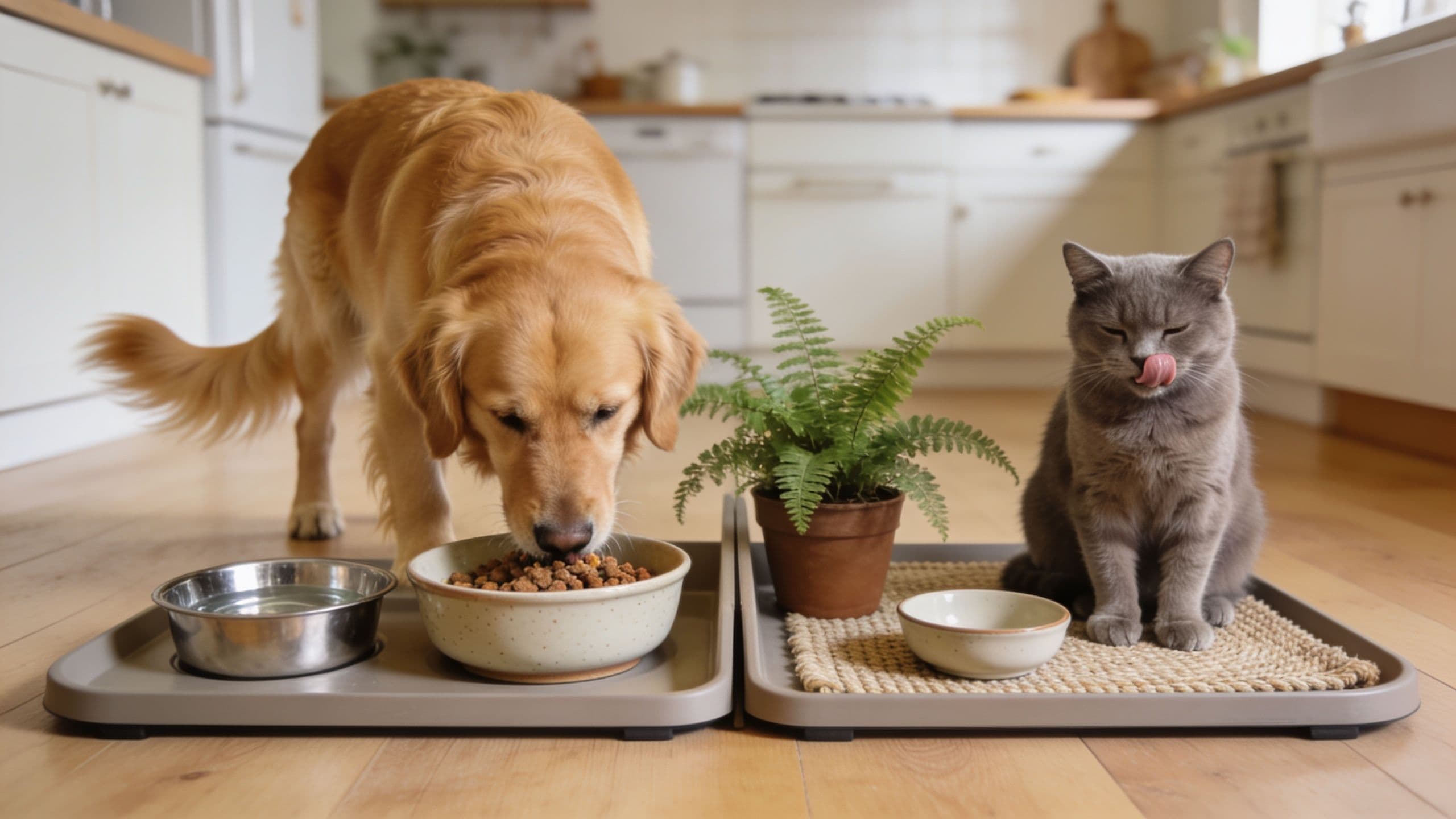
A cat eating on a counter-approved feeding shelf or utility cart while the dog eats on the floor elsewhere
One pet eating in a laundry nook, the other in a quiet corner of the living room
A gated feeding zone for one animal and an open zone for the other
The key features are simple:
Separate but still practical
The zones should be far enough apart that each pet can focus on its own meal, but close enough that the routine is easy to maintain. If the setup is so inconvenient that nobody sticks with it, it will not last.
Clear approach and exit paths
Pets should be able to get to their bowls without squeezing past each other. This is especially important in apartments and smaller homes, where the route matters as much as the final bowl position.
A built-in end point
Each zone should also make cleanup and bowl pickup easy. That reduces the post-meal period when a fast eater lingers around another pet’s leftovers.
Think less about symmetry and more about flow. The best setups often look slightly uneven because the home itself is uneven.
Picking the right zones for dogs, cats, and mixed households
The right feeding map depends on who is eating.
Dogs often need distance and pacing control
For two dogs, the main issue is usually line-of-sight pressure and speed mismatch. One dog may inhale food and immediately patrol the room. The other may be slower, pickier, older, or simply less comfortable eating under observation.
Helpful zone choices include:
Adjacent rooms with open sightlines if both dogs are relaxed but crowd each other
Same room, opposite sides, with furniture creating a visual buffer
One dog behind a baby gate during meals
One dog fed in a crate if the crate is already a calm, positive space
The point is not punishment or separation for its own sake. It is reducing the social pressure that turns eating into a race.
Cats usually benefit from privacy and vertical options
Cats often want a quieter setup than owners expect. A bowl near a noisy walkway, litter box route, or dog traffic lane can make a cat hesitant. In mixed pet homes, elevation can be especially useful if the cat is comfortable jumping and the dog is prone to checking the cat’s bowl.
Good options include:
A stable shelf or feeding station in a quiet room
A counter area if that fits household rules and hygiene preferences
A gated room with a cat door or small opening the dog cannot access
A corner with visual cover rather than a fully exposed open floor spot
Cats also tend to prefer having a bit of environmental control. Privacy often matters more than proximity.
In small homes, micro-zones work
You do not need large square footage to create separation. In a studio, apartment, or compact home, use barriers, height, and angles.
Try:
Feeding one pet on one side of a kitchen island and the other in the next room or entry nook
Rotating one pet into a bathroom or laundry area for ten minutes
Using a folding gate to split one room into two feeding lanes
Positioning bowls so pets face away from each other rather than directly toward each other
A small space can still feel organized if each pet has a predictable place and route.
The small adjustments that make the biggest difference
Once the zones are chosen, a few low-effort tweaks make them work better immediately.
Move water away from the main feeding bottleneck
When water bowls sit right beside food bowls, they extend the crowd. A pet that is done eating may linger for a drink, blocking another animal’s path or turning the feeding area into a hangout spot. In many homes, a shared water station works better slightly outside the two meal zones.
Use mats to define boundaries
A feeding mat is not just for spills. It creates a clear visual cue for owners and pets: this is the eating spot. Mats also help keep bowls from sliding, which reduces movement and noise that can unsettle nervous animals.
Feed in a reliable order
If one pet always gets fed first while another waits in the highest-traffic area, anticipation can spike. A smoother routine often comes from preparing both meals before setting either down, then guiding each pet directly to its zone.
Pick up leftovers promptly
Leaving partially eaten food down can restart the whole cycle. One pet is finished; another is still thinking about food; someone starts monitoring someone else. If a pet free-feeds for medical or preference reasons, a protected zone matters even more.
Avoid making the quiet pet defend its space
If one animal repeatedly has to finish meals while another hovers nearby, the layout is not doing enough. Add more distance, change the angle, or create a physical barrier. The calmer pet should not have to solve the setup problem alone.
Calm feeding is often an environmental win, not a behavior overhaul
Owners often assume mealtime friction calls for more commands: wait, leave it, back up, go to place. Those cues can help, but they work better when the room is not set up to provoke crowding in the first place.
A two-zone system lowers the number of decisions everyone has to make. Pets are not negotiating access, speed, proximity, and exit routes at every meal. Owners are not inserting themselves into a recurring cluster. The result is usually less hovering, less rushing, fewer bowl checks, and a more routine-feeling start and finish.
That is the real appeal of this setup. It does not depend on perfect obedience or a dramatic home makeover. It asks a more practical question: where can each animal eat with the least pressure and the clearest path?
In many households, that one change turns feeding from a daily flash point into a normal part of the day. And when a routine feels calmer for the pets, it usually feels calmer for the humans too.
Safety & Scope
This article is for general informational purposes and does not replace professional advice for complex repairs or installations.
Frequently Asked Questions
+How can I feed two pets without mealtime chaos?
Create two distinct feeding zones instead of placing bowls side by side. Give each pet its own eating area, with a clear path in and out, and pick up leftovers promptly so one pet does not hover near the other’s food.
+Should cats and dogs eat in separate areas?
In many homes, yes. Cats often prefer quieter or elevated feeding spots, while dogs may eat more calmly with more distance and fewer visual triggers. Separate areas can reduce monitoring, rushing, and food stealing.
+What is the best feeding setup for a small home with pets?
Use micro-zones: opposite sides of a room, nearby rooms, vertical space for cats, or temporary barriers like baby gates. Even in a small home, the goal is to create enough separation that pets can eat without crowding each other.