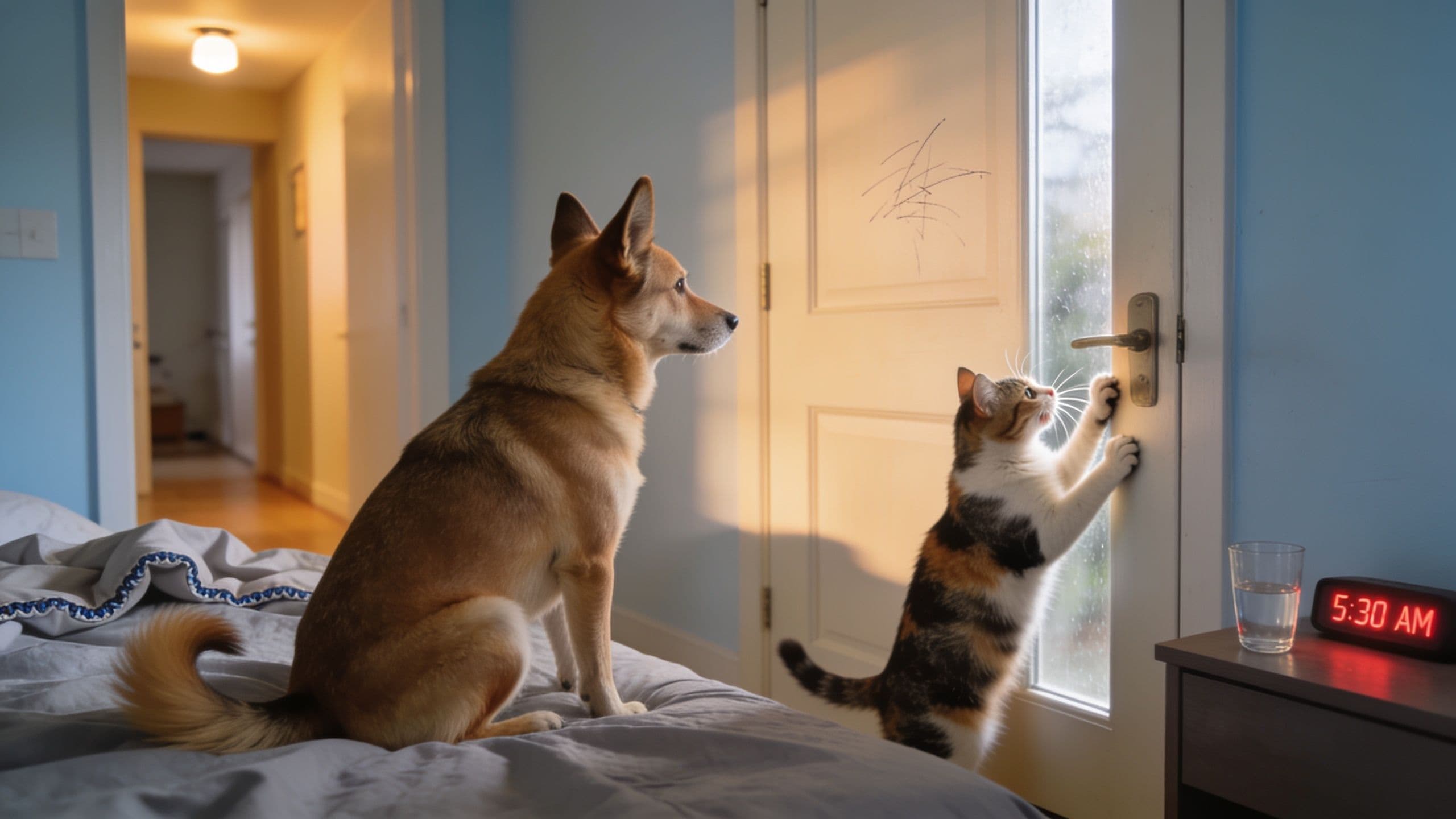
A Shared Evening Ritual Can Strengthen Life With a Pet
The most meaningful moments with a pet often happen when the day is winding down. A simple evening ritual can help animals settle, reduce friction around bedtime, and turn routine care into a steady source of connection.
Avery writes about trends, platforms, and strategic shifts in pets & animal lifestyle, with attention to what matters in practice.

The end of the day is when many pets show their clearest needs. A dog paces because the household energy suddenly drops. A cat becomes demanding just as the lights go low. A rabbit that tolerated the day’s noise finally relaxes enough to accept gentle handling. These small transitions are easy to overlook, but they are often where companionship gets built.
A shared evening ritual does not need to look like training class or a perfectly choreographed routine. Its power comes from repetition, predictability, and a few signals your pet learns to associate with safety and attention. For owners, that can mean fewer chaotic bedtimes and a more grounded close to the day. For pets, it can mean a reliable bridge from activity to rest.
Why the last hour of the day matters so much
Pets are exquisitely tuned to patterns. They notice when shoes come off, when the dishwasher starts, when the final walk usually happens, and when the household mood shifts. Evening rituals work because they turn those ambient cues into a clear sequence.
Predictability lowers guesswork. Instead of wondering whether more excitement is coming, a pet begins to recognize a familiar chain: a short walk, a water refresh, a brushing session, a treat on a mat, lights dimming, then sleep. That sequence can reduce restless behavior not by suppressing it, but by giving it somewhere to go.
The emotional side matters just as much. Repeated shared actions become relationship anchors. A dog who gets a two-minute ear rub every night before bed does not experience that as a generic task; over time, it becomes part of how closeness is expressed. A cat who chases a wand toy for five focused minutes before settling may begin to anticipate not just play, but your attention in a form that feels satisfying and complete.
That is why evening rituals often improve more than bedtime. They can soften clinginess, reduce attention-seeking at inconvenient times, and create a calmer baseline across the household.
A low-effort ritual that actually works
The best evening ritual is short enough to survive real life. Five to fifteen minutes is usually plenty. What matters is that the pieces happen in roughly the same order.
A practical routine often includes three parts:
1. A brief check-in
Start with a moment of physical or observational attention. This could be brushing, wiping paws, checking a harness area, refreshing water, or simply sitting at your pet’s level and noticing their state.
This check-in serves two purposes. First, it turns care into contact. Second, it helps you spot changes early: a dog licking one paw more than usual, a cat unusually overstimulated, a guinea pig less eager to move. Even when nothing is wrong, the ritual communicates that the day is ending with your attention, not just your absence.
2. A decompression activity
This should match the species and the pet’s temperament. For some dogs, that is a slow sniff-heavy walk around the block rather than one last burst of fetch. For indoor cats, it may be a short interactive hunt sequence with a wand toy, ending with a small food reward. For small pets, it might be a calm handling session, a predictable enclosure tidy-up, or a favorite forage item placed in the same corner each night.
The point is not to tire the animal out at all costs. It is to help them complete the day. Many pets settle better after an activity that lets them express a natural behavior in a contained way: sniffing, stalking, chewing, grooming, or nest-building.
3. A settle cue
Every strong ritual has an ending. This can be as simple as guiding your dog to a bed with a chew, giving your cat a final treat on a blanket by the window, or dimming lights around a small pet’s enclosure after one calm verbal cue.
Over time, a phrase such as “bedtime,” “all done,” or “settle” starts to mean something because it consistently arrives at the end of the same sequence. The cue is not magic on its own. It works because your pet has learned what comes before and after it.
Tailor the rhythm to the animal in front of you
A ritual only works if it fits the pet’s actual needs rather than an idealized version of pet ownership.
For dogs, evening routines are often about transition. Many dogs struggle not from lack of love but from abrupt changes in household energy. If the day contains scattered stimulation and the evening suddenly requires stillness, a short bridge helps. Senior dogs may benefit from gentle massage, a final potty break, and a warm sleeping spot. Young adult dogs may need a lick mat, a sniff walk, or a chew to come down cleanly.
For cats, the common mistake is skipping focused interaction and expecting them to settle on human timing alone. Many cats are more relaxed after a compact play sequence that mimics hunt-catch-eat-rest. A few minutes with a feather wand, followed by a small snack, can be far more effective than passive affection when a cat is buzzing with evening energy.
For rabbits, guinea pigs, and other small companions, predictability can be especially reassuring. Evening can be the ideal window for a quiet enclosure reset, fresh hay, a brief handling check, and a consistent goodnight cue. These animals often thrive on reliable timing and low-drama interaction rather than novelty.
The specific ingredients matter less than the feeling the routine creates: calm, legible, and repeatable.
The five-minute version for busy nights
A ritual does not fail because it is short. It fails when it becomes so elaborate that it disappears the moment life gets crowded.
A strong five-minute version might look like this:
60 seconds of greeting and physical check-in
2 minutes of species-appropriate activity
1 minute of water refresh or bedding reset
1 calm reward paired with the same settle phrase
For a dog in an apartment, that could mean a hallway sniff break, a quick paw wipe, and a treat on a mat. For a cat, a brief wand-toy burst and a few kibbles placed in a predictable resting spot may be enough. For a small pet, replacing hay, speaking softly, and offering one preferred food item can still create a recognizable rhythm.
Consistency beats ambition. A simple ritual repeated six nights a week is more valuable than an elaborate one that only happens when you have extra time.
It also helps to keep the environment aligned with the routine. If you want your pet to settle, avoid making the final minutes of the day the most stimulating ones. Bright lights, rough play, and mixed signals can undo the clarity you are trying to build. Evening rituals work best when the household supports them with a gradual drop in intensity.
What changes after a few weeks
The first improvement people usually notice is not dramatic affection. It is less friction. The dog stops shadowing every movement after the final walk. The cat pesters less at midnight. The whole household seems to understand how the day ends.
The deeper benefit is quieter and more durable. Rituals create a repeated experience of responsiveness. Your pet learns that certain needs will be met without escalation. You learn which small acts genuinely help them settle rather than simply filling time. That mutual understanding often feels like closeness because it is closeness, expressed through rhythm instead of novelty.
This is also why the ritual can outlast changes in schedule. Work gets busy. Weather turns bad. Travel interrupts the usual pattern. If your pet knows the core sequence, even a shortened version can preserve the emotional signal: we are together, the day is ending, and things are okay.
A shared evening ritual will not solve every behavior issue, and it does not need to. Its value is subtler than that. It makes the ordinary end of the day easier, clearer, and warmer. Over time, those repeated quiet moments often become the ones that define life with a pet most vividly.
Safety & Scope
This article is for general informational purposes and does not replace professional advice for complex repairs or installations.
Frequently Asked Questions
+What is a good bedtime routine for pets?
A good bedtime routine is short, predictable, and calming. It usually includes a brief check-in, a species-appropriate activity such as a slow walk or interactive play, and a clear settle cue with a small reward or comfort item.
+Can routines help pets feel closer to their owners?
Yes. Repeated routines create reliable moments of attention and comfort. Pets learn to associate those shared actions with safety and connection, which can strengthen companionship over time.
+How long should a nightly pet ritual be?
Most nightly pet rituals work well in five to fifteen minutes. The ideal length depends on the animal’s energy level and needs, but consistency matters more than duration.