A Calm Visitor Plan for Pets Who Need a Minute
The first minute of a visit often sets the tone for the next hour. A simple, repeatable plan can help shy, overstimulated, or overly enthusiastic pets handle guests without forced greetings, frantic door scenes, or mixed signals.
Jordan specializes in turning complex pets & animal lifestyle topics into clear, useful explainers for everyday readers.
The hardest part of having visitors is often not the visit itself. It is the first 60 seconds: the doorbell, the footsteps, the voices, the sudden shift in energy. For pets that are shy, excitable, territorial, or easily overloaded, that opening burst can tip the whole visit in the wrong direction.
A calmer approach does not require a perfectly trained dog or an unusually social cat. It requires a predictable routine that lowers pressure for everyone involved. The goal is not to make every pet greet every guest. The goal is to give the animal a clear, safe way to settle before deciding whether to engage.
Why the arrival moment feels so big
Visitors bring several challenges all at once. There is noise, movement, scent, and social uncertainty packed into a few seconds. Even friendly pets can struggle when all of that lands at the front door.
For dogs, the door often triggers action. Some sprint over because they are thrilled. Others bark because the sound and commotion feel like an alert. Some do both. The issue is not always fear or aggression; it can simply be over-arousal. A dog that is too excited to think clearly may jump, mouth, whine, spin, or ignore cues it knows well.
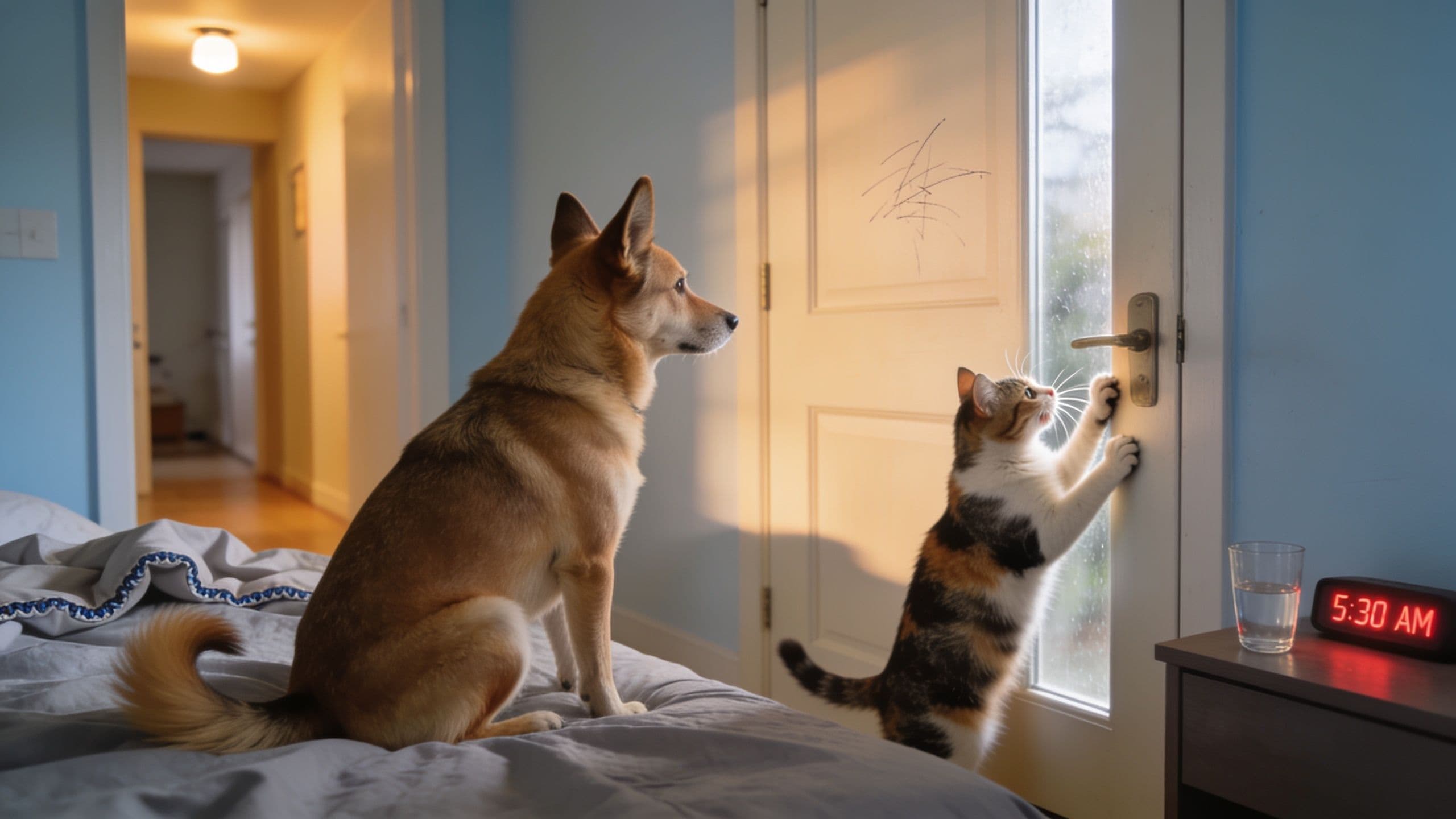
Cats often react differently but for similar reasons. A new person entering the home changes the environment fast. Many cats prefer to assess from a distance, from under a bed, from a cat tree, or from another room. That is not bad behavior. It is often a sensible strategy for an animal that feels safer observing before participating.
Small mammals and birds can also be affected by visitor energy. Loud greetings, children rushing over, or people tapping at enclosures can turn an ordinary social call into a stressful event.
The common thread is this: sudden social pressure makes coping harder. Predictability makes coping easier.
Set the scene before the knock
The best visitor plan starts before anyone arrives. Waiting until the bell rings usually means you are already behind.
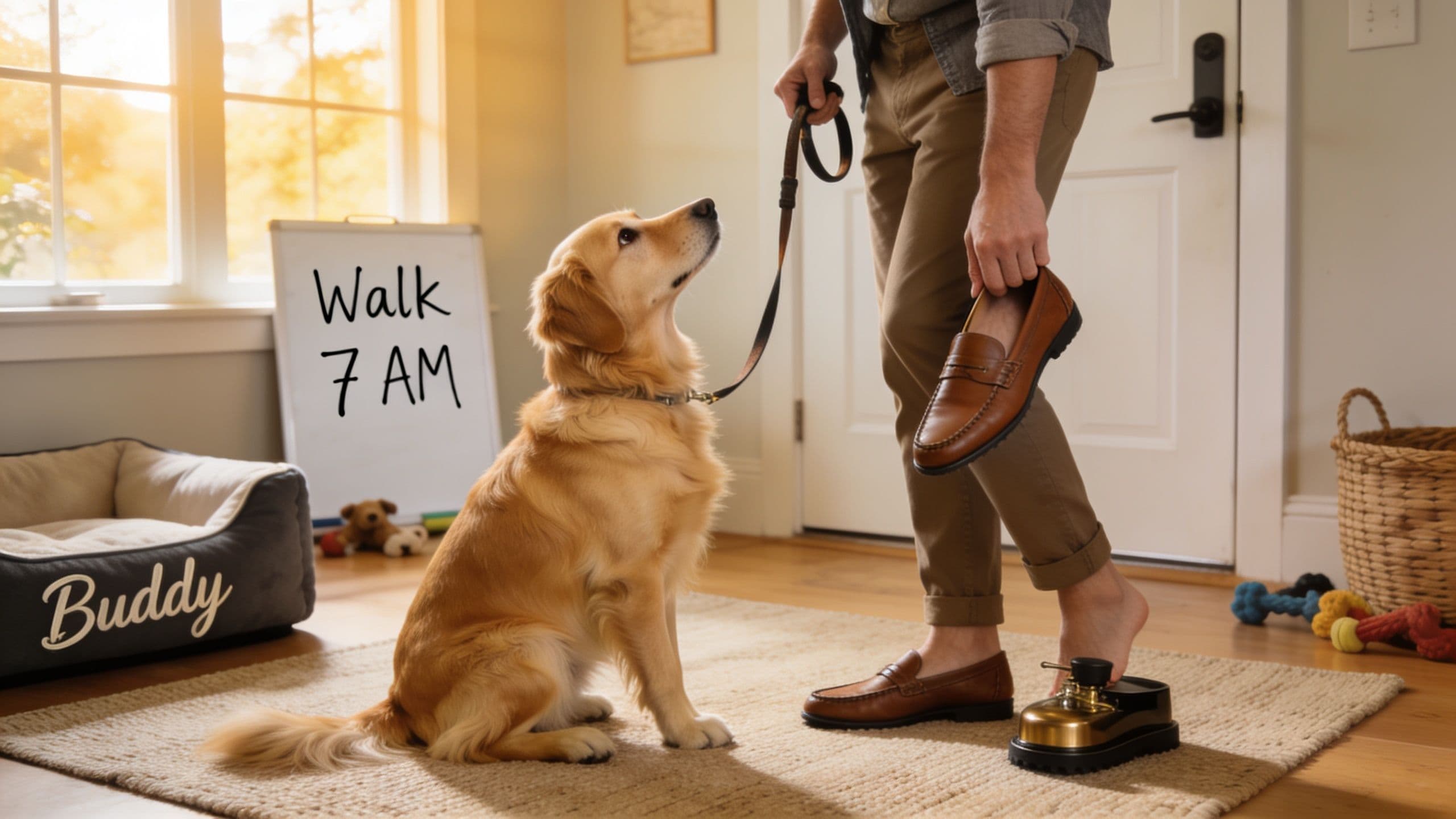
Pick a default setup for your pet and use it consistently. For a dog, that might be a mat in the living room, a gated kitchen area, a crate with a chew, or a bedroom where the dog can decompress for the first few minutes. For a cat, it might be access to a quiet room, a perch with escape routes, or a familiar hiding spot that no one disturbs.
A few practical details matter:
Use physical management. Baby gates, leashes, closed doors, pens, and crates are tools, not failures. They prevent rushed greetings and buy time.
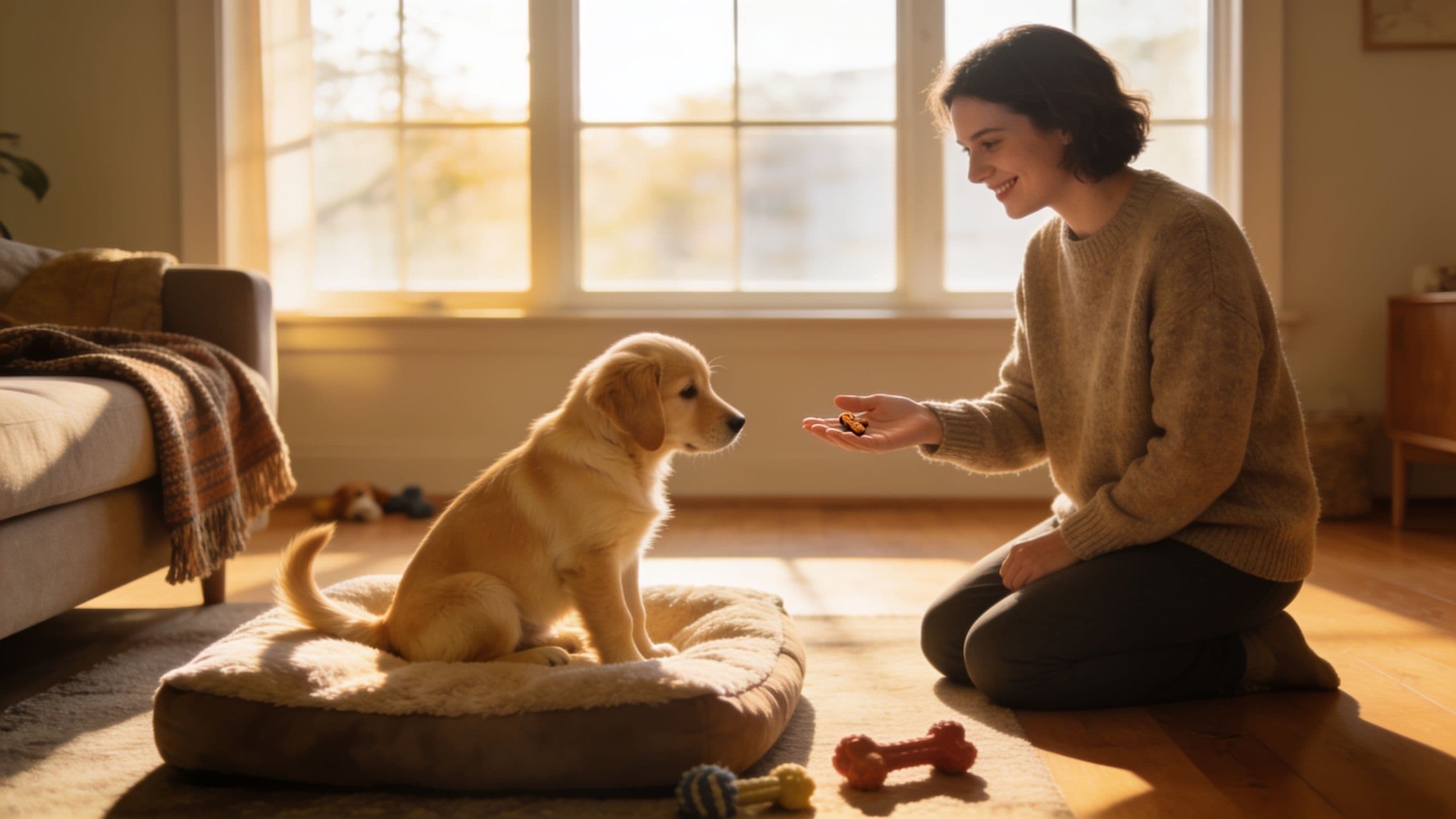
Prepare something to do. A lick mat, stuffed food toy, chew, small scatter of treats, or a favorite blanket can redirect nervous or pushy energy.
Reduce environmental spikes. If the doorbell itself sets your pet off, ask guests to text when they arrive instead of knocking.
Choose the right room. The ideal starting area is calm, familiar, and not directly in the traffic lane of incoming guests.
This setup should feel routine rather than dramatic. If you only bring out the gate, crate, or treat station during high-stress moments, some pets will treat those items as a warning sign. Used regularly, they become part of normal life.
A low-pressure arrival routine that actually works
The most useful visitor plans are short enough to remember and repeat. A realistic version looks like this:
1. Place the pet before opening the door
Before the guest comes in, guide your pet to the starting station or retreat area. That might mean clipping on a leash, tossing treats onto a mat, closing a gate, or leading your cat to a quieter space with access to food, water, and hiding options.
This step matters because trying to rearrange an already aroused pet at an open doorway is where many visits go wrong.
2. Let the guest enter without becoming the event
Once your pet is secure, invite the guest inside calmly. Skip the excited commentary. No repeated name-calling, no "look who's here," no crowding around the pet. The less theatrical the moment, the easier it is for the animal to settle.
3. Start with no greeting at all
This is the part many owners and visitors resist, even though it helps most. Ask guests to ignore the pet at first. That means no leaning in, no fast reaching, no kissy noises, and no direct face-to-face approach.
For dogs, ignoring reduces social pressure and often lowers jumping and frantic solicitation. For cats, it preserves choice, which is often the difference between hiding and cautiously emerging.
4. Wait for signs of recovery, not just silence
A dog that has stopped barking but is still stiff, staring, pacing, or whining may not be ready. A cat that came out but is crouched low with wide eyes is not necessarily comfortable. Look for softer body language: easier breathing, looser movement, curiosity, sniffing, grooming, taking treats, choosing to rest.
5. Allow brief, side-on contact only if the pet seeks it
If your pet approaches on their own and appears relaxed, keep greetings small. For dogs, a side approach and a low-key sniff are often better than head pats. For cats, a stationary hand offered at a comfortable distance is usually more polite than reaching over the head or trying to pick them up.
If the pet backs away, that is the answer. Let the interaction end there without coaxing.
Dogs need structure; cats need choice
A single visitor routine can work for both species, but the details should respect how they usually handle social novelty.
For dogs that rush, bark, or jump
Many dogs benefit from having a job during arrivals. That does not need to be elaborate obedience. A mat stay, a food toy behind a gate, or a leash walk to another room can be enough. The point is to interrupt the sprint-to-door habit and replace it with a familiar pattern.
If your dog gets more wound up by being held back physically at the doorway, increase distance. A room farther from the entrance often works better than a close-range battle at the baby gate.
For highly social dogs, the challenge is not fear but impulse control. These dogs still benefit from delayed greetings. Meeting after two calm minutes is usually more successful than meeting at peak excitement.
For cats that disappear or hover at the edges
Do not measure success by whether the cat came out to say hello. Measure it by whether the cat had options and stayed regulated.
A shy cat should never be carried into the room to "show them there's nothing to worry about." That removes control at exactly the wrong moment. Better choices include a quiet room with vertical space, open carriers as hiding spots, and a guest who acts like the cat is not an assignment.
Many cats will investigate once the room quiets down. If they do, let them set the pace. A cat that rubs against a chair may be interested in proximity without wanting touch. A cat that hops onto a lap has made a much clearer decision.
What guests should know before they walk in
Pets often do better when visitors get simple instructions in advance. Most people are willing to help if they know what helps.
Send a quick note or mention it when confirming plans:
"Please come in and ignore the pets for the first few minutes."
"If the dog approaches, let him sniff first before trying to pet him."
"If the cat stays hidden, that is fine. Please do not try to coax her out."
"Please avoid standing over them or reaching quickly."
This kind of scripting spares you from explaining while managing a noisy arrival. It also protects your pet from well-meaning but unhelpful behavior.
Children need especially clear guidance. Even a tolerant pet can feel trapped by fast movement, hugging, squealing, or being followed. If young guests are coming over, management should be tighter, not looser.
The mistakes that make visits harder every time
Three habits tend to derail progress.
Forcing interaction. Pushing a pet to "be social" usually teaches the opposite lesson. If every guest predicts unwanted contact, the pet learns that visitors reduce safety.
Using excitement to override nerves. Loud, cheerful encouragement can make humans feel better while making pets feel worse. Calm beats hype.
Changing the rules each visit. If one guest is allowed to rush in and pet immediately while another is asked to wait, your pet has no stable pattern to rely on. Consistency matters more than perfection.
A good visitor plan is not about making pets perform politeness on command. It is about giving them a dependable script: first we separate or settle, then the house gets quiet, then I can observe, then I can choose whether to engage.
That predictability helps a pushy greeter avoid spiraling upward and helps a shy pet avoid shutting down. It also makes your home easier to enter for guests, because they are not being asked to decode your pet in real time.
When a visit goes well, it may look uneventful. The dog stays behind a gate with a chew for five minutes, then comes out and sniffs politely. The cat remains on the bookshelf for half an hour, then walks through the room and leaves again. That is not a failed social moment. That is a successful, low-pressure one.
Included does not have to mean immediate. For many pets, the kindest welcome is a little time and a clear plan.
Safety & Scope
This article is for general informational purposes and does not replace professional advice for complex repairs or installations.
Frequently Asked Questions
+How do I help my dog calm down when guests arrive?
Set up a routine before the door opens. Place your dog behind a gate, on a leash, on a mat, or in another room with a chew or food toy. Let the guest enter calmly and ask them to ignore the dog at first. Once your dog's body language softens and excitement drops, allow a brief greeting only if the dog seems ready.
+Should visitors try to pet a shy cat right away?
No. Most shy cats do better when they are ignored at first and allowed to observe from a distance. Give the cat access to a quiet retreat, hiding spots, and elevated perches. If the cat approaches later, let contact stay brief and gentle, and do not force interaction if the cat backs away.
+What is the best setup for pets during doorbell moments?
The best setup is one that prevents a chaotic doorway and gives the pet a familiar place to settle. For dogs, that may be a gate, crate, leash station, or mat away from the entrance. For cats, it may be a separate room or a quiet perch with escape options. If the doorbell itself is a trigger, ask guests to text on arrival instead.