A Better Welcome for Guests Starts With the Pet’s First Minute
Most awkward guest arrivals are decided before anyone has taken off their shoes. A simple first-minute routine can lower excitement, reduce barking or hiding, and make your home feel calmer from the doorway onward.
Maya covers pets & animal lifestyle with an emphasis on practical analysis, products, and real-world impact.
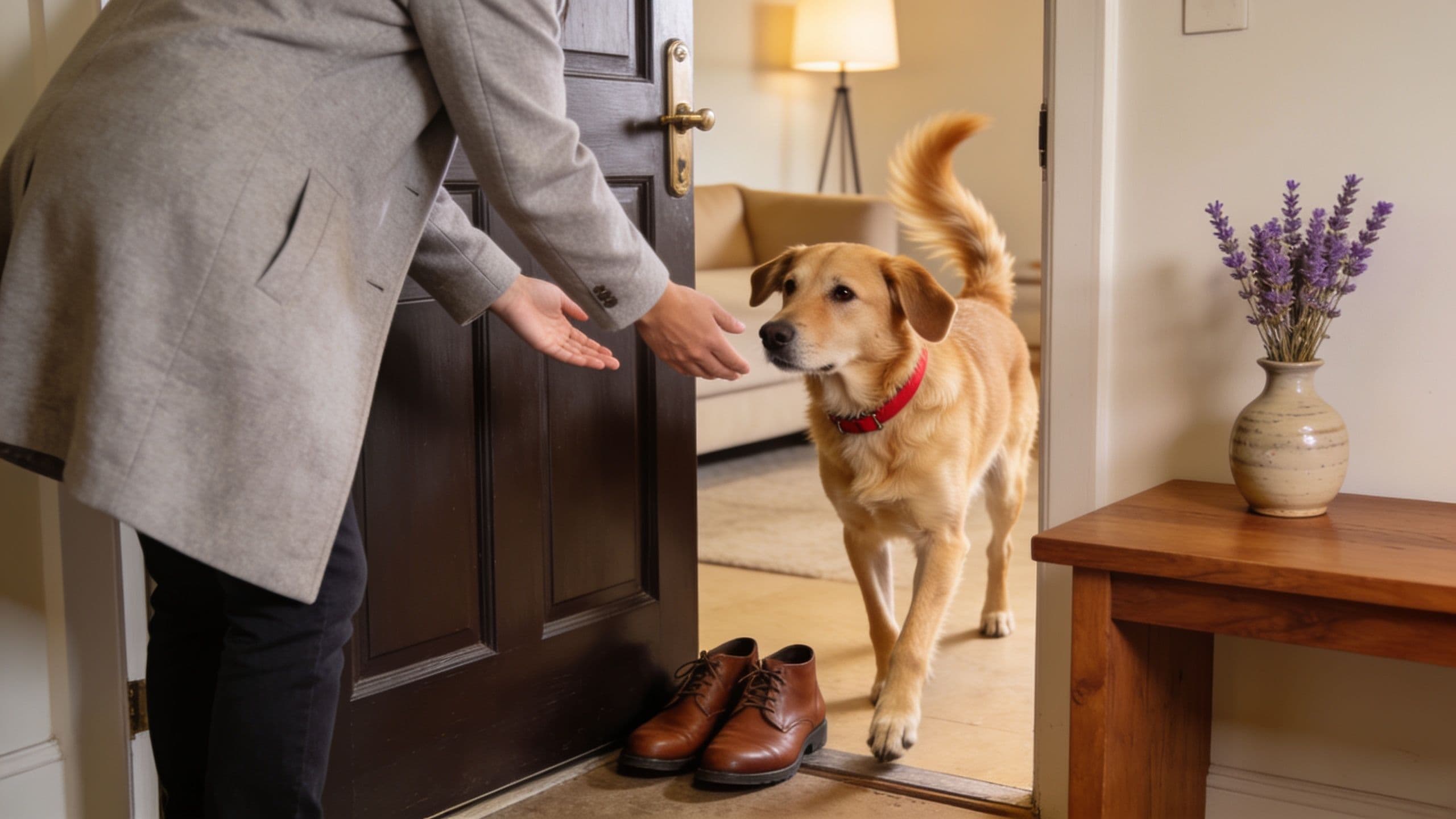
Most guest visits go sideways for pets before the visit has really begun. The doorbell rings, footsteps approach, voices rise, and the animal reacts faster than the humans do. By the time an owner starts repeating cues or apologizing from across the room, the energy is already high.
That is why the first minute matters more than the next hour. Pets do not need a perfect social performance. They need a predictable opening sequence: where to go, what to do, and how contact with a new person will happen. When that first minute is structured, the rest of the visit usually feels easier for everyone.
The arrival spike happens before you feel ready
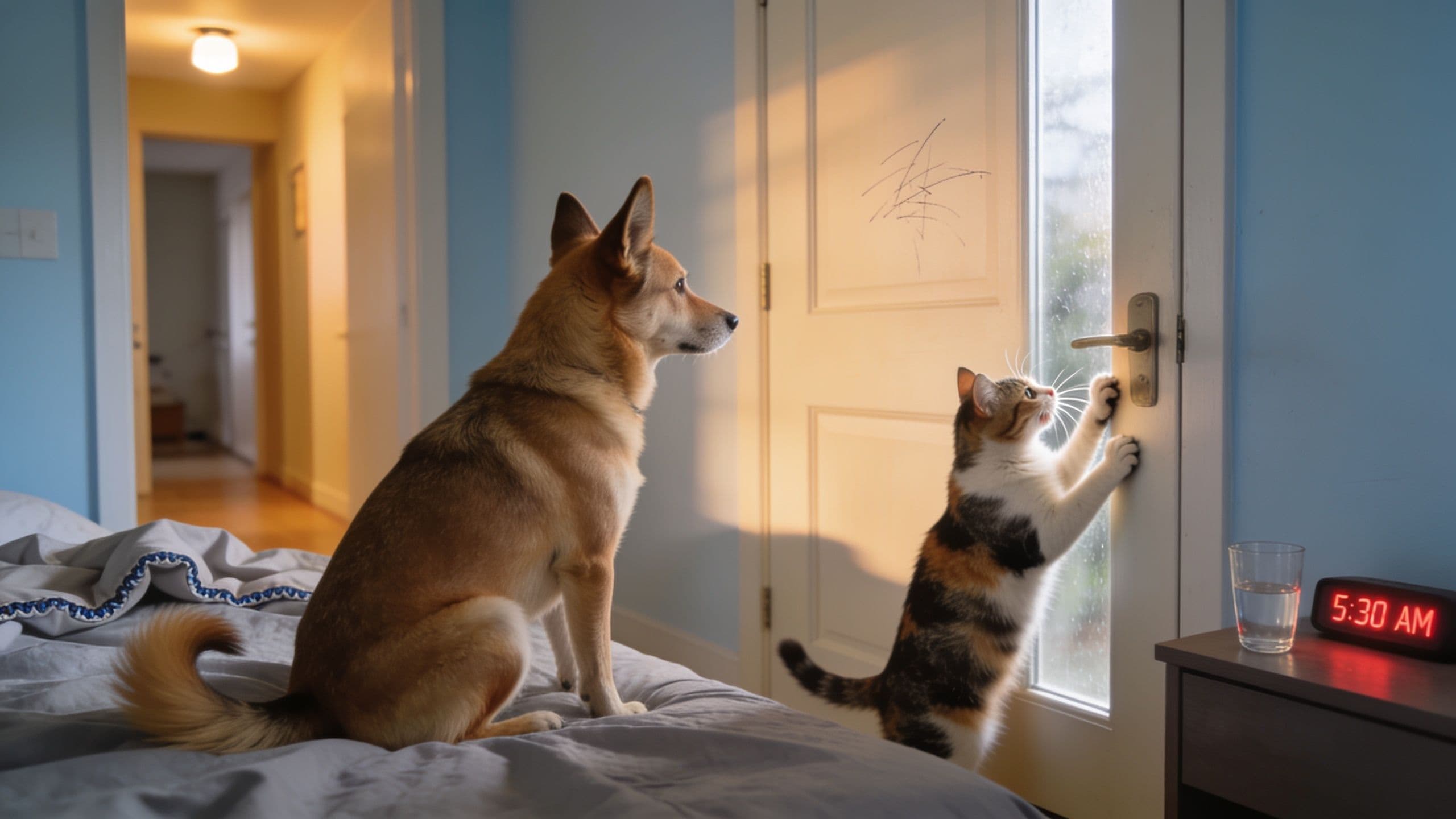
Guest arrivals compress several triggers into a few seconds: noise at the door, movement in the hallway, unfamiliar scents, and a sudden shift in the owner’s attention. For social dogs, that can look like jumping, spinning, barking, or door-dashing. For shy cats, it can mean bolting under a bed before anyone even enters. For rabbits, birds, or other small pets, it may mean freezing, retreating, or becoming overstimulated by noise.
The mistake many owners make is treating the reaction as the problem. Often, the real problem is the lack of a plan before the trigger arrives.
A pet that has no clear assignment will invent one. That assignment might be guarding the door, rushing the guest, hiding immediately, or pacing through the hallway. None of those behaviors are surprising. They are what happens when the animal is asked to process a chaotic moment with no structure.
The strongest arrival routines do two things at once:
they reduce sensory overload
they give the pet one simple, repeatable task
That task does not need to be elaborate. It can be going to a mat, waiting behind a gate, moving to a perch, staying in a bedroom with a food puzzle, or simply observing from a distance without interaction.
Build the first minute before the guest knocks
A calm greeting starts well before the door opens. Preparation is not about making your home feel rigid. It is about removing decisions from the busiest moment.
Set the environment first
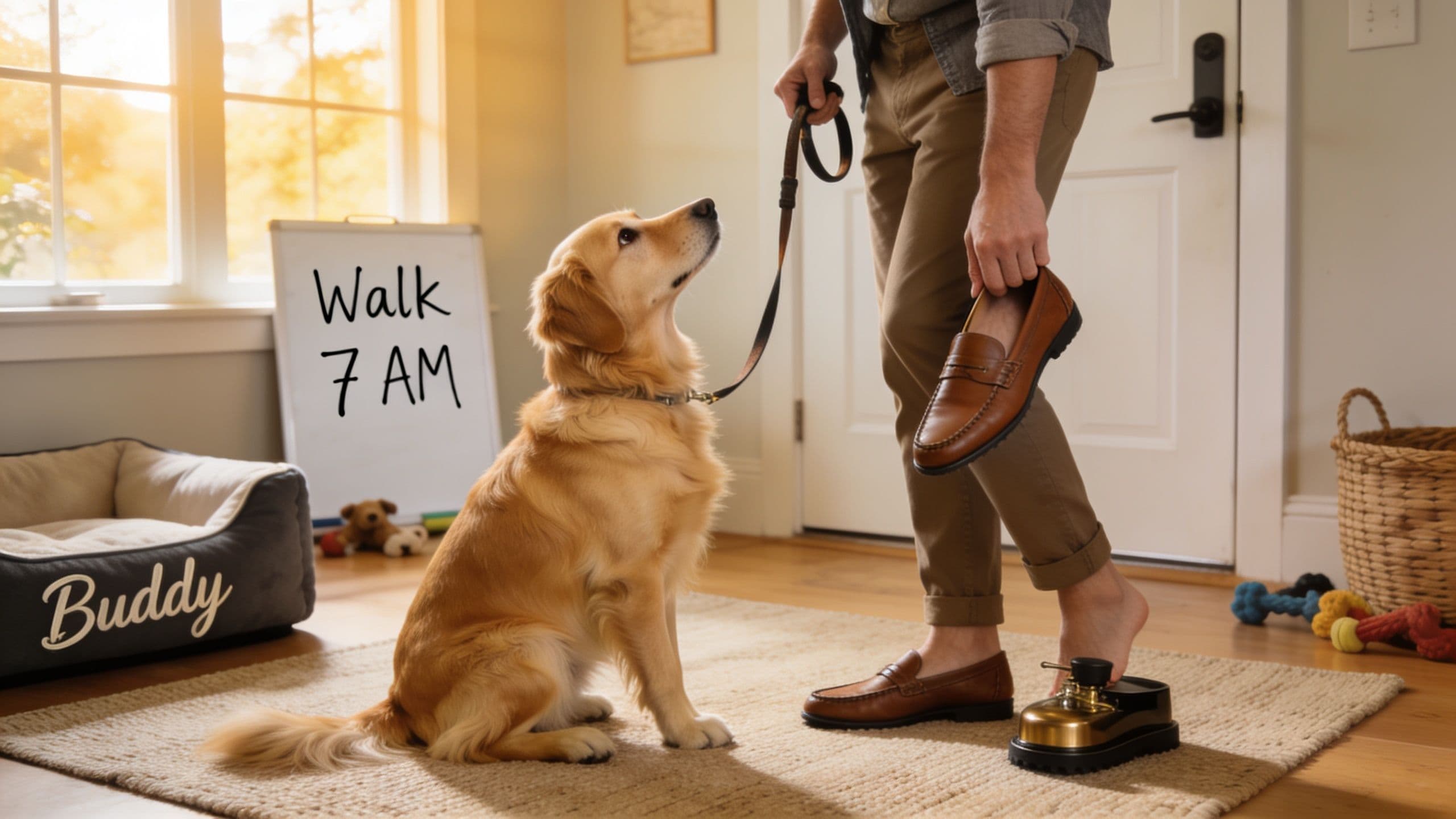
If your dog tends to launch at the entryway, set up a gate, leash, or station spot before the guest arrives. If your cat is wary, open access to a quiet retreat room with water, litter, and a familiar resting place. If you have a small pet sensitive to noise, move the enclosure away from the front-door traffic path if possible.
This is also the moment to manage the door area itself. Keep shoes, bags, and clutter clear so you can move smoothly. If your pet reacts strongly to the doorbell, consider texting guests to arrive and knock lightly, or use a neutral cue such as “Come in” only after you are in position.
Give the pet a job it already understands
The first minute is not the time to test new training. Use a behavior the pet knows well enough to perform under mild excitement.
For a dog, that might be:
go to mat
sit for tossed treats
wait behind a gate
hold a toy
follow you to a preset spot away from the door
For a shy cat, the job is often simpler: retreat is allowed, observation is allowed, and no contact is required. A cat does not need to greet to succeed. The job may simply be staying in a safe location without being pursued.
For confident cats, a perch or elevated spot near but not directly in the path of entry can work well. It gives them visual access without forcing interaction.
Brief the humans too
Owners often prepare the pet and forget the guest. But freestyle greetings are one of the fastest ways to derail a good start.
A guest needs only one or two directions, delivered clearly and casually:
“Ignore him for the first minute while he settles.”
“Please come in slowly and let her approach if she wants.”
“Don’t reach for the cat; she’ll decide if she wants to say hello.”
That short briefing is more effective than a long explanation shouted over barking.
A staged greeting works better than a big hello
The cleanest first-minute routine is built in stages rather than one dramatic interaction.
Stage 1: Entry without contact
Open the door only when you are physically ready to manage the pet. That may mean leash in hand, gate closed, or treats ready. The guest enters. The pet does not get direct attention yet.
This matters because many animals escalate when the doorway becomes a social hotspot. Eye contact, excited voices, bending over, and outstretched hands can all add pressure.
Your only goal in this stage is a successful entry. Not affection. Not introductions. Not proving how friendly your pet is.
Stage 2: Reset the energy
Once the guest is inside, create a few seconds of neutral activity. Hang up a coat. Walk to the living room. Ask the guest to sit. Scatter a few treats on a mat for the dog. Let the cat watch from a hallway or perch. The point is to shift from threshold excitement to ordinary room energy.
Many pets handle visitors much better once the doorway has stopped being the center of the event.
Stage 3: Allow greeting on the pet’s terms
If the pet is calm, greeting can happen after that initial reset.
For dogs, this often means four paws on the floor before attention starts. Petting should stay brief and low-key at first. A side turn from the guest is often easier than a direct lean-in.
For cats, greeting may mean no touching at all initially. A guest who sits quietly and lets the cat investigate is usually more successful than one who tries to win the cat over immediately.
The same logic applies to small pets. Observation from a comfortable distance can be a successful introduction. Handling or close contact should never be the automatic default during arrival.
The mistakes that make the doorway harder
Owners usually do not create chaotic greetings on purpose. They tend to fall into a few predictable traps.
Repeating cues into a rising storm
“SIT, sit, sit, sit” is rarely useful when the dog is already over threshold. If the environment is too intense for the pet to respond, the answer is management, not louder repetition. Distance, barriers, and simpler tasks work better than trying to out-talk the excitement.
Letting guests improvise
A well-meaning visitor who squeals, crouches, reaches, or stares can undo a lot in seconds. Most people are happy to follow instructions if they get them early and simply.
Waiting until the reaction peaks
If you only start managing once barking, jumping, or hiding is in full swing, you are already late. The useful moment is before the knock, before the latch turns, before the pet decides the plan.
Forcing sociability
Not every pet should greet every guest. That is especially true for shy cats and easily overwhelmed animals. Success may mean staying relaxed in another room for ten minutes, then emerging later. A quieter, delayed interaction is still a good outcome.
Match the routine to the pet you actually have
The best first-minute plan is not the most impressive one. It is the one your pet can repeat reliably.
Social dogs need brakes, not hype
Friendly dogs often overwhelm guests not because they are aggressive, but because they have no speed control. These dogs benefit from movement patterns and physical setup: leash drag, mat work, treat tosses, gates, and a short pause before touch.
If your dog loves visitors, the goal is not to suppress that. It is to channel it into a greeting that reads as polished rather than chaotic.
Cautious cats need distance and choice
A shy cat usually does better when nobody makes the cat the project. Quiet entrances, no reaching, and access to vertical space or a retreat room matter more than coaxing. If the cat chooses to appear later, that is a positive sign, not a failed introduction.
Curious small pets need noise control
Birds, rabbits, guinea pigs, and similar pets are often affected less by the guest personally than by the sudden change in volume and movement. Keep arrivals away from enclosures, reduce crowding around the habitat, and avoid treating the pet like part of the receiving line.
Turn it into a house routine, not a special event
The real breakthrough comes when the first minute stops being improvised. Use the same cue, same setup, and same flow every time someone visits. Over time, the sequence itself becomes informative to the pet.
A routine might look like this:
1. Guest texts on arrival. 2. Pet is guided to mat, gate, perch, or quiet room. 3. Guest enters without greeting the pet. 4. Everyone moves away from the doorway. 5. Pet gets a calm, controlled opportunity to approach if appropriate.
That is enough. It is specific, repeatable, and realistic.
You do not need a pet who acts like a brand ambassador at the front door. You need a first minute that prevents the visit from starting in a scramble. When the opening is calmer, guests feel more comfortable, owners look more composed, and pets get a clearer picture of what is expected. That is what a better welcome really looks like.
Safety & Scope
This article is for general informational purposes and does not replace professional advice for complex repairs or installations.
Frequently Asked Questions
+How do I stop my dog from exploding at the door when guests arrive?
Start before the knock by setting up management like a leash, gate, or mat, then give your dog one simple job such as going to a station or waiting behind a barrier. Ask guests to ignore the dog during entry and delay petting until the dog is calm. The goal is to prevent escalation, not to correct it after it starts.
+What should visitors do when meeting a shy cat?
Visitors should enter calmly, avoid direct staring or reaching, and let the cat choose whether to approach. Sitting down and ignoring the cat at first is often more effective than trying to coax interaction. A shy cat usually does best when it has distance, escape routes, and no pressure to greet.
+Why is the first minute of a guest visit so important for pets?
The first minute compresses noise, movement, new scents, and social pressure into a very short window. Pets often react before owners are organized, so that opening sets the tone for the rest of the visit. A predictable routine during that minute helps reduce excitement, fear, and confusion.