Why Your Cat Changes Meows for Different People
Many cats do not meow the same way at everyone in the house. They adjust tone, volume, timing, and persistence based on who usually feeds them, who responds fastest, and what kind of communication has paid off before.
Jordan specializes in turning complex pets & animal lifestyle topics into clear, useful explainers for everyday readers.
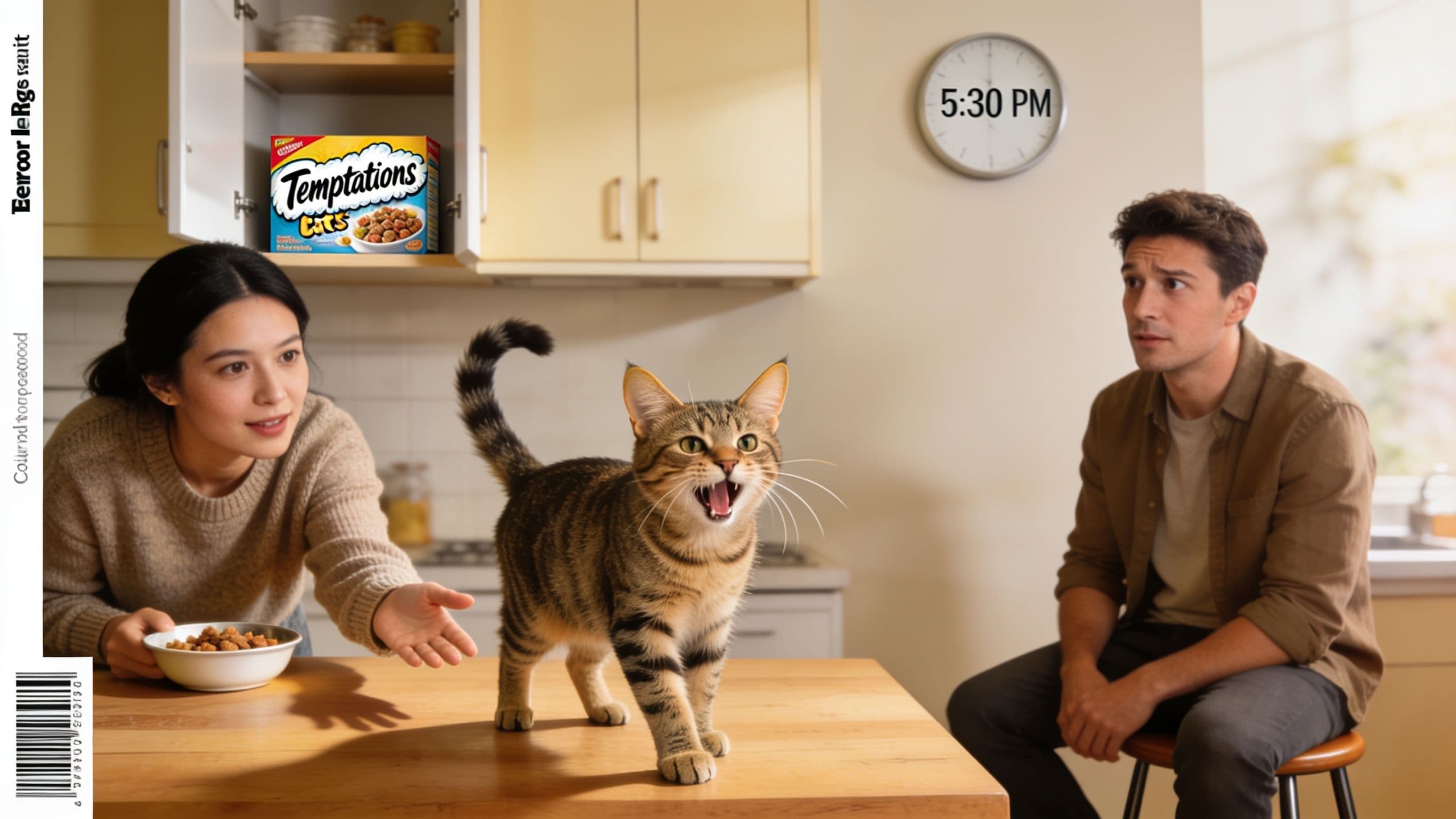
Your cat may sound sweet and delicate with one person, loud and relentless with another, and almost completely silent around guests. That is not random moodiness. It is often a sign that your cat has become an extremely efficient observer of human behavior.
Cats are not just making noise; many are fine-tuning a message for a specific audience. Over time, they learn which voice gets breakfast from one person, which chirp opens a door with another, and which dramatic complaint earns attention from the household member most likely to give in.
Cats often treat meowing as a tailored social tool
Adult cats do not typically meow at each other very much. Meowing is used heavily with humans, which is one reason it can feel so personal. Within a household, that communication can become highly customized.
You might notice patterns like these:
A short trill for the person who usually serves meals
A drawn-out, demanding meow for the person who caves in for treats
Repeated yowls at the bedroom door for the human most likely to get up
Quiet chirps and body rubs for a trusted favorite
Near silence around visitors or less familiar family members
These differences usually involve more than volume. Cats vary pitch, length, repetition, and timing. Some save their most dramatic sound for the person who has taught them, unintentionally, that persistence works. Others use softer, shorter sounds with the family member who already reads subtle cues like staring at the bowl or walking to the door.
That is why two people can live with the same cat and swear they know completely different animals.
What your cat is learning from each person
The simplest explanation is often the best one: your cat is studying results.
If one person responds immediately to a single soft meow, the cat has no reason to escalate. If another ignores subtle signals but eventually reacts to louder and more frequent meowing, the cat learns to skip straight to the louder version.
This is basic reinforcement, but cats apply it with surprising precision.
Response speed shapes vocal style
Cats pay attention to timing. If you consistently answer right away, your cat may use brief, efficient sounds with you. If responses are delayed, your cat may become more repetitive or more theatrical.
From the cat's perspective, this is practical communication, not manipulation. The goal is simple: get the needed outcome with the least wasted effort.
Different people control different resources
Many households divide cat-related jobs without realizing how much the cat notices. One person fills the food bowl. Another opens the patio door. Someone else starts the evening play session or handles lap time.
A cat may attach different vocal patterns to each role:
Food person: anticipatory meows at regular times
Play person: chirps, trills, or excited chatter
Door person: sharp attention-getting calls near exits
Comfort person: softer, affiliative sounds and closer physical contact
The cat is not speaking a human language, but it is linking specific signals to specific outcomes and specific people.
Social comfort matters too
Not every vocal difference is about rewards. Cats also adjust to their comfort level with each individual. A cat that trusts you deeply may vocalize more because it feels safe being expressive around you. A quieter response to guests or a less familiar roommate can reflect caution rather than dislike.
Some cats are especially talkative with the person they are bonded to because that relationship includes more back-and-forth interaction. If you tend to answer your cat, greet it when entering a room, and respond to small bids for attention, you are participating in a social routine that encourages even more vocal exchange.
Why one person gets the loud version
If your cat meows more at you than at anyone else, that can mean several things, and not all of them are negative.
First, you may simply be the most important audience. Cats often direct the most communication toward the person most closely tied to feeding, comfort, routine, or security.
Second, you may be the most responsive audience. If you notice every little sound and act on it, your cat has learned that vocalizing at you is worthwhile.
Third, you may have accidentally trained escalation. This happens when owners ignore the first few meows but eventually respond after the cat becomes louder or more persistent. The cat does not learn, "Meowing does not work." It learns, "Louder meowing works better."
This pattern is common around:
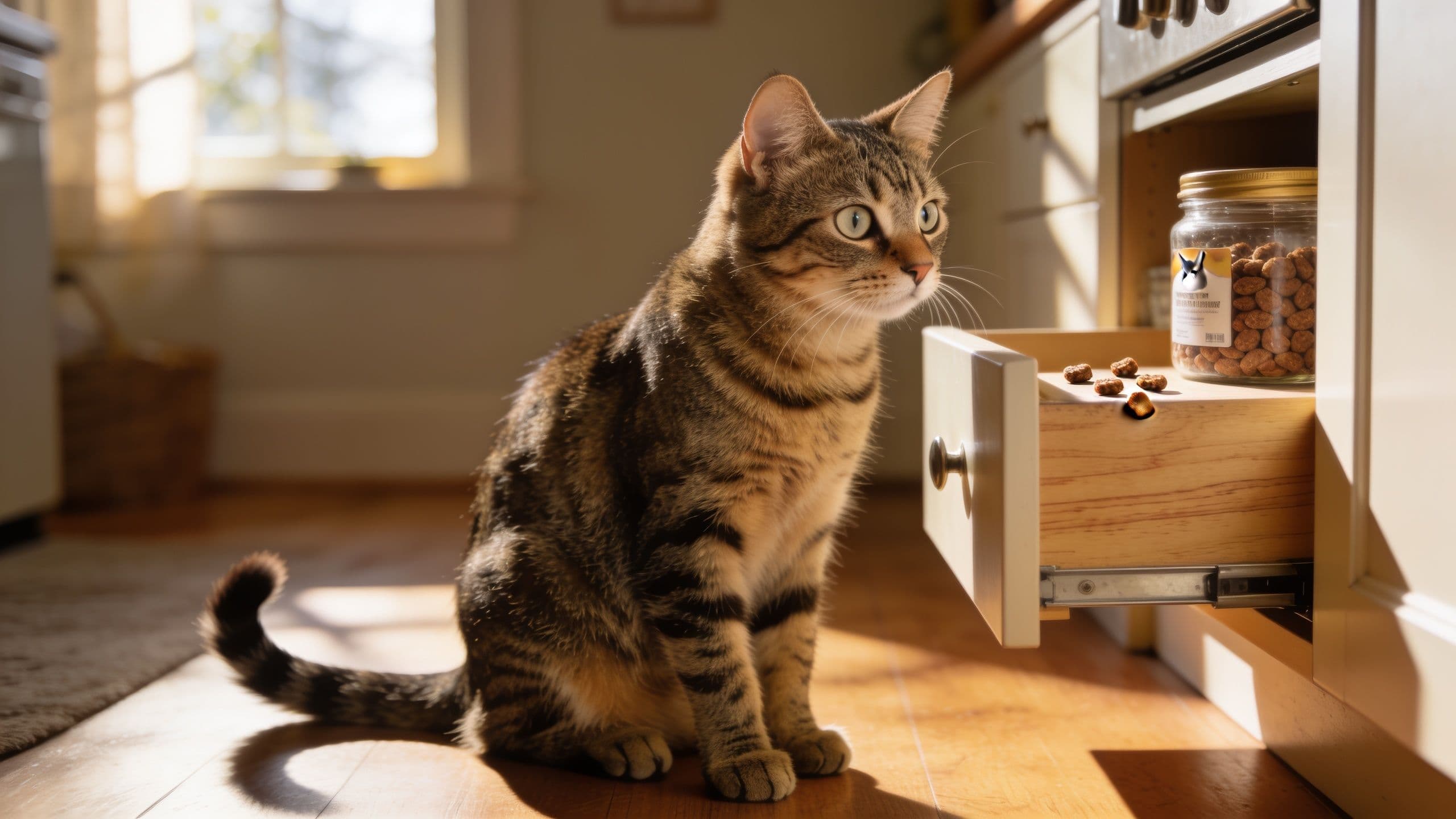
Early morning wake-up calls
Demand meowing for treats
Requests to open doors
Attention-seeking during work calls or screen time
Cats are excellent at detecting the exact point where a human gives in. If the payoff comes after the tenth meow, the tenth meow becomes part of the strategy.
Household habits quietly train different voices
The most dramatic vocal differences often come from inconsistent human behavior, not from any special quirk in the cat.
One person may reward calm sitting by serving food once the cat is quiet. Another may pour food while the cat is already yelling. One family member may engage in play before dinner, reducing frustration. Another may delay meals unpredictably, increasing vocal intensity around feeding times.
Over weeks and months, these small differences create very different expectations.
A useful way to think about it is that your cat is running multiple communication experiments at once:
What works on Alex at 6 a.m.?
What gets Jordan off the couch to open the balcony?
Which sound makes Sam stop typing and look over?
And because cats thrive on patterns, they keep the methods that reliably succeed.
Research on cat-human communication supports the broader idea that domestic cats adjust their signaling to human attention and response. Studies from groups such as the University of Sussex have helped popularize the idea that certain feline vocalizations, including urgent-sounding solicitation calls, are especially effective at getting humans to act. In daily life, most owners do not need a lab study to recognize the result: cats refine what gets noticed.
What these meow differences can reveal
When your cat changes its voice for different people, it can tell you quite a bit about the social dynamics in the home.
Preference and trust
A cat that uses more varied, frequent, or softer vocalizations with one person may feel especially secure with that individual. Richer communication often appears where the cat expects understanding.
Confidence and expectation
Demanding meows usually signal that the cat expects a response. A cat does not keep pressing a button that never works. Persistent vocalizing often reflects confidence that the person can be influenced.
Routine awareness
Cats that "remind" only one household member about dinner, medication, or bedtime are showing how well they track human roles. They know who is associated with what.
That said, sudden changes matter. If a previously quiet cat becomes much louder with everyone, or if vocalization changes come with appetite, grooming, litter box, or activity changes, it is worth paying closer attention. Not every meow pattern is behavioral.
How to respond without rewarding nonstop demand meowing
If you want a calmer household, the goal is not to silence your cat. It is to make communication clearer and more consistent.
Start by comparing notes with everyone in the home. Who feeds the cat? Who opens doors? Who gives treats after repeated meowing? You may discover that the cat is not inconsistent at all; the humans are.
A few practical adjustments can help:
Use more predictable routines for meals, play, and bedtime
Reward calm approaches before the meowing escalates
Avoid giving food, treats, or access at the peak of loud demand behavior
Make sure all household members follow the same response pattern
Offer play, enrichment, and attention proactively so the cat does not need to campaign for it
For example, if your cat screams at one person for dinner, that person can wait for a brief quiet pause before placing the bowl down. The pause does not need to be long at first. What matters is that the cat stops linking the loudest moment with the reward.
Likewise, if one family member gets soft chirps while another gets full-volume complaints, the quieter communicator may simply be responding earlier to subtle signals. Teaching everyone to notice those low-key cues can reduce the need for escalation.
The big takeaway is not that your cat is being dramatic for sport. It is that your cat has learned your household with remarkable detail. Different meows for different people usually reflect memory, expectation, trust, and trial-and-error learning all working together. Your cat is not speaking a different language with each person so much as using a customized strategy for each audience.
Safety & Scope
This article is for general informational purposes and does not replace professional advice for complex repairs or installations.
Frequently Asked Questions
+Why does my cat meow more at me than at anyone else?
Usually because you are the person most associated with food, attention, comfort, or fast responses. Your cat may also feel safest being vocal with you. If you tend to respond after repeated meowing, your cat may have learned that you are the most effective audience for persistent requests.
+Do cats have different meows for different people?
Yes, many do. Cats often change pitch, volume, length, and repetition depending on who they are addressing. They learn which sounds work best with each person based on routines, rewards, and comfort level.
+Can owners accidentally train louder meowing?
Yes. If a cat gets what it wants only after becoming louder or more persistent, that pattern can reinforce demand meowing. Consistently rewarding calmer behavior and responding before escalation can help prevent this.