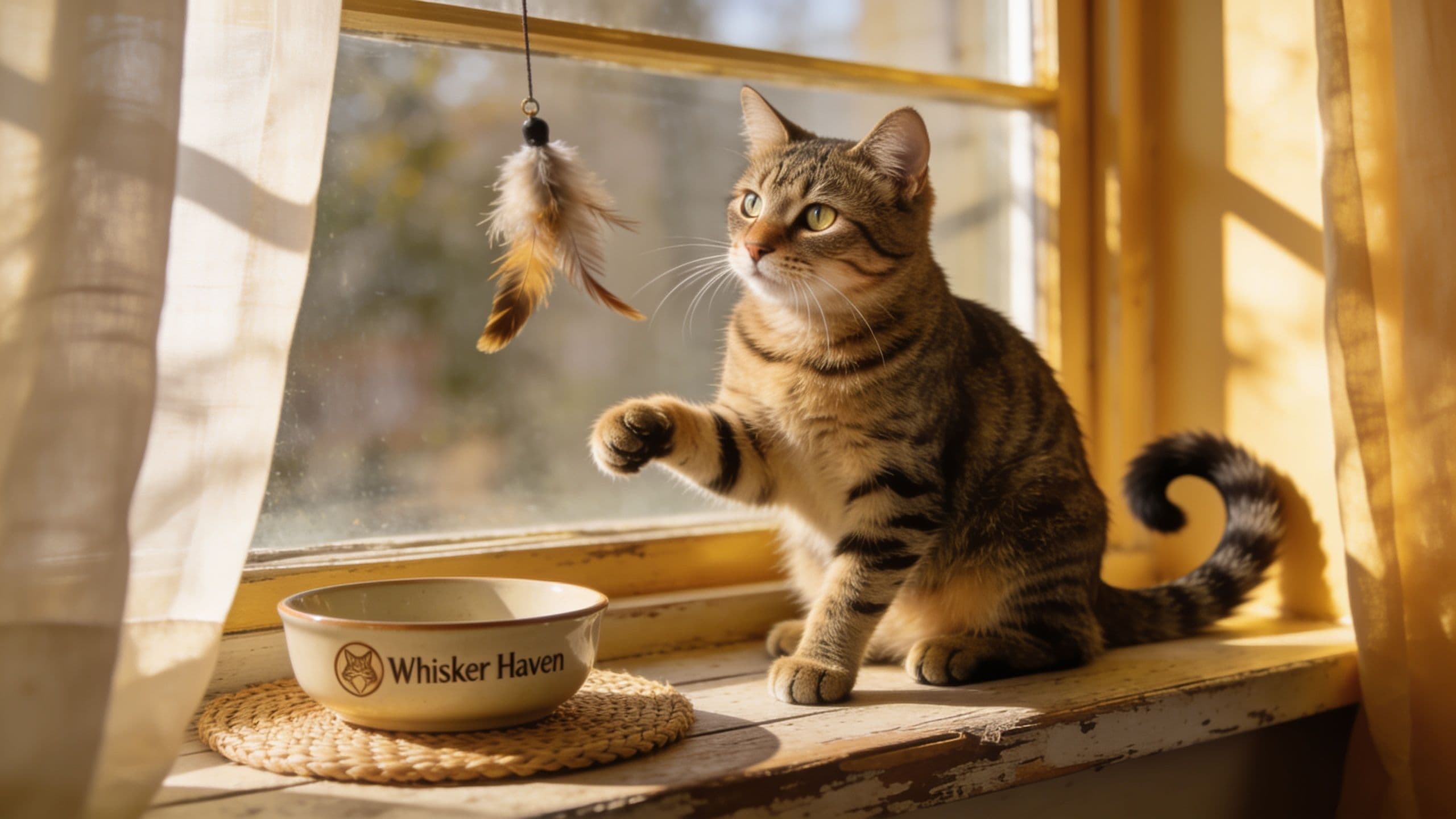
Why Your Cat Appears Exactly When You Open One Specific Drawer
That uncanny drawer-summoning trick is usually not a mystery at all. Cats learn the exact sounds, rhythms, and rewards tied to one drawer, then show up the moment they predict something good is about to happen.
Avery writes about trends, platforms, and strategic shifts in pets & animal lifestyle, with attention to what matters in practice.
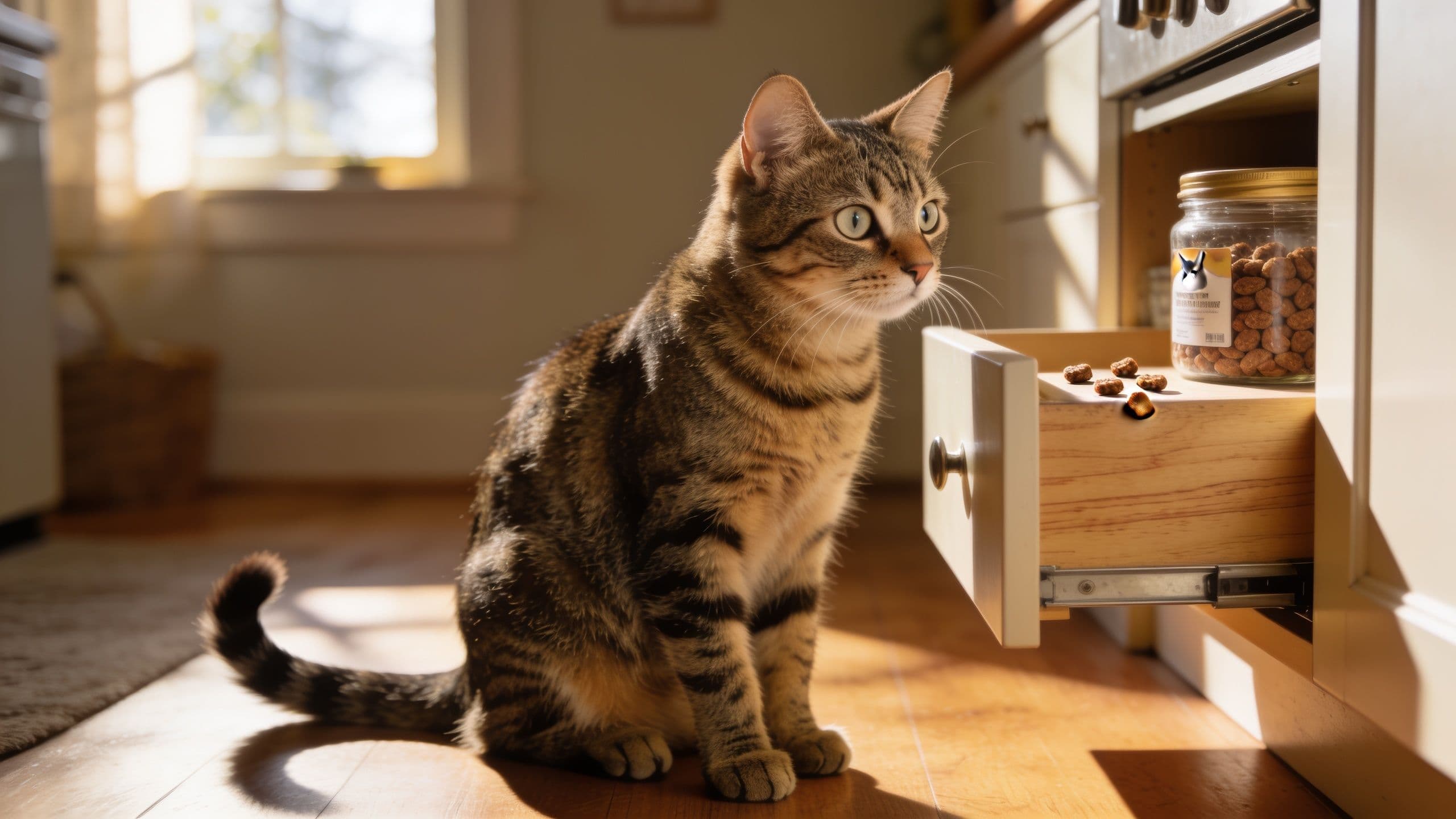
Your cat is not teleporting. It only feels that way because the sound of one particular drawer has become a highly reliable signal, and cats are exceptionally good at noticing signals that lead to something they value.
If the kitchen drawer usually means treats, the hallway drawer means the feather wand, or the bathroom drawer means the brush comes out, your cat may react faster to that drawer than to your own voice. That is not stubbornness or sorcery. It is pattern learning sharpened by repetition and reward.
That drawer is a cue, not a coincidence
Most homes are full of tiny noises humans barely register: cabinet hinges, plastic lids, the click of a lamp switch, the scrape of a chair leg. Cats do register them. More importantly, they sort those sounds by consequence.
One drawer may have a very distinctive audio signature: a certain rattle, a sticky glide, a soft thud at the end of the track. To you, it is background noise. To your cat, it may be the exact opening note of a familiar routine.
This is the same basic principle behind how pets learn that a can opener can mean dinner or how some cats start circling the kitchen at the sound of a specific food pouch being torn open. The sound itself is not meaningful at first. It becomes meaningful because it repeatedly predicts an outcome.
When a drawer has been paired with a rewarding event enough times, your cat stops waiting for the reward to appear. The drawer sound alone is enough to trigger movement, attention, and expectation.
Why this one sound beats every other sound in the house
Not every repeated household noise becomes important. The drawer that summons your cat tends to have three things going for it.
It has a strong payoff history
Cats are efficient learners when the result matters to them. A drawer that reliably produces freeze-dried chicken, catnip mice, a laser pointer, or a grooming session they enjoy will gain importance quickly.
Frequency matters, but emotional value matters too. A drawer opened once a day for a favorite treat may become a stronger cue than a cabinet opened ten times a day for boring reasons.
It sounds different from everything else
A unique cue is easier to learn. One drawer may squeak on the left side, slide with a metallic rasp, or bump the frame in a way no other storage spot does. That makes it easier for your cat to distinguish from all the generic household noise.
This is why owners are often convinced their cat knows the *difference* between drawers. In many cases, the cat probably does know the difference, at least in functional terms. It does not need to understand the concept of "the second drawer by the stove." It only needs to learn that a certain sound pattern predicts something worthwhile.
The reward comes quickly
The shorter the gap between cue and reward, the stronger the association usually becomes. If you open the drawer and the treats appear within seconds, the lesson is crystal clear. If you open the drawer, wander away, answer a text, and eventually maybe get the treats, the association is fuzzier.
Cats are excellent at linking immediate events. Fast, consistent payoff turns a random sound into a dependable forecast.
What your cat may actually be expecting
Owners often assume the cat is responding to the drawer itself, but the real target is the routine attached to it.
For many cats, that routine falls into one of a few categories.
Treats and food extras
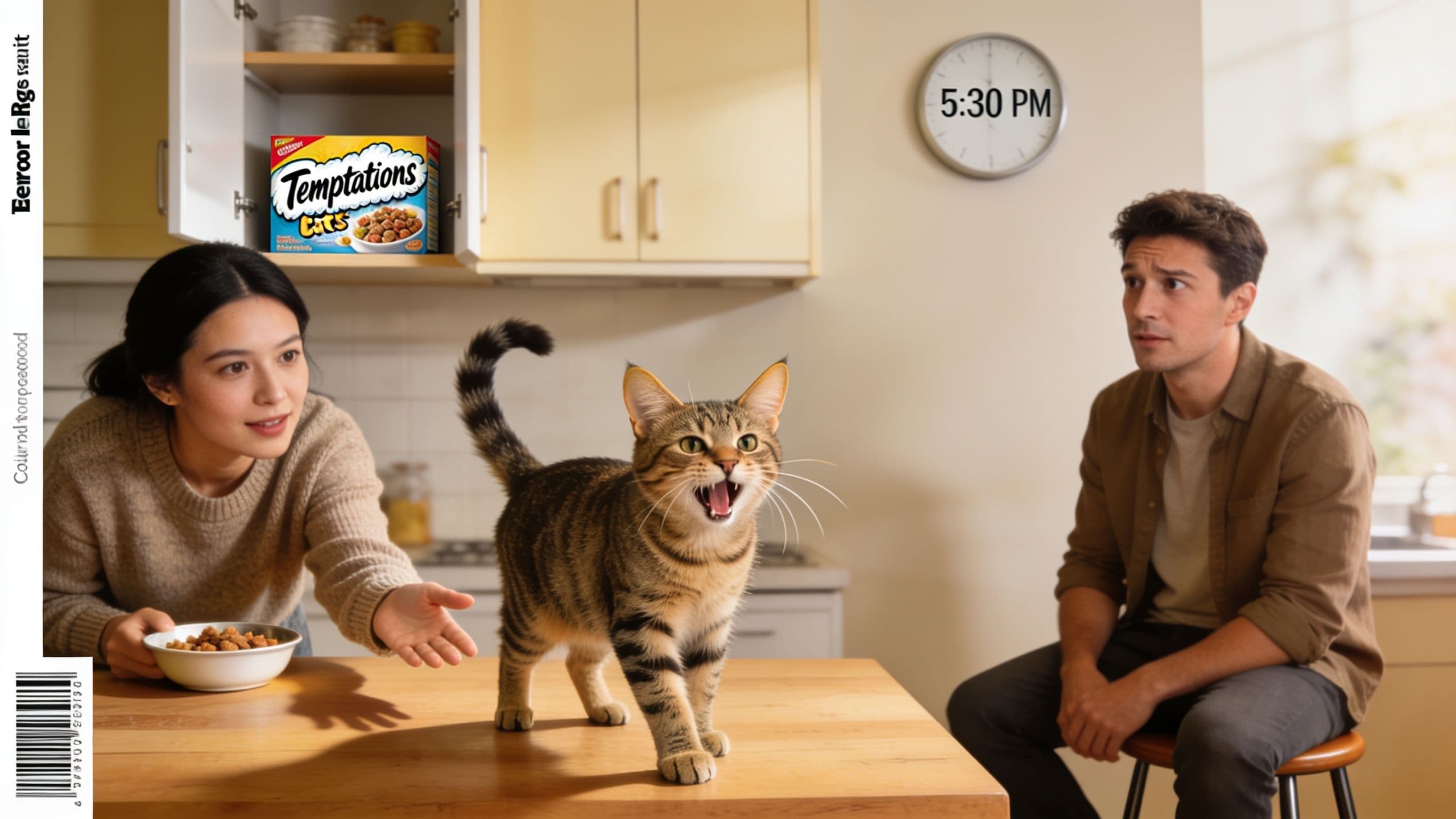
This is the classic version. If one drawer contains treats, your cat may appear from a dead sleep because the value is obvious and the history is clear.
Food-related cues are especially sticky because they are repeated often and reinforced strongly. Even if you are not opening the drawer for treats every time, a history of enough successful predictions can keep the behavior going.
Play sessions
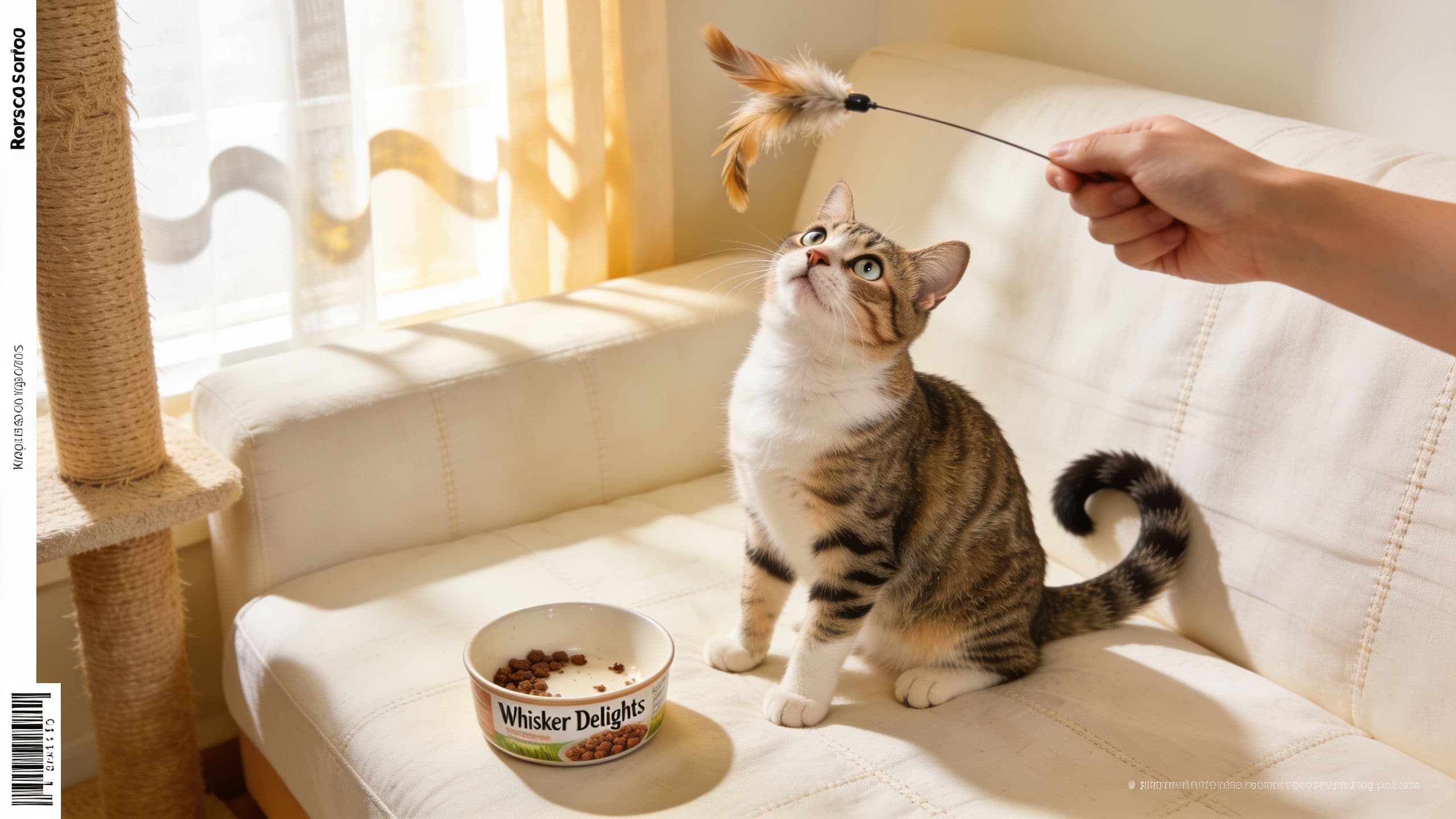
A cat that comes running for the toy drawer is showing the same pattern learning. Interactive toys often create a bigger burst of excitement than owners expect, particularly if the toy is not available all day. The feather wand that only appears from one drawer can become a high-value event.
Grooming or contact rituals
Not every drawer cue is about snacks. Some cats show up when they hear the drawer where the brush is kept, especially if brushing has become a calm, rewarding interaction. Others respond to the drawer with dental treats, harness gear, or the tiny tube of a favorite lickable topper used after medication.
The common factor is not the object. It is the consistency of the sequence.
Why the timing feels almost supernatural
Part of the charm is how precise the behavior looks. You crack the drawer open by an inch, and there is the cat.
Two things make this feel more magical than it is.
First, cats are often already monitoring the environment more than owners realize. A resting cat may be lightly asleep, listening. A cat in another room may have learned to orient toward that sound instantly because it has paid off before.
Second, humans are natural pattern-noticers too. We remember the dramatic perfect-timing moments and forget the times we opened the drawer and the cat did not show up, or the times the cat was already nearby for unrelated reasons. That does not mean the behavior is fake. It means the memorable examples stand out.
The result is a small domestic illusion: your cat seems to possess impossible knowledge, when it is really combining sharp hearing, learned associations, and quick movement.
What this reveals about feline intelligence at home
The drawer phenomenon is a useful reminder that cats are closely tuned to routine, especially routine that benefits them.
They are not passively inhabiting the house. They are mapping it. They learn where valuable resources come from, which people are most likely to deliver them, what times of day matter, and what sensory clues predict the next event.
That can be helpful. Clear cues often make life easier for cats. Predictable sound patterns around feeding, play, or grooming can reduce confusion and help a cat feel more secure about what happens next. Many behaviorists emphasize consistency for exactly this reason: animals cope well when important events are legible.
It also explains why cats can seem very selective about what they respond to. They are not trying to ignore you personally. They are responding to the signals that have proven most useful.
How to keep the habit charming instead of chaotic
If your cat's drawer obsession is cute but starting to create overexcitement, the solution is not to outsmart the cat. It is to clean up the cue system.
Keep high-value routines reasonably predictable. If the treat drawer opens ten times a day but only sometimes pays off, your cat may check every single time and become more frantic about monitoring it.
Avoid too many false alarms when possible. If one drawer has become the universal source of excitement, using it constantly for unrelated items can keep your cat in a low-grade state of anticipation.
You can also shift some rewards onto clearer alternatives. For example, if treats always follow a verbal cue, a mat target, or a brief sit-and-wait routine, the cat begins responding to a broader pattern rather than stampeding at the first scrape of wood on rails.
And if the behavior is harmless, it may be worth appreciating for what it is: a very small, very funny demonstration of learning in action. Your cat has built a private theory of the household, and one drawer sits near the center of it.
The magic is not in the furniture. It is in the repetition. A distinctive sound, a valued outcome, and enough successful predictions can turn an ordinary drawer into one of the most important signals in your cat's day.
Safety & Scope
This article is for general informational purposes and does not replace professional advice for complex repairs or installations.
Frequently Asked Questions
+Why does my cat come running when I open a certain drawer?
Because that drawer has likely become a learned cue. Your cat associates its specific sound with a reward such as treats, toys, brushing, or attention, so the noise alone triggers anticipation.
+Can cats recognize specific household sounds?
Yes. Cats are very good at distinguishing familiar sounds, especially when those sounds reliably predict something important to them. A unique drawer rattle or glide can become as meaningful as the sight of the item inside.
+How do I stop my cat from expecting treats every time?
Reduce mixed signals. Avoid opening the treat drawer for unrelated reasons when possible, and build a new routine such as giving treats only after a verbal cue or a simple behavior. Consistency helps your cat learn what actually predicts the reward.