If Your Cat Sits on Your Laptop, Start With the Heat and the Height
A cat on a laptop is not random mischief. It is usually the clearest possible example of how cats combine warmth, elevation, scent, routine, and perfectly timed social interruption into one very efficient decision.
Avery writes about trends, platforms, and strategic shifts in pets & animal lifestyle, with attention to what matters in practice.
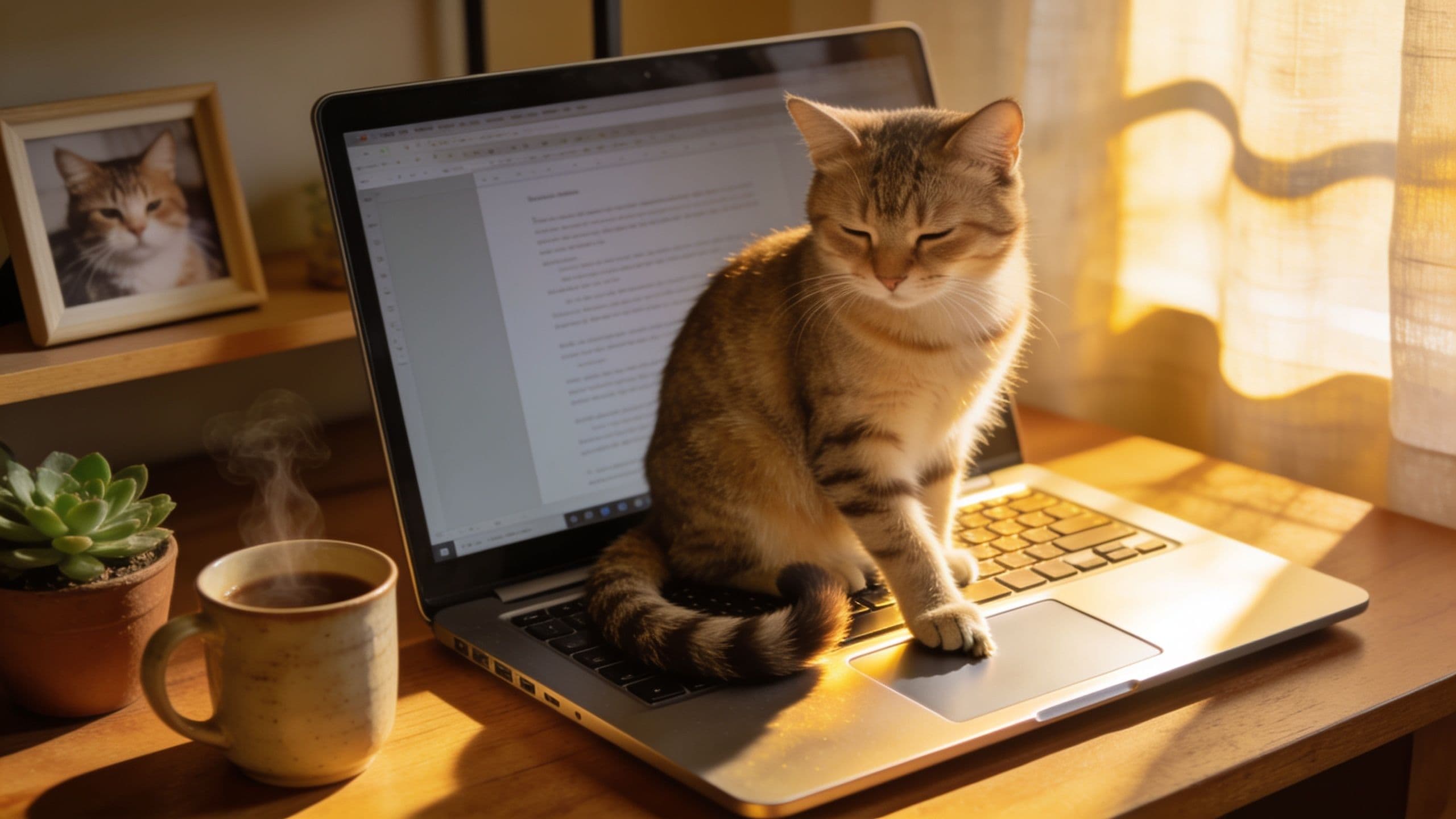
Your cat is probably not trying to ruin your workflow. The laptop just happens to be one of the best pieces of furniture in the house if you think like a cat: it is warm, slightly elevated, saturated with your scent, and placed exactly where your attention is most intense.
That combination matters more than any single explanation. People often assume the keyboard itself is the draw, as if cats have a mysterious preference for keys. More often, the laptop wins because it stacks several cat priorities in one compact square. It offers comfort, a good position, and a chance to insert themselves into the center of your activity without having to guess where the action is.
Why the laptop keeps winning
Warmth is the most obvious factor. Even a lightly used laptop gives off heat, especially around the keyboard and palm rest. Cats are efficient comfort seekers, and a warm surface requires no effort on their part. They do not need to wait for a sunny patch to move across the floor or for a blanket to be fluffed. The heat is immediate and reliable.
The height matters almost as much. A laptop on a desk turns an ordinary work surface into a little platform. Many cats prefer being slightly above floor level, where they can watch movement, track sounds, and feel less exposed. A desk gives them a view of the room and, often, of you. Add a glowing screen and moving hands, and the spot becomes even more interesting.
Then there is scent. Your laptop, desk, and chair are among the most strongly human-smelling objects in the home because you use them daily and for long stretches. Cats rely heavily on scent to evaluate places and possessions. Sitting on your laptop can be a way of choosing a spot that feels socially important and familiar at the same time.
Finally, your focus changes the value of the space. When you open the laptop, you signal that something important is happening. Cats are good at noticing routines and shifts in attention. If you become still, visually locked on the screen, and harder to engage, your cat may respond by moving straight into the center of that zone.
A small lesson in cat priorities
The laptop-sitting habit says less about disobedience than about how cats rank environments. They tend to favor places that combine three things: comfort, visibility, and relevance.
Comfort is straightforward. Warmth, texture, and a compact resting area all make a place attractive. Many cats also like surfaces that cradle the body just enough to feel defined. The space between your forearms and the edges of a laptop can create a contained, secure feeling.
Visibility is about control. A desk is not a cat tree, but it is often high enough to offer a mild strategic advantage. From there, a cat can monitor a doorway, window, or the movement of other people and pets. That elevated perspective is rewarding even when the height difference is modest.
Relevance is the part humans underestimate. Cats are often drawn to socially loaded spaces: the chair you want, the notebook you just opened, the box you are unpacking, the puzzle you are assembling. It is not always jealousy in a human sense. More often, it is attraction to a place that has suddenly become active, meaningful, and rich with cues.
This is why some cats ignore an identical closed laptop on an empty table but climb onto the keyboard the moment typing begins. The object is not acting alone. The whole scene is.
Why it happens right when you start working
Timing is the giveaway. If your cat appears only when the workday begins, habit and reinforcement are probably doing as much work as heat.
Cats are excellent observers of routine. They learn the sequence: coffee, chair, laptop opens, hands move, attention narrows. If they have ever been spoken to, petted, lifted, or even dramatically sighed at during that moment, the behavior may become self-reinforcing. From the cat's point of view, sitting on the laptop reliably changes the social atmosphere.
Not all attention feels the same to a cat. A distracted owner folding laundry is different from a focused owner at a desk. Concentrated human attention can make the desk area feel important. Interrupting that focus may be rewarding because it produces immediate engagement.
This does not mean your cat has formed an evil anti-productivity plan. It means the behavior works. It produces warmth, proximity, and a reaction. In animal behavior terms, that is a strong package.
Some owners accidentally make the desk even more attractive by turning removal into a ritual. If every laptop visit leads to talking, touching, eye contact, and repeated lifting, the interruption can become a game. The cat is not necessarily enjoying being removed; they may be enjoying the energetic exchange around it.
Alternatives that can actually compete
The mistake many owners make is offering an alternative that loses on every category. A bed across the room may be soft, but it is not warm, elevated, or located in your active zone. To compete with a laptop, the substitute needs to match the reasons the laptop is appealing.
Start close, not far away. A bed on the floor is rarely persuasive if the desk is where the interesting things happen. A better option is a desk-side perch, a chair next to yours, or a shelf at similar height. If your cat wants to be near your face and hands, proximity matters.
Add warmth deliberately. A folded fleece blanket can help, but a gently warmed spot often works better. In cooler months, a pet-safe heated pad placed on a nearby perch can outperform a laptop because it offers stronger, steadier warmth without the instability of moving hands.
Think about sightlines. If your cat likes to supervise, place the alternative where they can still watch the room or a window. A perch that faces a blank wall is competing at a disadvantage.
Use scent to your advantage. Put an item that smells strongly like you on the new spot, such as a worn T-shirt or the blanket from a favorite sleeping area. Familiar scent can help the alternative feel socially meaningful instead of generic.
For many cats, the best replacement is not a cat product marketed for desks. It is simply a nearby location that preserves heat, height, and access to you.
Redirection works best when it feels boring
If you want the laptop habit to fade, make the preferred choice easy and the laptop choice unrewarding.
Set up the alternative before you begin working. Waiting until the cat is already on the keyboard puts you in reaction mode. A warm perch in place at the start gives your cat a better first option.
Reward the choice you want. If your cat settles onto the nearby bed or perch, reinforce it with calm petting, a treat, or quiet praise. The goal is to make that spot pay off without creating a noisy contest.
When you do need to move your cat, keep it low-drama. Gently place them onto the prepared alternative without a long conversation or a theatrical response. Repeated big reactions can keep the behavior interesting.
Physical barriers can help if your work requires concentration. A laptop stand that changes the shape of the setup, a desk shelf, or a sidecar perch can reduce the appeal of the keyboard itself while preserving closeness. Some people also find that offering a decoy surface, like a small tray, notebook, or unused keyboard next to the laptop, gives the cat a socially adjacent place to settle.
Consistency matters more than intensity. A calm routine repeated daily tends to work better than occasional frustration followed by surrender.
The familiar image of a cat parked on a laptop endures because it captures something true about feline decision-making. Cats do not choose spaces for one reason. They choose the place where comfort, view, scent, timing, and social significance overlap. Your laptop just happens to check every box.
Once you see that, the behavior feels less like sabotage and more like data. Your cat is showing you what a high-value spot looks like from their perspective: warm, elevated, near the person they care about, and located exactly where life seems to be happening.
Safety & Scope
This article is for general informational purposes and does not replace professional advice for complex repairs or installations.
Frequently Asked Questions
+Why does my cat only sit on my laptop when I start working?
Because the appeal is tied to the whole routine, not just the object. When you start working, the laptop becomes warm, your attention becomes focused, and the desk turns into the center of activity. Cats quickly learn that this moment is both interesting and rewarding.
+Do cats like keyboards because of the warmth?
Warmth is a major reason, but usually not the only one. Cats are also drawn to the raised position, your scent, and the fact that the keyboard sits in the middle of your active space. The laptop is attractive because it combines several preferences at once.
+How can I keep my cat off my desk without a battle?
Offer a better option nearby before work begins: a warm perch, a chair beside you, or a desk-level resting spot with a familiar blanket. Reward your cat for using that space, and keep removals calm and brief so sitting on the laptop does not become an attention-grabbing game.