How Cats Communicate With Humans: Reading the Signals Hiding in Plain Sight
Cats rarely communicate the way people expect, which is why they can seem mysterious even when they are being clear. From meows and slow blinks to tail posture, rubbing, and routine, their signals add up to a practical language owners can learn to read.
Maya covers pets & animal lifestyle with an emphasis on practical analysis, products, and real-world impact.

Cats are not hard to read because they are aloof. They are hard to read because much of their communication is subtle, context-dependent, and different from the cues people learn from dogs. A cat may say a lot without making a sound: a tail held upright at the doorway, a slow blink from the sofa, a deliberate shoulder rub against your leg, or a sudden decision to sit directly on the laptop you need.
For people, the breakthrough usually comes when they stop looking for one universal translation and start noticing patterns. Cats communicate with humans through voice, body language, touch, and routine. No single signal means the same thing every time, but clusters of signals can be surprisingly readable in daily life.
Why cats often seem mysterious when they are not
Cats evolved as both predators and prey, and that shapes how they express themselves. They are capable of being social and affectionate, but they also tend to communicate in smaller, quieter increments than many people expect. Instead of a big wagging-dog style display, cats often stack signals: eye shape, ear angle, whisker position, body tension, tail movement, and distance from you.
That is why a purr alone is not a full answer, and why silence does not equal indifference. A cat resting two feet away with relaxed posture may be choosing company. A cat that leaves the room after a few strokes may not be rejecting you; it may simply be done.
The practical skill is learning to read the whole cat, not just one feature.
The signals cats use most with people
Meows, chirps, and the sounds reserved for us
Adult cats do not typically meow at each other the way they meow at humans. That is one reason owners often feel their cat has a special voice for them. Meows can function like requests, greetings, protests, or commentary, and many cats learn quickly which sounds get a human response.
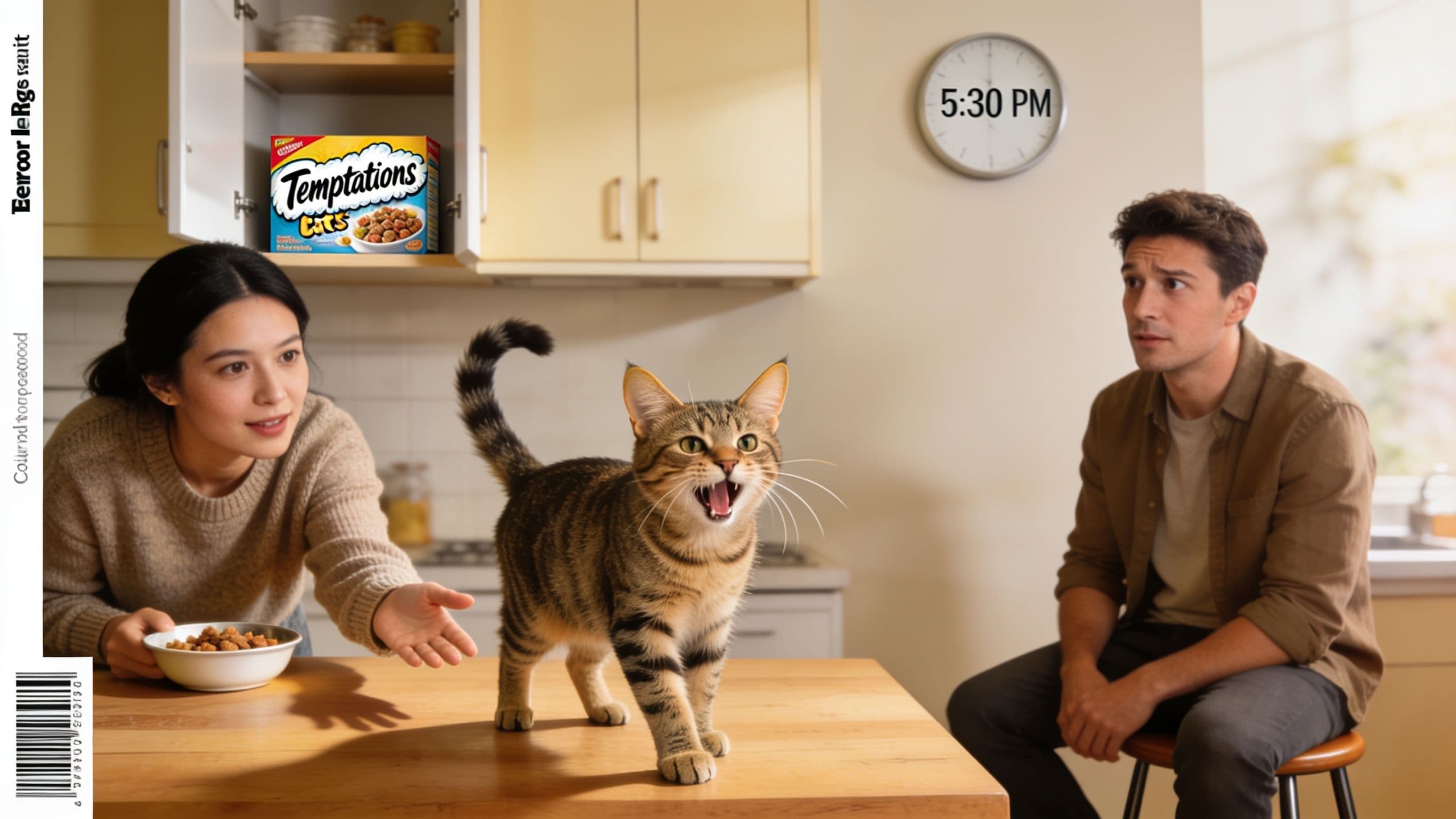
A short meow at the kitchen entrance may mean anticipation around feeding time. A louder, repeated meow near a closed door may mean frustration or curiosity. Trills and chirps often appear friendlier and can sound like invitations to interact or follow. Some cats become very talkative with certain people because the exchange works: the person answers, looks over, opens the cabinet, tosses the toy, or starts the petting session.
Context matters more than volume. A meow at 6 p.m. in front of the food cupboard says something different from a meow while your cat carries a toy down the hallway.
Body language: tail, ears, eyes, posture
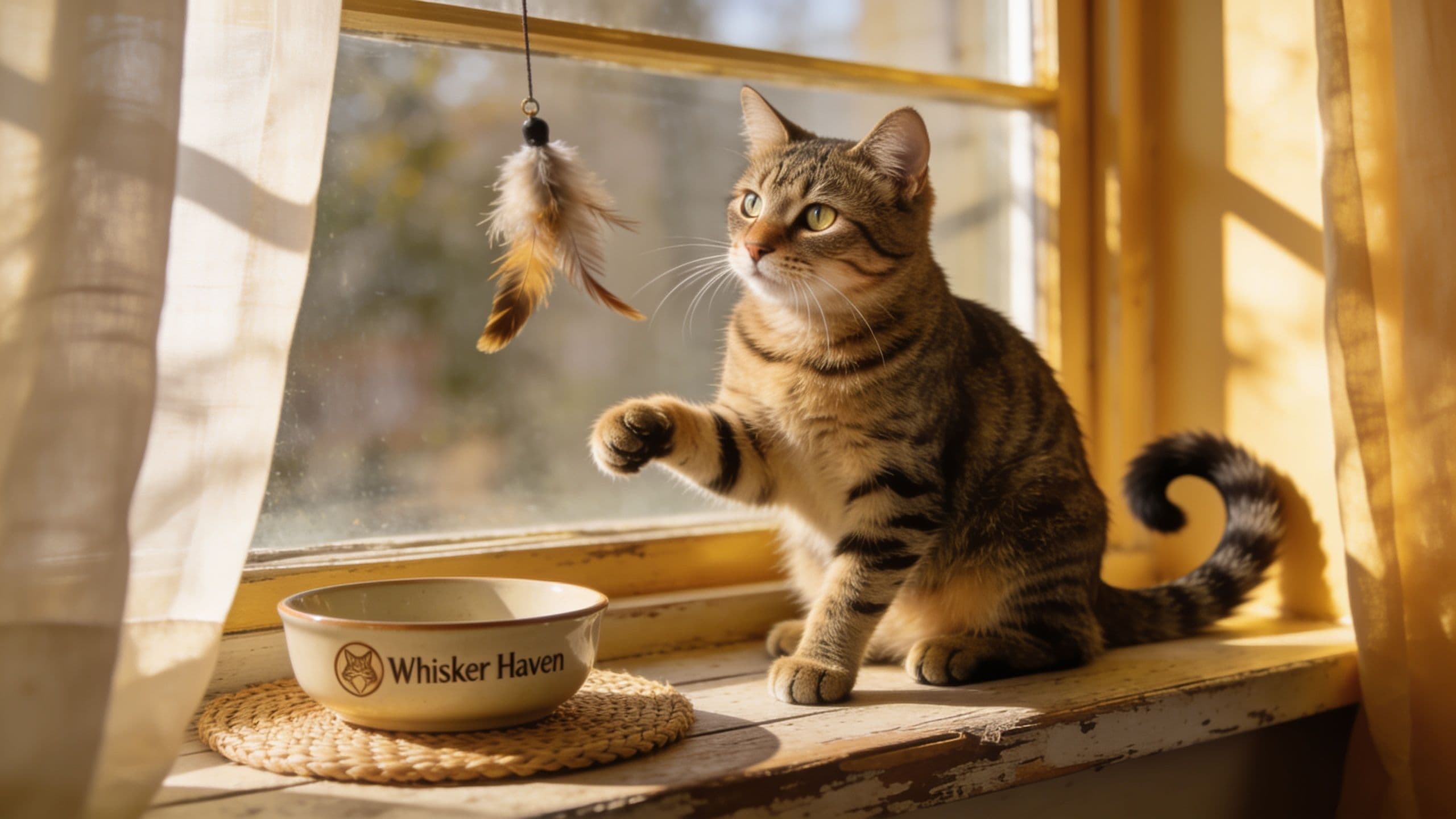
The tail is one of the clearest places to start. A tail held upright often signals confidence or friendly engagement, especially when your cat approaches you. A tail wrapped around the body can suggest rest or caution. A puffed tail indicates arousal, often fear or alarm. Fast tail flicking, especially when paired with tense posture or ears turning sideways, can mean irritation or overstimulation.
Ears provide another running commentary. Forward-facing ears usually suggest interest. Ears rotated sideways or flattened back point to discomfort, defensiveness, or agitation. Eyes matter too: wide pupils can reflect excitement, fear, or play arousal depending on the situation, while narrowed, soft eyes often indicate relaxation.
Then there is the slow blink, one of the most famous feline signals. When a cat looks at you and slowly closes and opens its eyes, it is generally read as a sign of trust and calm. Research published in *Scientific Reports* in 2020 found that cats were more likely to approach humans after a slow-blink interaction, suggesting this expression does function as a positive social signal between cats and people.
Touch, scent, and choosing proximity
Cats also communicate through contact and scent transfer. When a cat rubs its face or body against your legs, hand, or furniture, that behavior is often called bunting or allorubbing. It can be affectionate, but it is also about scent. Cats have scent glands around the face and body, and rubbing helps mark people and places as familiar.
Head bumps are usually friendly social contact. Kneading can signal comfort, contentment, or a self-soothing state. Sitting beside you, leaning into you, or sleeping near your feet can all be forms of social closeness, even when the cat is not asking to be touched.
That last point matters because humans often over-translate proximity into permission. A cat on the sofa near you may want company, warmth, or shared space, not a full-body petting session.
Routine as communication
Cats are excellent pattern readers, and they use routine to communicate with people. Standing by the door at the usual play hour, pawing the cupboard before dinner, waiting by the bathroom in the morning, or appearing the moment a laptop opens are not random habits. They are learned interactions.
A cat that follows you from room to room may be curious, social, or simply interested in what might happen next. A cat that brings a toy to the bed at night may be inviting play. A cat that sits in a doorway can be signaling a desire for access, attention, or strategic observation.
Owners often think of communication as something the cat initiates dramatically. In reality, much of it is built into repetition.
What common behaviors may actually be saying
A slow blink usually reads as relaxed trust.
Rubbing against your legs often means social greeting, scent marking, or both.
Following you around can mean companionship, curiosity, or anticipation of a resource such as food, play, or access.
Bringing toys may be an invitation to interact, a play ritual, or a way of relocating favored objects to where you are.
Sitting on a laptop, book, or keyboard is often less about sabotage than about access to your attention, your hands, or a warm surface that smells like you.
Midnight zoomies may look chaotic, but they are often a release of pent-up energy, especially in indoor cats whose hunting instincts have not been given enough structured outlets during the day.
Purring is the signal people most often oversimplify. Many cats purr when content, but cats can also purr when stressed, injured, or self-soothing. If the body is loose, the ears are neutral, and the cat is leaning into contact, the purr is more likely to reflect comfort. If the body is tense or the cat is hiding, the same sound means something different.
Why cats do not communicate like dogs
Cats and dogs both bond strongly with humans, but they advertise their intentions differently. Dogs tend to be more overt and repetitive in social signaling. Cats are often more economical. They may approach, offer a small cue, and then reassess based on your response.
That does not make cats colder. It means owners need to notice finer details and respect shorter interaction windows. A dog may solicit and sustain rough-and-tumble attention. A cat may want ten seconds of cheek rubs, then a pause, then a nap in the same room. When people expect canine-style enthusiasm, they can miss feline-style affection entirely.
How to respond in ways cats understand
The best response is not to force more communication. It is to make the exchange clearer and safer.
Start by rewarding what your cat initiates. If your cat approaches with relaxed posture, answer gently: offer a hand to sniff, pet preferred areas such as the cheeks or head if the cat seems receptive, or engage with a toy. Stop before the cat has to escalate to a swat, tail lash, or hard turn of the head.
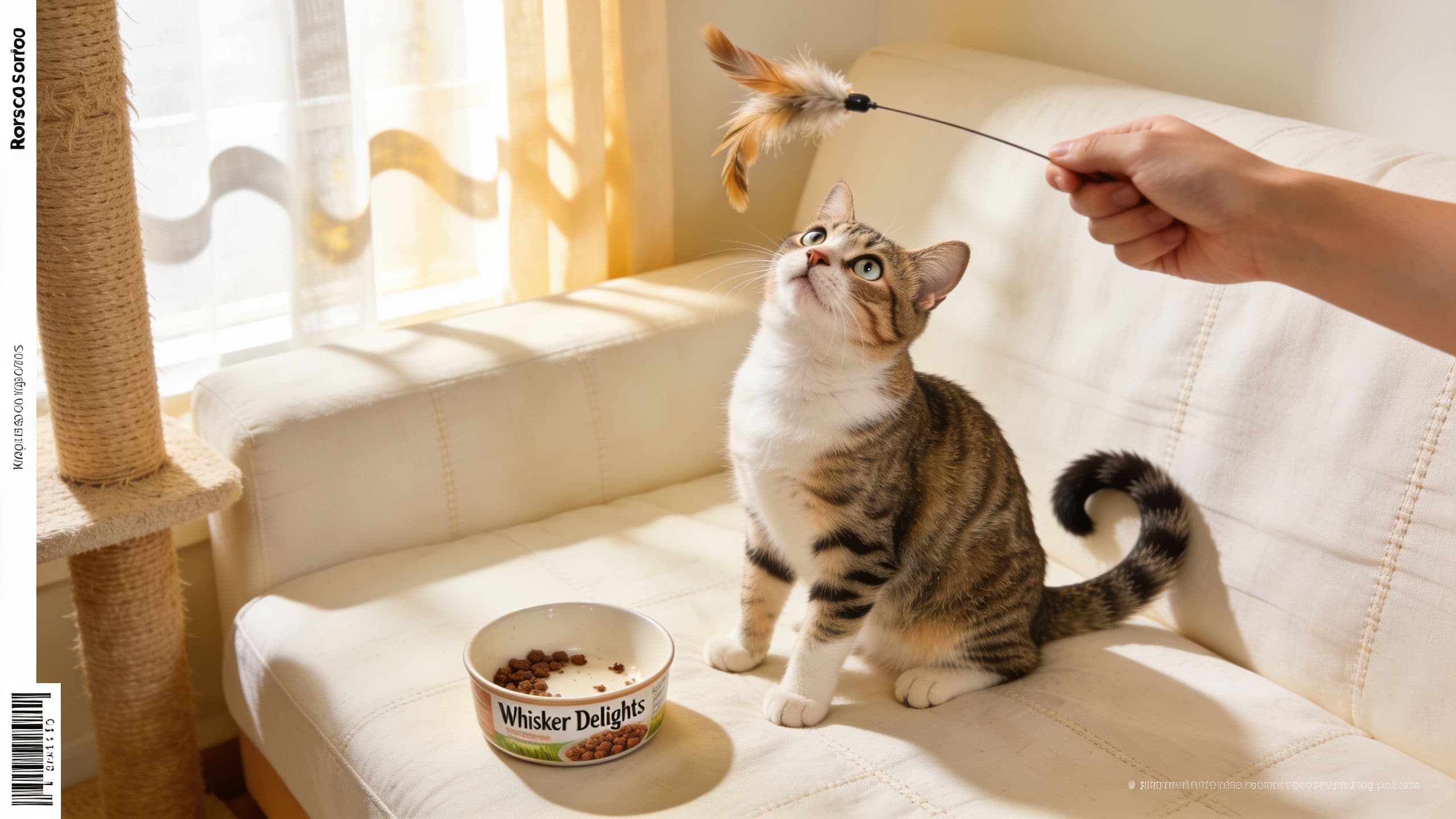
Use consistency. Cats learn household patterns quickly, so regular meal times, short daily play sessions, and predictable quiet spaces help them communicate with less frustration. Interactive toys, wand play, puzzle feeders, and perches can turn restless or attention-seeking behavior into healthier routines.
You can also answer a slow blink with one of your own. Many owners find their cats respond. It is a small gesture, but it matches the cat's low-pressure social style.
Most important, respect boundaries. A cat asking for space may communicate that through a twitching tail, flattening ears, turning away, skin rippling, or suddenly grooming mid-interaction. If you pause at those early signs, your cat learns that subtle communication works. If you ignore them, the cat may feel forced to become louder with claws or teeth.
The signals people misread most often
One of the biggest mistakes is treating all affection as unlimited affection. A cat can enjoy contact and still become overstimulated quickly. Repeated stroking, especially along the lower back or belly, may flip a pleasant moment into irritation.
Another mistake is assuming quiet cats are detached. Some cats are not highly vocal with humans, but they may still communicate constantly through location choices, eye contact, timing, and routine.
Finally, many people read every purr as approval and every retreat as rejection. Neither is that simple. Cats are dynamic communicators. A better question is not, "What does this one signal mean forever?" but, "What is my cat telling me right now, with this body, in this situation?"
That shift is where understanding starts. Once you notice the small cues, cats look less mysterious and more conversational. Their language is not hidden. It is just quiet, precise, and easy to miss until you learn how to listen.
Safety & Scope
This article is for general informational purposes and does not replace professional advice for complex repairs or installations.
Frequently Asked Questions
+Why do cats meow more at humans than at other cats?
Many adult cats use meows especially as a way to get human attention. They learn that meowing can lead to food, play, a door opening, or social interaction. With other cats, they often rely more on scent, posture, and other body-language signals.
+What does it mean when a cat slow blinks at you?
A slow blink is generally a sign of relaxation and trust. It is often described as a friendly, low-pressure social signal. You can gently slow blink back, and some cats will respond in kind.
+Why does my cat rub against my legs?
Rubbing is usually a social greeting combined with scent marking. Cats have scent glands around the face and body, so rubbing helps make you smell familiar while also signaling comfort and connection.
+How can I tell if my cat wants attention or space?
Look at the full body, not one signal. A cat that wants attention may approach with a relaxed body, upright tail, soft eyes, or gentle vocalizing. A cat that wants space may turn away, flick its tail sharply, flatten its ears, tense up, or leave after brief contact.