Compared With Dogs, Cats Often End a Social Moment More Politely
Cats and dogs both set social limits, but they often do it in very different ways. Cats tend to end interaction with small, easy-to-miss signals and quiet withdrawal, while dogs are more likely to stay engaged longer or make their discomfort easier to read.
Avery writes about trends, platforms, and strategic shifts in pets & animal lifestyle, with attention to what matters in practice.
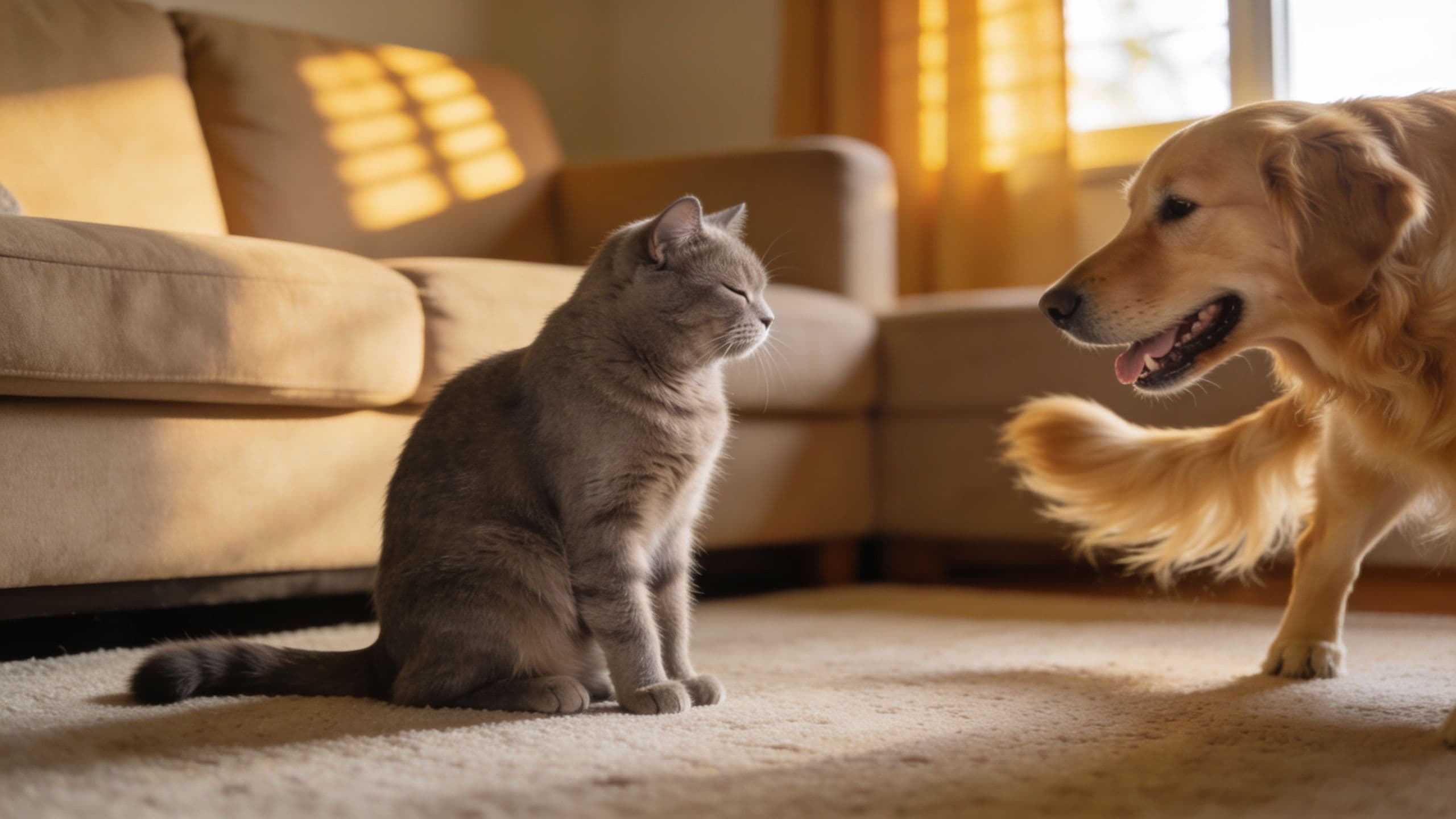
A lot of pet misunderstandings happen at the end of an interaction, not the beginning. Both cats and dogs can ask for attention, enjoy contact, and then decide they are finished. The difference is that cats often end the moment with a soft exit, while dogs more often stay in the social exchange longer or show their boundary in a way humans notice faster.
That contrast matters in multi-pet homes. People who are used to dogs may expect clearer escalation, more obvious body language, or a more gradual winding down. Cats often do something else: they simply start leaving. If that early exit is ignored, the cat may need to become much more emphatic.
A cat's "no thanks" is often built around distance
Cats frequently manage social contact by changing position rather than creating a scene. A cat that has had enough petting or attention may turn the head away, shift weight off your hand, rotate the ears, flick the tail once or twice, or step just out of reach. None of these signals is dramatic on its own. Together, they often mean the same thing: the social moment is ending.
This can look polite because it is. Instead of protesting loudly, many cats try to reduce intensity first. They put space between themselves and the contact. They may hop down from the couch, settle a few feet away, or remain near you but no longer invite touch. To people who expect a stronger reaction, this reads as neutral behavior. To the cat, it was already a clear answer.
One reason this gets missed is timing. Cat exit cues often come early, before the animal is truly upset. A head turn is not random. A skin twitch along the back, a pause in purring, or a subtle body lean away can be the first attempt to keep the interaction comfortable. If the person keeps petting through that moment, the cat may move to firmer communication: a sharper tail lash, a fast retreat, a warning swat, or a bite that seems to come "out of nowhere" only because the smaller cues were overlooked.
Dogs often stay in the exchange longer
Dogs absolutely have boundaries, and good dog handling depends on reading them well. But compared with cats, many dogs are more likely to remain socially engaged while they sort out how they feel. A dog may fidget, lick lips, yawn, look away, stand up, circle, bring a toy, lean elsewhere, or solicit a different kind of interaction instead of simply ending the moment immediately.
That does not mean dogs are always clearer or more tolerant. It means their discomfort or changing interest often unfolds within continued engagement. They may redirect the interaction rather than leave it. A dog that is done with petting might get up and wag toward the door, nose your hand toward play, or bounce into another activity. Even avoidance can be easier for humans to spot because the movement is bigger and the social energy remains outward.
In practical terms, many owners have more chances to notice the shift with dogs. The dog may offer several readable steps on the way out. Cats often compress those steps. Their version of de-escalation is frequently, "I will remove myself now."
Why cat cues are easy to misread in dog-oriented households
Homes shaped by dog behavior can accidentally teach people to ignore feline subtlety. If your mental model of a friendly pet includes sustained eye contact, repeated touch, eager physical closeness, and lots of social recovery after mild annoyance, cat behavior can seem abrupt when it is actually restrained.
Three habits tend to create problems:
Waiting for a bigger signal
Many people assume that if a cat really wanted the interaction to stop, the cat would obviously hiss, growl, or leave in a dramatic way. In reality, many cats begin with minimal signals. By the time the cue is unmistakable, the cat is often already over threshold.
Treating approach as open-ended consent
Cats commonly seek contact and then want it in short, specific doses. A cat may jump into your lap, rub your leg, or nudge your hand and still be interested in only a brief exchange. People often read the approach as permission for continuous petting. The cat was asking to start, not signing up for unlimited handling.
Missing the difference between staying near and wanting touch
Cats often enjoy company without wanting constant contact. A cat that remains on the sofa after turning away may still want to share space. Continuing to reach in can change a calm social moment into one the cat now needs to end more forcefully.
What a cleaner ending looks like at home
The most useful skill is learning to stop before the cat has to insist. Watch for the first change, not the final protest. If the cat turns the head, shifts the body, changes tail rhythm, or stops leaning into touch, pause for a second. Let the animal choose what happens next.
If the cat re-engages by rubbing, repositioning, or pushing into your hand, continue gently. If the cat stays still, looks away, or leaves, accept the ending. That clean stop teaches the cat that small signals work. Over time, cats that trust their boundaries will often initiate affection more confidently and more often.
This is especially valuable in homes with both cats and dogs. Dogs can add motion, noise, and social pressure that make feline withdrawal harder to notice. If a cat exits a petting session and immediately relocates to a shelf, chair back, or another room, that is often a decision to regulate social intensity, not a rejection of the household.
A few practical adjustments help:
Pet in shorter bursts, then pause.
Focus on areas many cats prefer, such as the cheeks or under the chin, rather than assuming full-body petting is welcome.
Reward voluntary returns with calm attention instead of grabbing for more contact.
Give cats easy escape routes and elevated resting spots.
Teach children that when a cat walks away, the interaction is over.
Animal behavior organizations such as the American Association of Feline Practitioners have long emphasized the value of choice, predictability, and low-stress handling in cat care. That principle applies to affection too: the easier it is for a cat to say "done," the easier it is for the cat to say "hello" next time.
Respecting the small exit makes future affection easier
The idea that cats are aloof and dogs are social misses the real distinction. Cats are social, but they are often economical. They do not always announce the end of a pleasant moment with fanfare. They downshift, disengage, and create distance. When that quiet ending is respected, the relationship usually gets smoother.
Dogs and cats both deserve to have their boundaries recognized. The difference is that cats often express those boundaries with less drama and more finesse. For owners, that means the job is not to wait for a stronger message. It is to notice the first polite one.
Safety & Scope
This article is for general informational purposes and does not replace professional advice for complex repairs or installations.
Frequently Asked Questions
+How can I tell when a cat is done being petted?
Common signs include turning the head away, shifting the body out of reach, tail flicking, skin twitching, ears rotating, stopping leaning into your hand, or simply getting up and leaving. The earliest signals are often subtle, so pausing at the first change is usually best.
+Do dogs and cats show social boundaries differently?
Often, yes. Cats frequently end interaction by creating distance quietly and early. Dogs may stay engaged longer, redirect into another activity, or show larger body-language changes that people notice more easily. Both species have boundaries, but the style of communication often differs.
+Why does my cat walk away right after seeking attention?
Seeking attention does not always mean wanting a long session. Many cats prefer brief, specific contact and then choose to stop while the interaction still feels comfortable. Walking away right after initiating contact is often normal boundary-setting, not moodiness or rejection.