Cats on High Ground: The Everyday Logic Behind Elevated Hangouts
A cat stretched across the top of a bookcase or balanced on the back of a sofa is not being theatrical for the sake of it. Elevated spots offer a better view, a buffer from household traffic, and a sense of control that makes ordinary rooms feel easier to manage.
Jordan specializes in turning complex pets & animal lifestyle topics into clear, useful explainers for everyday readers.
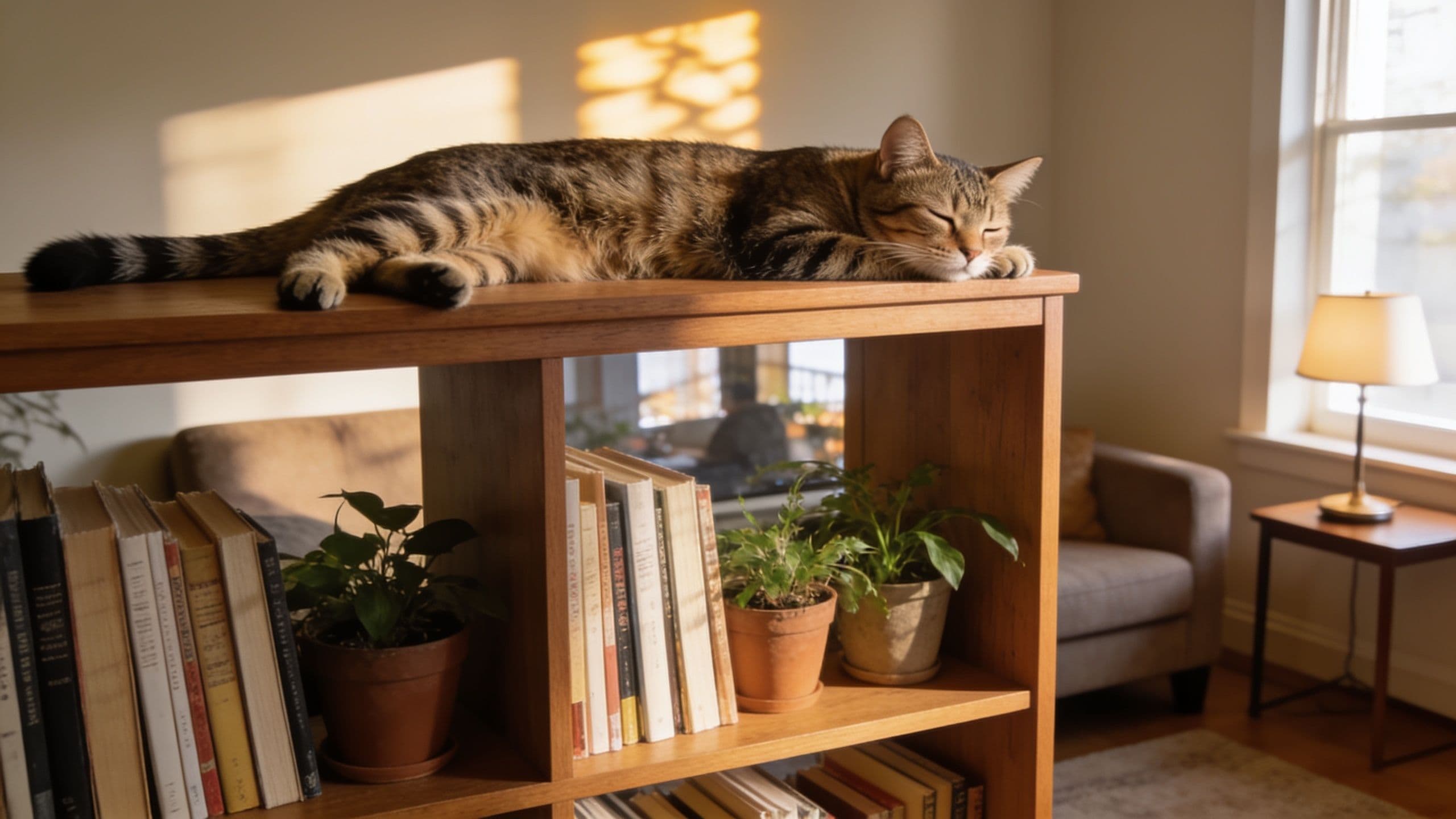
A cat on top of the fridge, the bookshelf, or the highest platform of a cat tree is usually making a practical choice. Height gives cats three things they value in daily life: visibility, comfort, and control. What looks dramatic to people often functions as simple household strategy for an animal that prefers to assess a space before fully relaxing in it.
That is why elevated hangouts show up across so many homes, even when the cat has plenty of floor-level beds. The appeal is not only about instinct in the abstract. It is about how modern homes feel from a cat’s point of view: busy walkways, unpredictable movement, competing pets, and limited quiet zones. A higher surface can solve several of those problems at once.
Height turns a room into something easier to read
Cats pay close attention to movement. They track who is entering, where food is being prepared, when another pet is passing through, and which parts of the room are calm versus chaotic. An elevated perch gives them a wide-angle view without requiring them to stay in the middle of the action.
That matters in everyday situations:
In a living room, the back of a couch lets a cat watch people while avoiding constant approach.
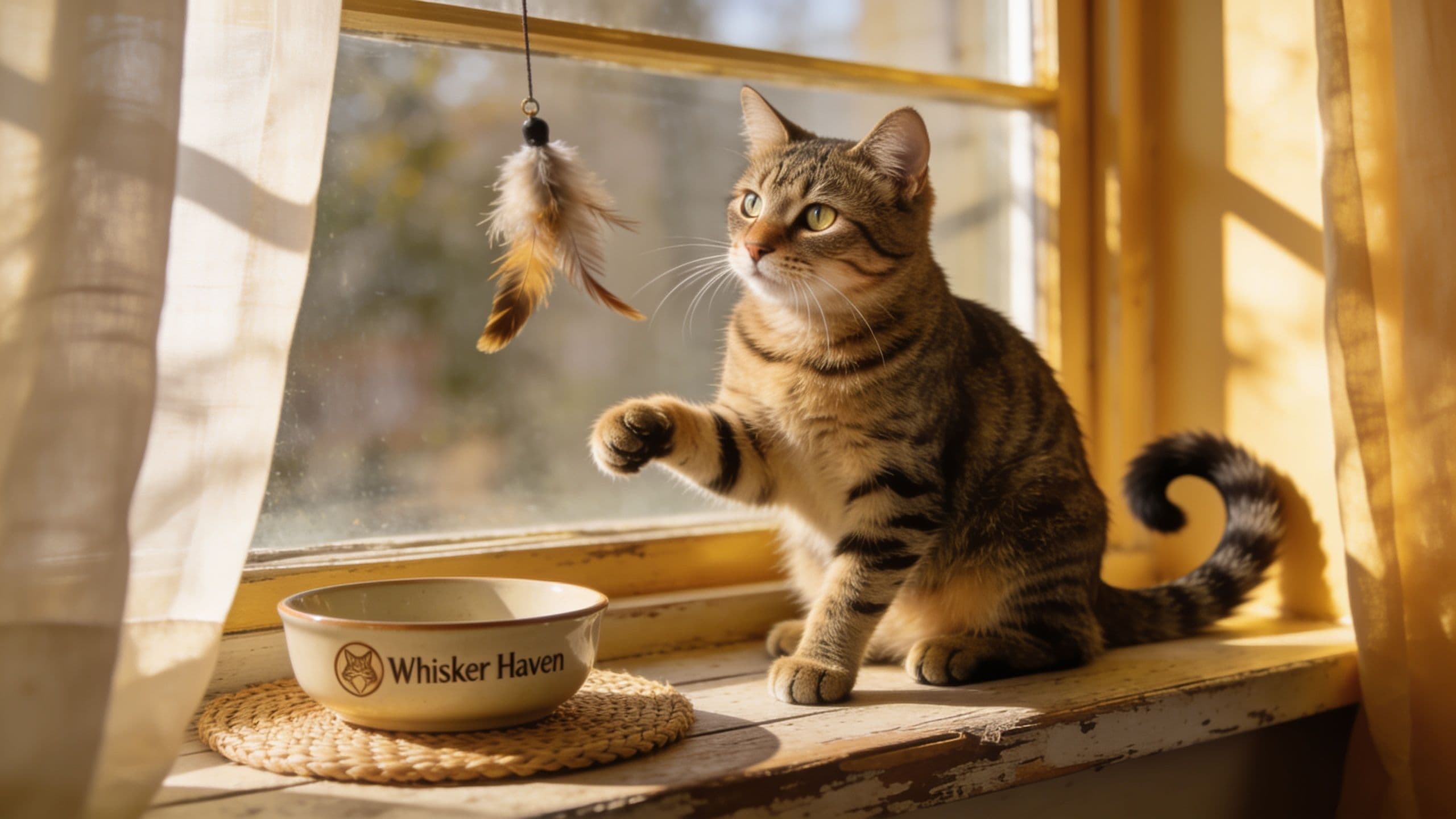
Near a window, a perch combines outdoor stimulation with a protected resting place.
In a multi-pet home, a higher shelf offers an escape from a dog’s nose-level curiosity.
In smaller apartments, vertical space creates distance when floor space is limited.
From up high, a cat can monitor household patterns while deciding how much to participate. That control is often the key detail. Many cats want to be near activity without being fully available to it. A top shelf or cat tree platform lets them stay socially aware on their own terms.
Elevated rest can feel safer than floor-level rest
Sleep is when animals are most vulnerable, and cats are selective about where they settle deeply. A raised spot often feels more secure because it reduces surprise contact. Fewer feet pass by, fewer hands reach in casually, and other animals are less likely to barrel straight into the sleeping area.
This is especially noticeable in homes with children, guests, or energetic dogs. Even a confident cat may choose height simply because it reduces interruption. The cat is not necessarily frightened; it may just prefer a resting place where it controls when interaction happens.
There is also a comfort factor. Many elevated spots combine multiple rewards:
warmth from nearby appliances or sun exposure
soft edges or narrow surfaces that feel enclosed
reduced drafts compared with open floor areas
quieter corners above the main traffic path
That helps explain why cats often choose surprisingly specific places, such as the top of a wardrobe, a sunny windowsill, or the upper shelf of a sturdy bookcase. The appeal is not only the altitude. It is the combination of security, climate, and visibility.
Not all high spots serve the same purpose
Owners sometimes group all climbing behavior together, but cats often use different elevated places for different reasons.
Window perches are about stimulation
A window seat is less of a bunker and more of an observation deck. Birds, passing cars, neighborhood cats, and changing light make it one of the richest locations in the home. If a cat spends hours on a window perch, that often reflects curiosity and environmental interest more than withdrawal.
Furniture backs and counters are about proximity with distance
The back of a sofa, a dining chair, or even a kitchen counter can place a cat near people while still maintaining a boundary. Counters are frustrating for owners, but from the cat’s perspective they are stable, high-traffic observation points with valuable information: smells, activity, and line of sight.
Bookcases, wardrobes, and cat trees are strategic retreats
These spots tend to be chosen when a cat wants a quieter pause. A tall cat tree in a corner can become a preferred nap zone because it offers both elevation and predictability. Bookcases and wardrobes often serve the same function, especially in homes that lack cat-specific vertical furniture.
The favorite perch can tell you something about the cat’s priorities. A social cat may choose the highest spot in the busiest room. A more cautious cat may choose a high location that is visually open but physically tucked away. A sun-loving cat may rotate between elevated spots based on the time of day.
Why some homes produce more climbers than others
Cats do not all climb to the same degree, and the home itself plays a major role. Some environments practically invite vertical living.
Homes with constant floor-level traffic often push cats upward. If hallways are busy, children move quickly, or a dog patrols the rooms, a raised perch becomes one of the few places where the cat can pause without negotiation.
Layout matters too. Open-plan homes can leave cats exposed at ground level, while tall furniture creates natural lookout points. In compact spaces, vertical territory can be more meaningful than square footage. A studio apartment with shelves, a window hammock, and a sturdy cat tree may feel more usable to a cat than a larger home with little climbing access.
Temperament is part of the equation as well. Breeds often described as active climbers, such as Bengals or Abyssinians, may seek elevation aggressively, but individual personality matters more than labels. Age also changes perch preferences. Young cats may explore every ledge available, while older cats often want height that is still easy to reach, such as a low window platform or a stepped tower.
Work with the instinct instead of fighting every jump
The most effective response to unwanted climbing is usually not endless correction. It is giving the cat a better legal option nearby.
If a cat targets counters, ask what the counter is providing. Is it the best view of the room? Access to the sink? Morning sunlight? Proximity to people preparing meals? Once the reward is clear, it becomes easier to redirect the behavior.
Practical ways to add vertical space without filling the room with bulky furniture include:
window-mounted perches
wall shelves designed for cats
a narrow cat tree placed near a social area
a cleared bookshelf level with a non-slip mat
a bench or ottoman that works as a step-up to a favorite ledge
Placement matters as much as the object itself. A beautiful cat tree in a dead corner may be ignored, while a simple perch beside a frequently used window becomes prime real estate. Cats tend to choose locations, not just products.
To make acceptable spots more appealing, add the things cats already seek: soft texture, sun, line of sight, and some distance from sudden approach. If the goal is to keep a cat off a specific surface, consistency helps. Keep off-limits areas unrewarding and legal alternatives attractive.
For older cats or cats with mobility issues, vertical space should be accessible rather than extreme. Ramps, staggered furniture heights, and wider platforms can preserve the benefits of elevation without requiring athletic jumps.
A favorite perch is often a map of what your cat needs
When a cat repeatedly returns to one elevated place, it is useful feedback. That spot may offer relief from noise, easier social observation, better sunlight, or a stronger sense of security. In other words, the perch is not random. It is a clue.
A cat that always chooses the highest surface in the busiest room may want involvement without interruption. A cat that naps on top of a wardrobe may be seeking privacy. A cat that moves among several elevated spots may be tracking the day: morning sun in one window, afternoon quiet in a bedroom, evening observation from the couch back.
Seen this way, a cat’s love of height is less mystery than smart everyday design. Elevated hangouts help cats manage their environment with minimal effort. They can watch, rest, and opt in or out of household life as needed. For owners, that understanding can turn an annoying climbing habit into a useful guide for building a calmer, more cat-friendly home.
Safety & Scope
This article is for general informational purposes and does not replace professional advice for complex repairs or installations.
Frequently Asked Questions
+Why does my cat always sit on the highest surface in the room?
The highest surface often offers the best combination of visibility, distance from foot traffic, and control over interaction. Your cat can watch the room without being approached as easily, which makes that spot both informative and relaxing.
+Do cats feel safer when they sleep up high?
Many do. Elevated sleeping spots reduce surprise contact from people and other pets, and they often sit outside the busiest pathways in the home. That can make rest feel more secure, especially in active households.
+How can I give my cat vertical space without a huge cat tree?
Try window perches, wall-mounted shelves, a cleared bookshelf level, or a small tower placed in a useful location like near a window or social room. The best vertical space is not necessarily the largest option; it is the one that gives your cat a good view and a sense of safety.