A Window View Gives Indoor Cats More Than Entertainment
For an indoor cat, a good window is not a passive distraction. It adds routine, choice, warmth, movement, and a low-stress way to engage with the world beyond the walls of home.
Avery writes about trends, platforms, and strategic shifts in pets & animal lifestyle, with attention to what matters in practice.
A well-placed window can quietly become one of the most valuable parts of an indoor cat’s day. Not because it keeps a cat “busy” in the shallow sense, but because it supports several things cats naturally seek: a vantage point, a changing environment, predictable activity, and the freedom to observe without being approached or handled.
For humans, a window may seem like a small amenity. For many cats, it functions more like a lookout tower, a sun lounge, and a daily schedule all in one. Birds arrive in the morning. Delivery vans stop at familiar hours. Light moves across the floor. Rain changes the soundscape. The same frame offers new information every day, which is exactly why it matters.
The view is a form of environmental variety
Indoor cats benefit from homes that do more than meet basic needs. Food, water, litter, and a bed keep a cat comfortable, but they do not automatically make indoor life rich. A window helps fill that gap by adding low-effort, self-directed stimulation.
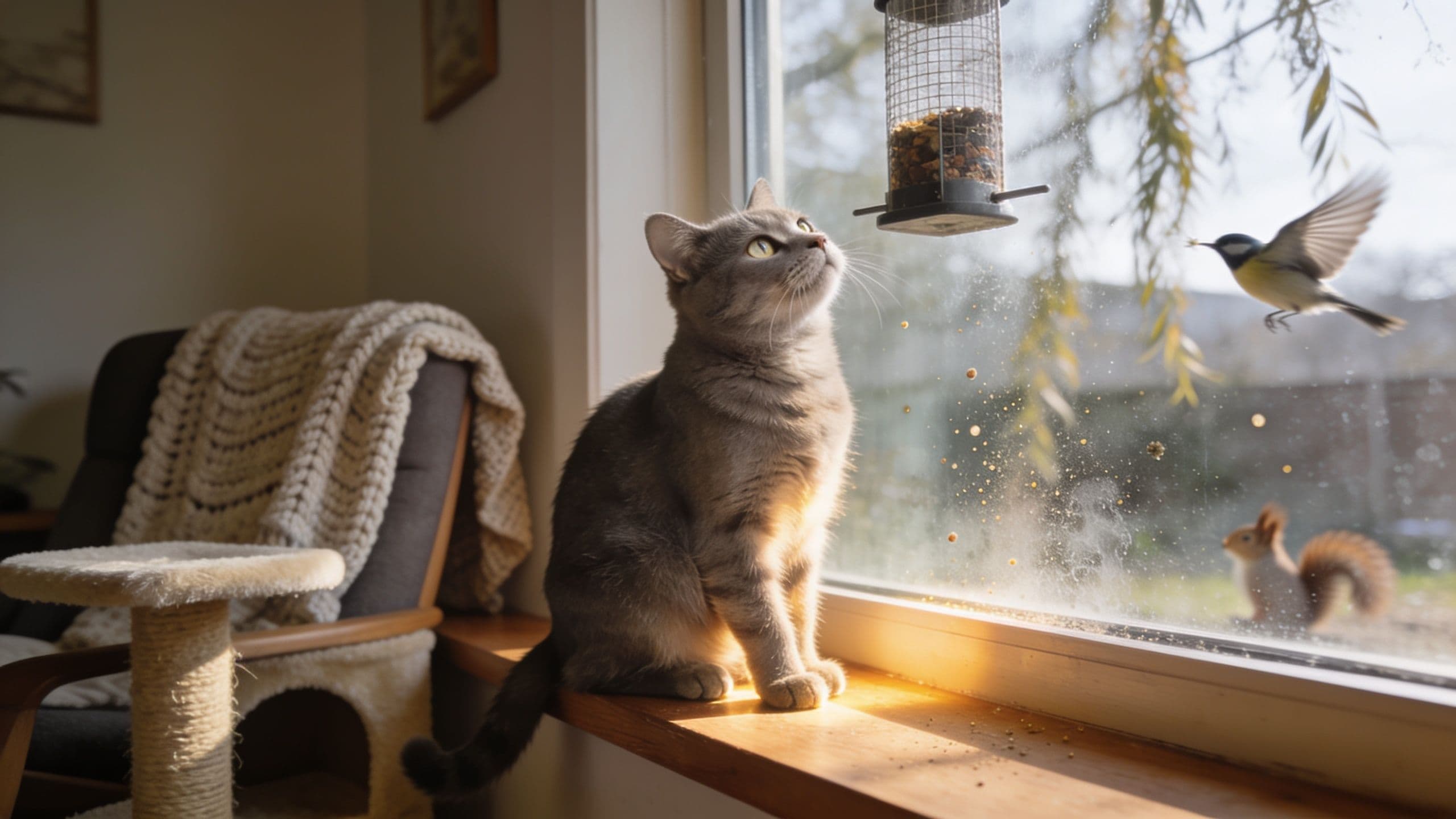
Unlike a toy that appears only during playtime, a view is available throughout the day. It changes with weather, light, season, and neighborhood traffic. That variability matters. A cat can watch a squirrel pause on a fence, leaves move in the wind, people pass on the sidewalk, or shadows shift across a building. None of this requires human scheduling, and none of it forces interaction when the cat would rather simply monitor.
That kind of passive engagement suits feline behavior. Cats are observers by design. They notice movement, track patterns, and return to places where they can gather information from a safe position. A window provides novelty without the social pressure some cats feel during direct play or household commotion.
Why cats often treat windows like prime territory
A cat who claims a windowsill is not wasting time. They are using a resource that checks several important boxes at once.
Height brings confidence
Even a modest rise above floor level can change how secure a cat feels. From a perch, the room is easier to survey and household traffic is easier to avoid. This is one reason many cats choose elevated spots when visitors arrive, vacuuming starts, or children become noisy.
A window perch adds a second layer to that comfort: information. The cat is not just getting away from activity inside the home. They are also gaining a controlled way to pay attention to activity outside it.
Observation happens without direct pressure
One overlooked advantage of a window is that it lets a cat engage on their own terms. The outside world is interesting, but physically separate. The cat can watch dogs, birds, cyclists, and passing people without needing to flee, defend space, or participate.
For cats that are easily overstimulated, that distance is useful. It creates a buffer between excitement and contact. The result is often focused attention rather than stress, especially when the perch itself feels stable and secure.
Predictable outside activity supports routine
Cats often thrive on repetition. A neighborhood window scene can become part of that rhythm. Morning sun on the sill, afternoon school pickup noise, evening bird movement near a tree: these cues help structure the day.
Owners sometimes notice their cat visiting the same window at the same times, almost as if following appointments. In a sense, they are. The outside environment provides recurring events that many indoor spaces lack.
A better window setup is about comfort, not just access
Not every window becomes a favorite. The best setups combine visibility with physical comfort and a sense of safety.
Start with a stable perch
The most important feature is stability. A cat should be able to jump up, turn around, sit, and stretch without the surface wobbling. A broad sill can work on its own, but many homes need an add-on option such as a mounted perch, a sturdy cat tree placed beside the window, or a secure bench.
Products from brands like K&H Pet Products and Tuft + Paw have made window perches more common, but the basic rule matters more than the label: if it shifts, sags, or feels narrow, many cats will avoid it.
Make the surface pleasant to stay on
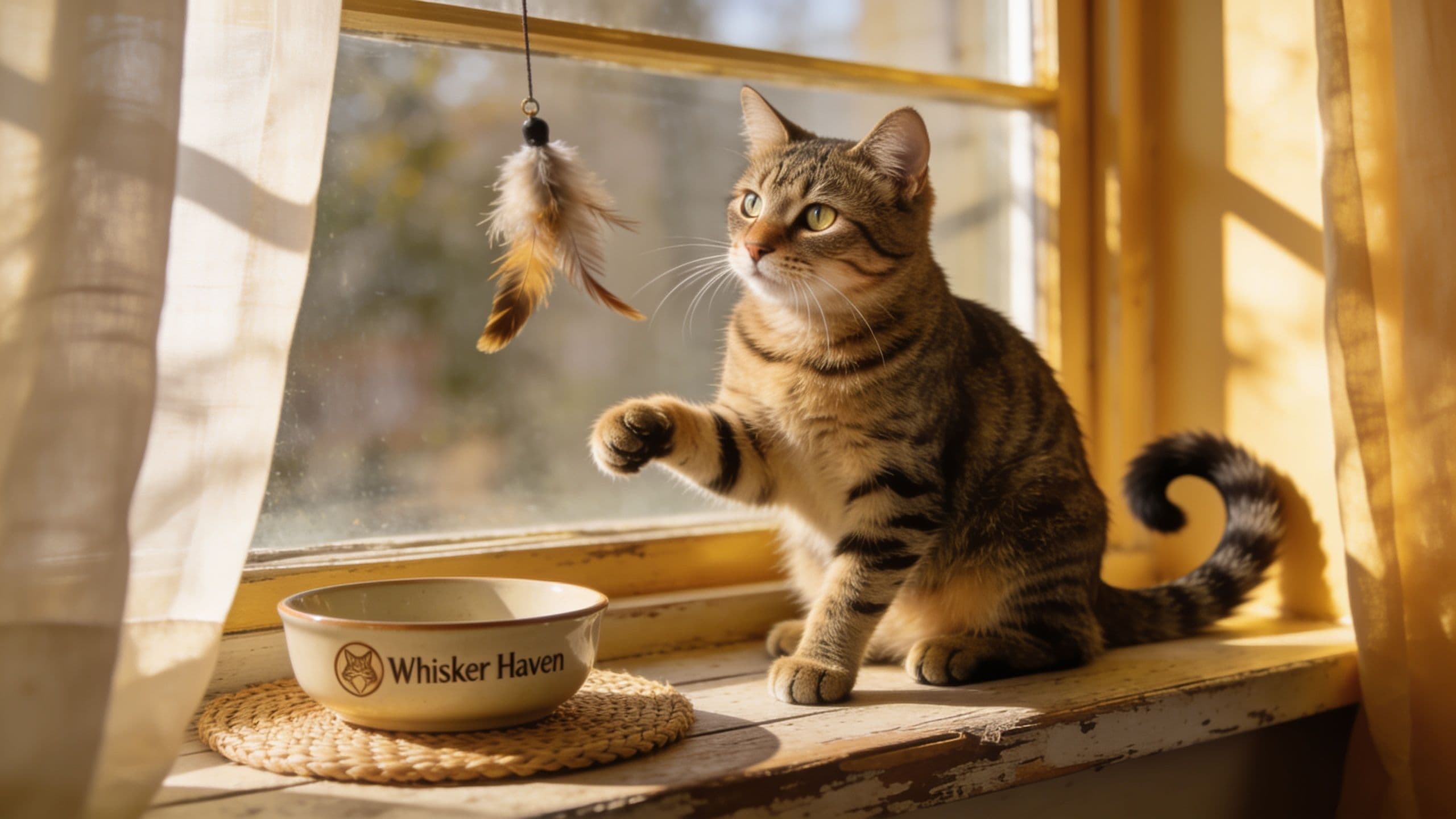
Cats do not just want a view. They want somewhere worth lingering. A soft pad, grippy fabric, or lightly cushioned cover can make a perch more inviting, especially for older cats. In cooler months, sunny spots become especially attractive because they combine visual interest with warmth.
If your cat sheds heavily or tracks litter, choose materials that are easy to clean. A neglected perch can lose its appeal quickly.
Offer more than one level if possible
A single windowsill is good. A small vertical zone is often better. A cat tree with multiple platforms near a window gives a cat options based on mood, weather, and household activity. One level may catch morning sun, another may feel more hidden, and a third may offer the best sightline to trees or street movement.
Choice is part of the benefit. Cats use environments differently when they can decide where and how to engage.
Pair the lookout with a retreat
A strong setup includes not just the viewing spot but also a nearby place to withdraw. That could be a covered bed, a shelf around the corner, or a quiet chair in the same room. If outside activity becomes too intense, the cat can step away without leaving the area entirely.
This matters in homes where outdoor triggers can be more activating than soothing, such as frequent loose dogs, loud traffic, or neighborhood cats approaching the glass.
What your cat’s behavior can tell you about the spot
Cats are clear communicators when a space works for them. The signs are usually behavioral rather than dramatic.
A cat who values a window area may:
Return to it at similar times each day
Nap there between periods of watching
Sit upright and focused when birds or people pass
Chatter, tail flick, or track movement with small head turns
Choose the perch during busy moments inside the home
Shift among nearby levels depending on light and noise
These patterns suggest the window is serving more than one function. It may be a resting place, a monitoring station, and a stress-management tool all at once.
If a cat shows interest but does not stay long, the problem is often practical. The perch may be too small, the glass may be drafty, the spot may be exposed to too much household traffic, or the window may simply not face much activity.
When the best upgrade is simply a more cat-centered placement
Owners sometimes assume enrichment means buying more toys. Toys help, but placement often changes daily life more than novelty purchases do. Moving an existing cat tree to a brighter window, adding a secure shelf where the morning sun lands, or clearing blinds so a cat can actually see out can have an immediate effect.
This is especially true in apartments or smaller homes where the cat’s usable territory is limited. A good window expands the perceived size of the environment. The cat remains safely indoors, but their sensory world becomes broader.
That is why so many indoor cats spend long stretches watching outside. They are not merely passing time. They are gathering information, following patterns, and choosing a vantage point that makes the home feel more dynamic.
A thoughtful window setup will not replace play, climbing, scratching, or social time. But it can improve how a cat experiences the hours between those activities. And for an indoor animal whose world is largely defined by the same rooms every day, that shift is significant.
A window view is one of the simplest ways to make home life feel larger, richer, and more responsive to how cats naturally move through the day.
Safety & Scope
This article is for general informational purposes and does not replace professional advice for complex repairs or installations.
Frequently Asked Questions
+Do indoor cats get bored without a window view?
Some indoor cats do fine without much interest in windows, but many benefit from having one. A view adds movement, light, routine, and visual variety that can make the day feel less repetitive. Without it, cats may rely more heavily on toys, climbing spaces, and human interaction for stimulation.
+What makes a good window perch for a cat?
A good window perch is stable, large enough for the cat to sit or lie down comfortably, and placed where the cat can actually see outside. Soft but easy-to-clean materials help, and nearby options such as a cat tree or second level can make the area more flexible and appealing.
+Why does my cat spend so much time watching outside?
Cats are natural observers. Watching outside gives them a safe way to track movement, notice patterns, and stay engaged with changing sights and sounds. Many also enjoy the warmth of sunlight and the security of an elevated resting spot, so the appeal is often physical as well as mental.